English
 عربى
عربى русский
 简体中文
简体中文







2026-10-09
Home / News / Industry News / Dynamic Mixer vs Static Mixer: Which Is Right for Polymer Melt Spinning?

When a spinning line needs in-line melt mixing — whether for masterbatch color addition, functional additive blending, or multi-component polymer homogenization — the equipment decision comes down to two fundamentally different approaches: a dynamic mixer or a static mixer. Both are installed in the melt flow path between the extruder and the spinneret. Both aim to produce a homogeneous melt before it is drawn into filament. But the mechanism, output quality, operating conditions, and maintenance requirements of each are different enough that choosing the wrong type for your application produces problems that cannot be corrected downstream.
This article compares dynamic and static mixers directly across the parameters that matter for chemical fiber spinning decisions.
A static mixer contains no moving parts. It achieves mixing by forcing the melt through a fixed series of helical or geometric elements inside a tube. Each element splits and recombines the melt flow, progressively reducing concentration gradients with each pass. The energy for mixing comes entirely from the melt pressure generated by the extruder or melt pump — the mixer itself does nothing active.
The number of mixing elements determines mixing intensity. More elements produce better homogeneity but also increase pressure drop across the mixer, which must be compensated by the upstream pump or extruder. This is the fundamental operating constraint of static mixing: you cannot increase mixing performance without increasing pressure drop, and you cannot reduce pressure drop without accepting lower mixing quality.
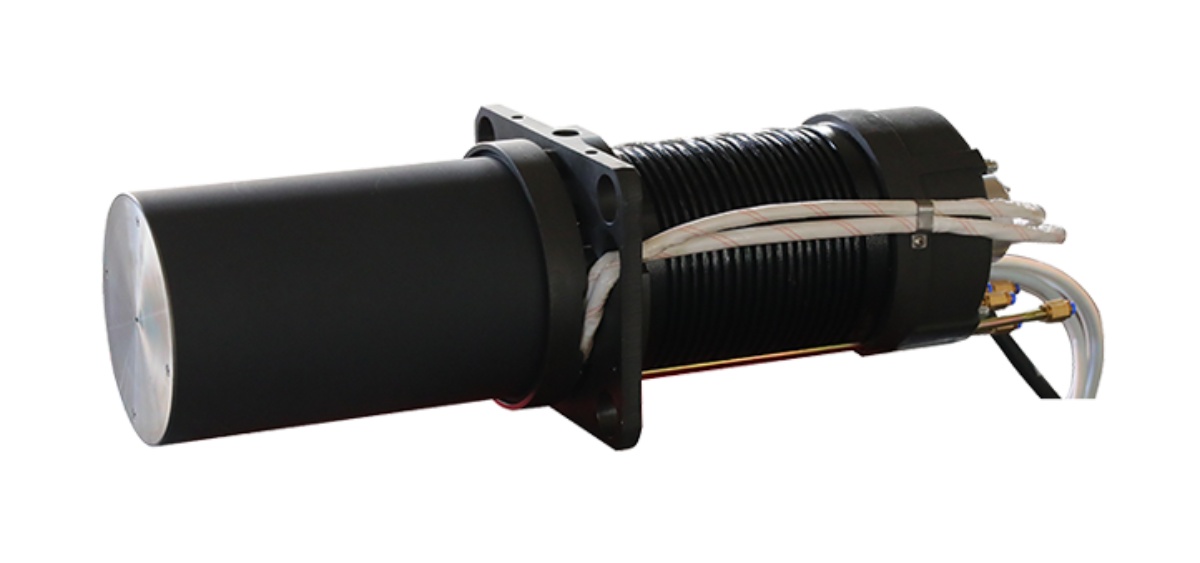
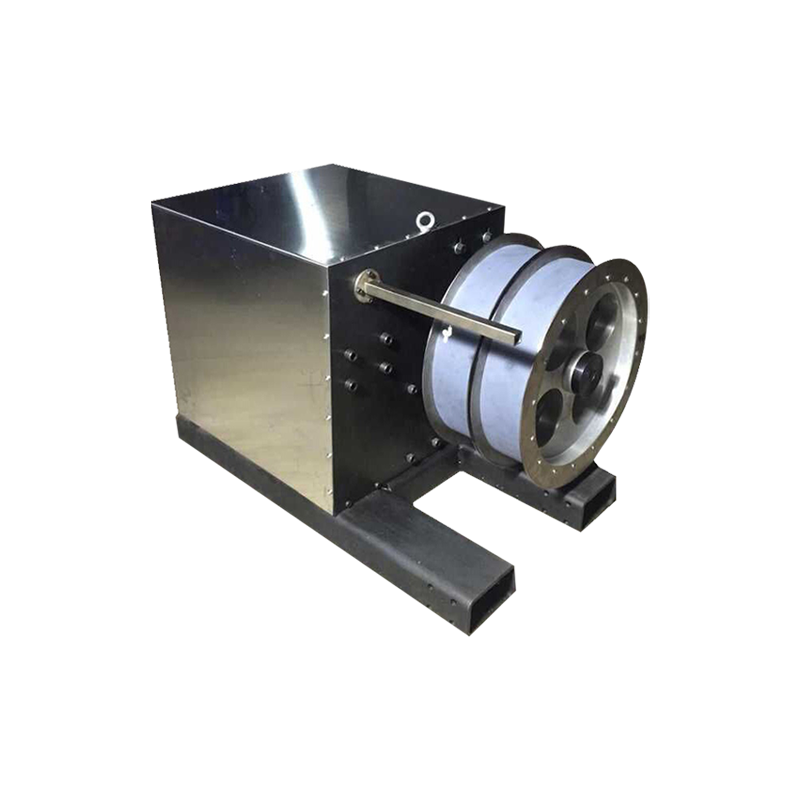
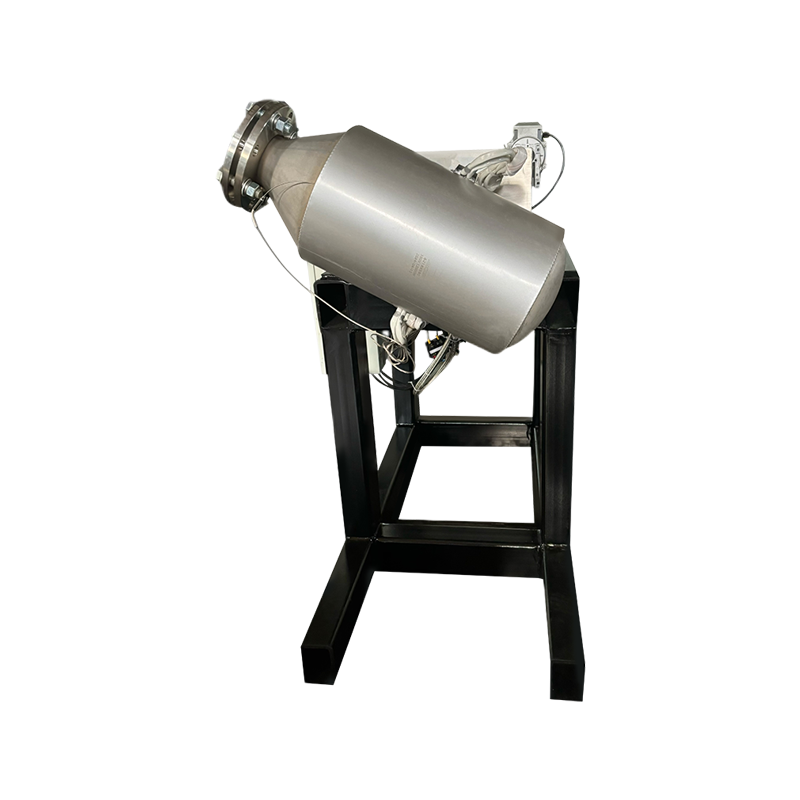
A dynamic mixer uses a driven rotor — rotating at controlled speed inside a heated, pressurized housing — to actively shear and homogenize the melt. Mixing energy is supplied mechanically by the drive motor rather than by melt pressure. This decouples mixing intensity from pressure drop: the rotor speed can be adjusted to change mixing performance independently of line throughput or upstream pressure conditions.
For a detailed explanation of dynamic mixer operating principles and configuration options, refer to our Dynamic Melt Mixer: Working Principle, Types & Selection Guide.
| Parameter | Dynamic Mixer | Static Mixer |
|---|---|---|
| Mixing mechanism | Active mechanical shear via driven rotor | Passive flow splitting via fixed elements |
| Mixing intensity control | Adjustable via rotor speed — independent of throughput | Fixed by element count — cannot be adjusted in operation |
| Pressure drop | Low; rotor supplies mixing energy independently | Significant; increases with element count and throughput |
| Homogeneity at low throughput | Maintained — rotor speed compensates for reduced flow | Degrades — less melt pressure means fewer effective splits |
| Masterbatch / additive mixing | Well suited — handles high viscosity ratio between carrier and additive | Limited — viscosity mismatch reduces effective mixing |
| Color / additive consistency | High — active shear disperses pigment agglomerates | Moderate — depends on masterbatch dispersion quality |
| Moving parts / maintenance | Yes — rotor, seals, drive require periodic service | None — no moving parts, no scheduled mechanical service |
| Residence time distribution | Narrow — active mixing reduces dead zones | Broader — flow channeling possible at element junctions |
Static mixers perform reliably in applications where the fluids being mixed have similar viscosities, are present in relatively balanced proportions, and the line runs at a consistent, predictable throughput. In chemical fiber spinning, these conditions frequently do not hold.
In melt direct spinning with masterbatch addition, the masterbatch carrier melt and the base polymer melt often have substantially different viscosities. Static mixing relies on laminar flow splitting — when viscosity ratios are high, the lower-viscosity component channels preferentially through the element geometry rather than distributing evenly. The result is streaking: bands of concentrated color or additive alternating with underdosed zones, which appear in the finished yarn as color variation across positions or along the yarn length.
A dynamic mixer's active rotor shear disperses the masterbatch regardless of viscosity ratio, breaking up pigment agglomerates and forcing distribution that passive splitting cannot achieve. For a direct look at how this eliminates color streaking in finished filament, see our article on how a dynamic melt mixer eliminates color streaking in masterbatch-colored filament yarn.
Spinning lines frequently run below rated throughput — during product changeovers, during startup sequences, or when running smaller denier products. At reduced throughput, the melt pressure driving flow through a static mixer decreases, which directly reduces the splitting energy available per unit volume of melt. Mixing quality degrades. This is not a marginal effect: on lines where throughput varies by 30–50% between products, the static mixer that performs adequately at full throughput may be genuinely insufficient at reduced rates.
A dynamic mixer's rotor speed can be adjusted to maintain mixing intensity regardless of line throughput, making it appropriate for lines with variable production schedules or frequent product changeovers.
Static mixer elements create zones of slower flow at the element junctions and housing walls. In high-temperature polymer melts — PET spinning at 280–295°C, for example — extended residence at low flow velocity accumulates thermal degradation products. These appear as yellow discoloration in nominally white or light-colored yarn, or as gel particles that block spinneret capillaries and cause end-breakage. A well-designed dynamic mixer with active flow through the mixing zone has a narrower residence time distribution, reducing the risk of hot spots and stagnant zones.
Static mixers are not universally inferior — there are specific conditions where their simplicity is a genuine advantage.
| Condition | Favors Dynamic Mixer | Favors Static Mixer |
|---|---|---|
| Masterbatch viscosity vs base polymer | High viscosity ratio (mismatch) | Similar viscosity |
| Throughput variability | Frequent changeovers or variable rates | Stable single-rate production |
| Color/additive uniformity requirement | Tight — fine-denier, fashion, technical yarn | Moderate — commodity or industrial yarn |
| Masterbatch addition ratio | Variable or high concentration | Fixed low concentration |
| Maintenance capacity | Structured planned maintenance program in place | Minimal maintenance resource |
| Polymer processing temperature | High temperature with degradation risk | Lower temperature, less degradation sensitivity |
For most melt direct spinning lines with masterbatch color or functional additive addition — where throughput varies, masterbatch viscosity differs from the base polymer, and yarn quality standards are tight — a dynamic mixer is the more appropriate choice. The maintenance requirement is real, but it is manageable and substantially outweighed by the quality consistency advantage in demanding spinning applications.
Shengbang's Dynamic Mixer is a patented product developed specifically for chemical fiber spinning and plastic melt homogenization. It covers a wide range of application scales, with pressure ratings of 5, 15, 25, and 45 MPa, rotor diameters from 25 to 300 mm, and capacity from 0.2 to 50 L. Heating is available in both oil heating and electrical heating configurations. Drive power ranges from 15 to 160 kW with a maximum rotor speed of 50 r/min.
Beyond chemical fiber spinning, the same mixer design applies to films, inks, and other polymer processing applications requiring uniform melt blending. Performance is validated through Shengbang's in-house spinning laboratory, where mixer behavior can be tested under actual production conditions with the customer's target polymer and masterbatch system before line integration.
For full product specifications and configuration options, visit the Dynamic Mixer product page. To discuss your specific application — polymer type, throughput range, masterbatch addition ratio, and mixing quality requirements — contact Jiaxing Shengbang Mechanical Equipment Co., Ltd. directly.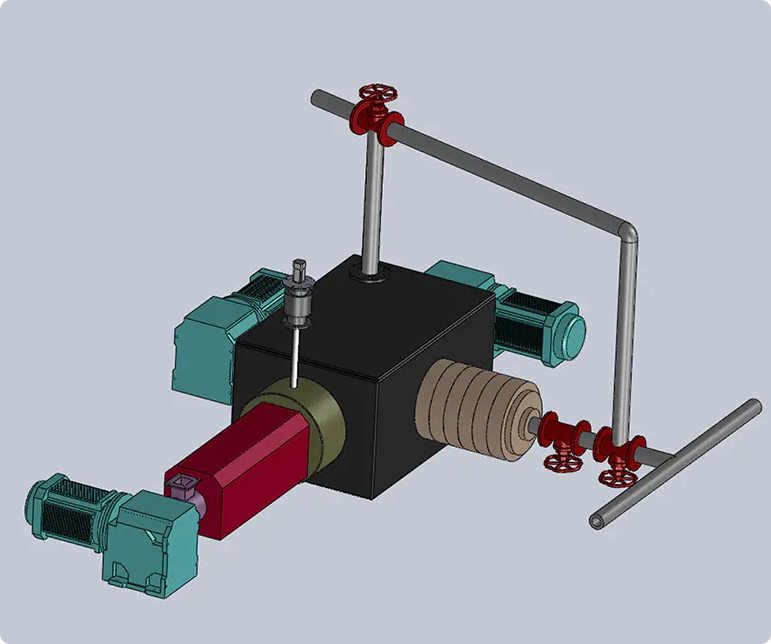

ADDRESS: No.1298, Zhouan Road, Economic and Technological Development District, Jiaxing City, Zhejiang Province
PHONE: +86 19057031687
TEL: 86-0573-83777752
EMAIL: [email protected]