English
 عربى
عربى русский
 简体中文
简体中文







2026-10-09
Home / News / Industry News / PET Flakes Dryer for Spinning: Why rPET Fiber Production Demands a Stricter Drying Standard

Recycled PET (rPET) flakes are an increasingly common feedstock for synthetic fiber spinning — driven by regulatory pressure, brand sustainability commitments, and the closing cost gap between virgin and recycled PET. But feeding rPET flakes into a spinning line is not a straightforward substitution for virgin chip. The drying step, in particular, operates under fundamentally different constraints when the downstream process is melt spinning rather than pelletizing or bottle-grade extrusion.
This article explains why PET flakes drying for spinning demands stricter moisture control than recycling line drying, what the correct targets are by fiber type, and what dryer configuration is appropriate for spinning-integrated rPET lines. For background on dryer types used in PET recycling lines generally, refer to our PET Flake Drying: Crucial Standards and Technologies for Recycling Lines.
Virgin PET chip arrives from the polymerization plant in a controlled, dry state with a defined intrinsic viscosity (IV) and minimal contamination. rPET flakes arrive from a recycling process that introduces variables virgin chip does not have.
These three factors together mean that the drying step for rPET spinning is not simply a matter of removing water. It is the last quality gate before an irreversible melt-processing step, and the tolerance for error is tight.
The moisture target for rPET flakes entering a spinning extruder is determined by the fiber type and denier, not by what the recycling line considers acceptable output. A recycling line that pelletizes rPET for general applications may accept outlet moisture of 200–500 ppm. A spinning line does not.
| Spinning Application | Target Moisture | Consequence of Exceeding Target |
|---|---|---|
| Standard POY / FDY filament (rPET) | ≤50 ppm | IV drop, end-breakage, denier variation |
| Fine-denier rPET filament (≤50 dtex) | ≤30–40 ppm | Spinneret capillary blockage, tenacity loss, high break rate |
| rPET staple fiber | ≤50–75 ppm | IV drop, reduced crimp stability, brittle fiber |
| Colored rPET filament (masterbatch blend) | ≤50 ppm | Color streaking compounded by melt instability |
| Pilot / trial spinning with rPET flakes | ≤50 ppm (batch-verified) | Unrepresentative trial results, unreliable process conclusions |
These targets are the same as for virgin PET chip in equivalent applications — rPET does not get a wider tolerance because it started as recycled material. The spinneret does not distinguish between IV loss from undried virgin chip and IV loss from undried rPET flakes. The degradation mechanism and the quality consequence are identical.
Reaching sub-50 ppm moisture from a starting point of 3–8% requires a staged approach. No single dryer type achieves this reduction efficiently in one step.
Immediately after washing, a centrifugal dryer removes the bulk of surface water mechanically, reducing moisture from 5–8% down to approximately 1–3%. This step costs very little energy relative to thermal drying and dramatically reduces the load on the downstream thermal stage. On rPET spinning lines, skipping mechanical pre-drying and sending wet flakes directly to thermal drying is one of the most common causes of both high energy consumption and inconsistent outlet moisture.
Hot air drying at 130–160°C reduces moisture from ~1–3% down to 0.1–0.5%. For recycling lines that stop at pelletizing, this stage is often sufficient. For spinning lines, it is a preparatory step, not a final one — the outlet moisture of 0.1–0.5% (1,000–5,000 ppm) is still 20–100 times higher than the spinning threshold.
The desiccant hopper dryer is the stage that bridges the gap between recycling-line acceptable moisture and spinning-grade moisture. Dry air at a dew point of −30°C to −40°C is circulated through a sealed hopper at 160–180°C for 4–6 hours. The molecular sieve desiccant continuously strips moisture from the circulating air, allowing sub-50 ppm outlet moisture to be reached and maintained reliably.
For rPET specifically, desiccant hopper drying at the correct dew point and temperature does something that hot air alone cannot: it achieves consistent sub-50 ppm outlet moisture even when inlet moisture to this stage varies batch to batch, provided the hopper is correctly sized and the desiccant is regenerated on schedule. This consistency is what makes the desiccant stage non-optional for spinning-grade rPET drying.
| Stage | Equipment | Inlet Moisture | Outlet Moisture | Purpose |
|---|---|---|---|---|
| 1 | Centrifugal dryer | 5–8% | 1–3% | Remove bulk surface water at low energy cost |
| 2 | Hot air drum dryer | 1–3% | 0.1–0.5% | Primary thermal reduction before desiccant stage |
| 3 | Desiccant hopper dryer | 0.1–0.5% | ≤50 ppm | Achieve spinning-grade moisture; feed directly to extruder |
Production-scale recycling lines generate continuous output at high throughput. Spinning lines — particularly pilot lines, specialty fiber lines, and lines running multiple product types — often operate in batch or semi-batch mode with variable throughput. A desiccant hopper dryer sized for continuous high-volume output runs oversized for actual spinning batch volumes, which means flakes sit in the hopper longer than the designed dwell time and risk reabsorbing moisture at transfer points, or the hopper is repeatedly partially loaded, which disrupts dew-point stability inside the drying zone.
The correct approach is to size the desiccant hopper to the actual batch volume being fed to the extruder per drying cycle, not to the upstream recycling line's rated capacity.
rPET flakes dried to sub-50 ppm moisture reabsorb moisture from ambient air within minutes of exposure. Any open transfer point — an unsealed chute, an open hopper lid, or a slow gravity feed without a purge — between the desiccant hopper outlet and the extruder feed throat can undo the entire drying cycle. This failure mode is common on rPET spinning lines that have retrofitted a recycling dryer without adapting the transfer system for spinning-grade moisture sensitivity.
Some recycling operators increase drying temperature above 180°C to shorten drying time or compensate for a desiccant system with degraded performance. On pelletizing lines, surface yellowing from mild thermal oxidation at 185–200°C may be acceptable. On spinning lines feeding fine-denier filament, it is not — discoloration from thermal oxidation appears directly in the yarn and cannot be corrected downstream. The correct response to a desiccant system losing performance is desiccant regeneration or replacement, not a temperature increase.
When specifying or evaluating a desiccant hopper dryer for rPET spinning integration, the following parameters are the most consequential.
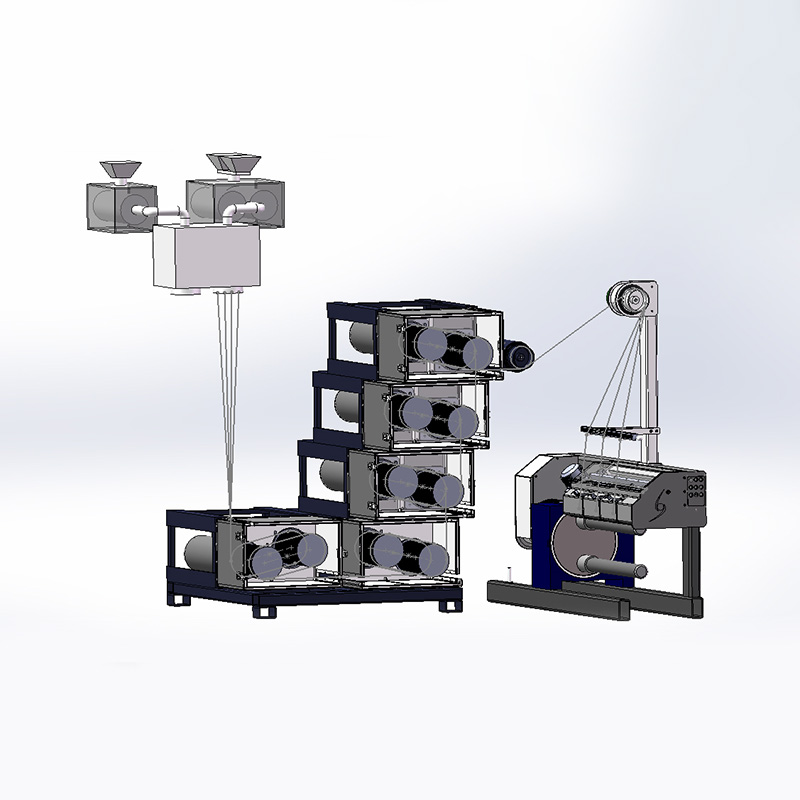
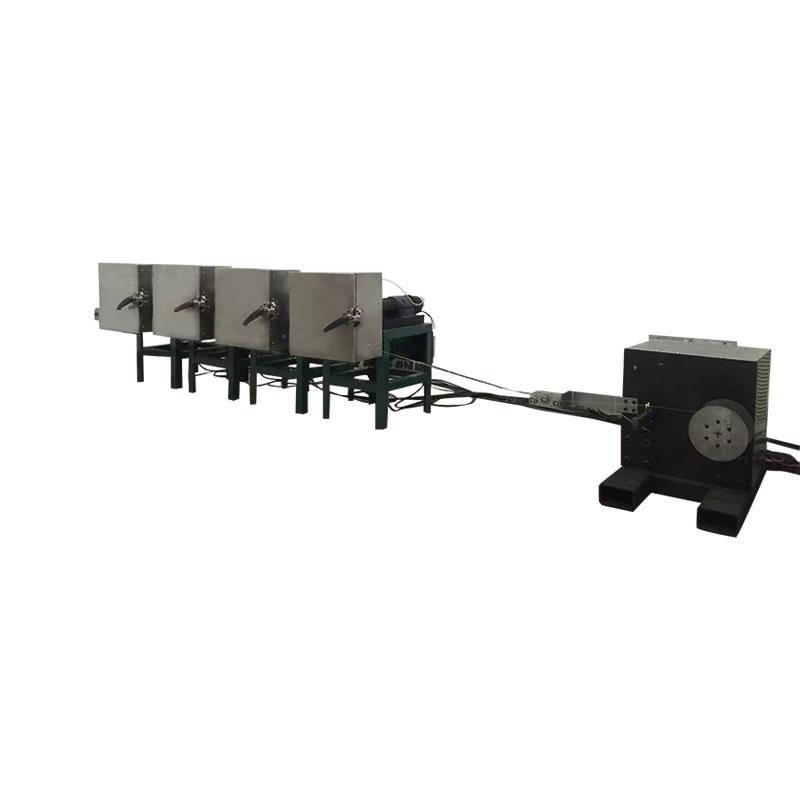
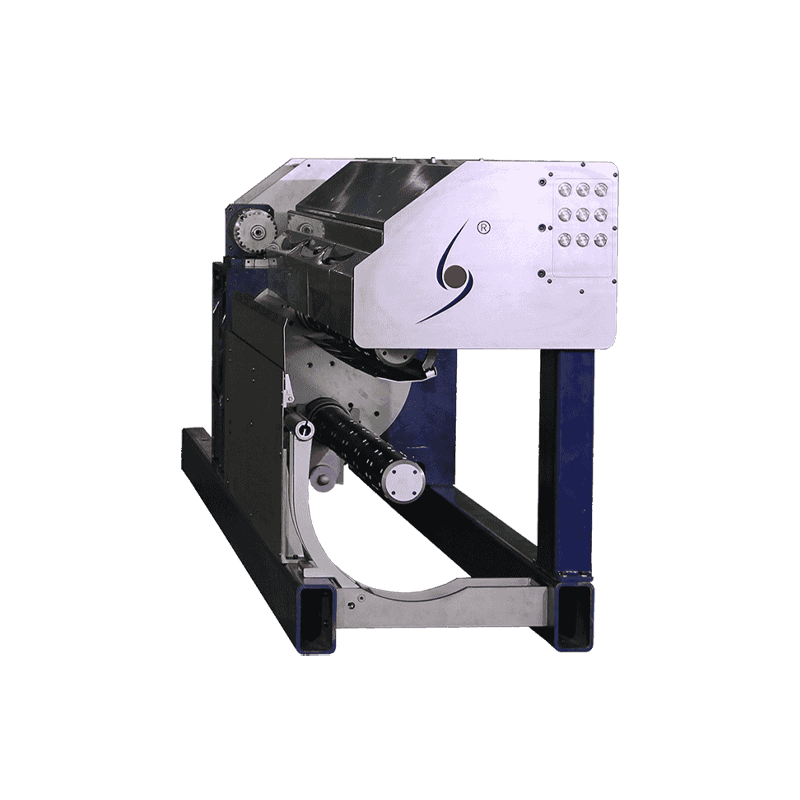
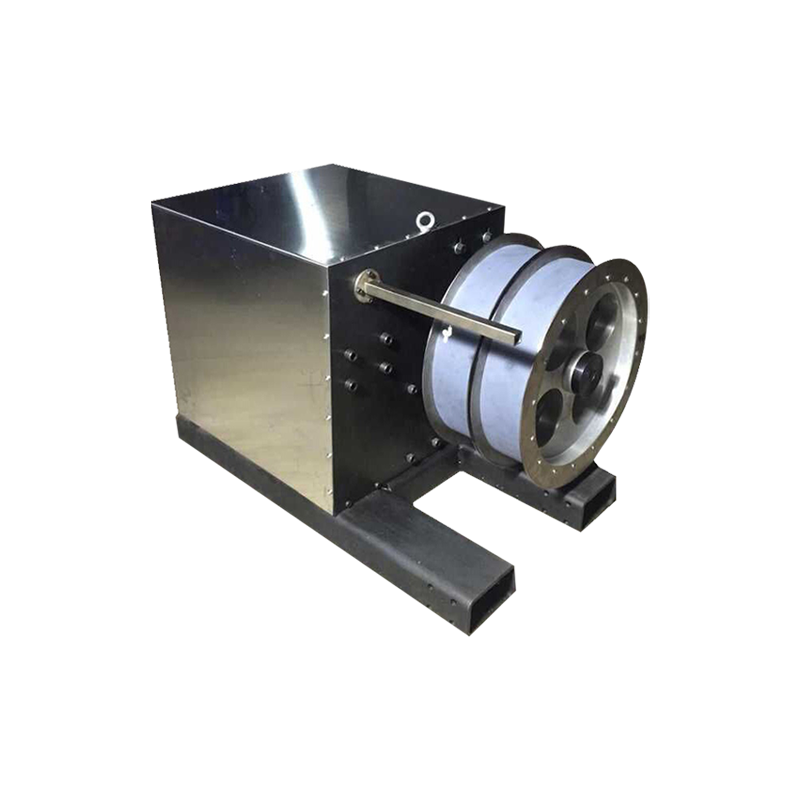
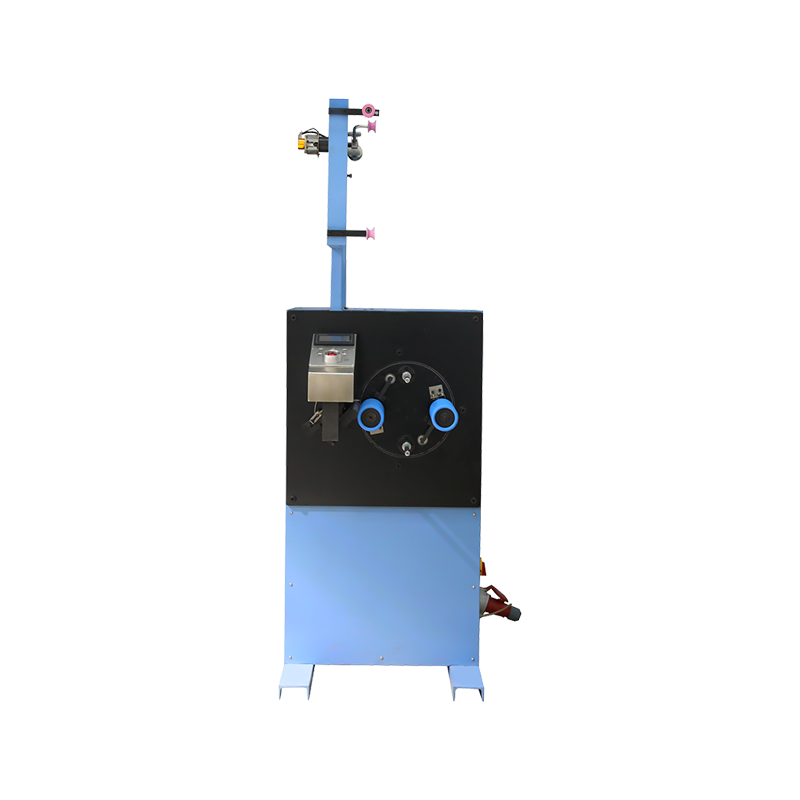
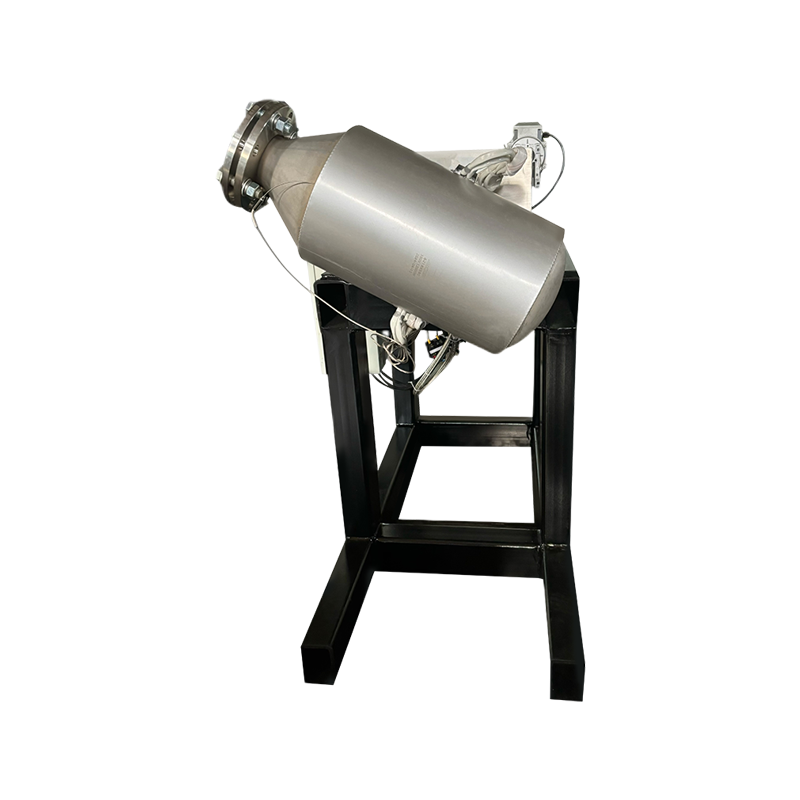
Shengbang's Dryer for Spinning Machine is built specifically for the drying requirements of spinning-integrated applications — not adapted from a general recycling line dryer. Available in 6L, 12L, and 45L hopper capacities, it is designed to match the batch volumes of pilot lines, laboratory-scale spinning trials, and short-run specialty fiber production where rPET flakes are the feedstock.
The dryer operates at drying temperatures up to 250°C suited to achieve sub-30 ppm outlet moisture on rPET flake inputs. It is validated through Shengbang's in-house spinning laboratory, where drying performance is verified under actual rPET spinning conditions rather than estimated from general-purpose specifications.
For mills integrating rPET flakes into an existing spinning line, or for research institutions and pilot plants developing rPET fiber processes, Shengbang's technical team can advise on the full drying sequence — from centrifugal pre-drying through desiccant finishing — matched to your feedstock moisture profile, target fiber type, and extruder throughput. Contact Jiaxing Shengbang Mechanical Equipment Co., Ltd. directly to discuss your specific rPET spinning drying requirements.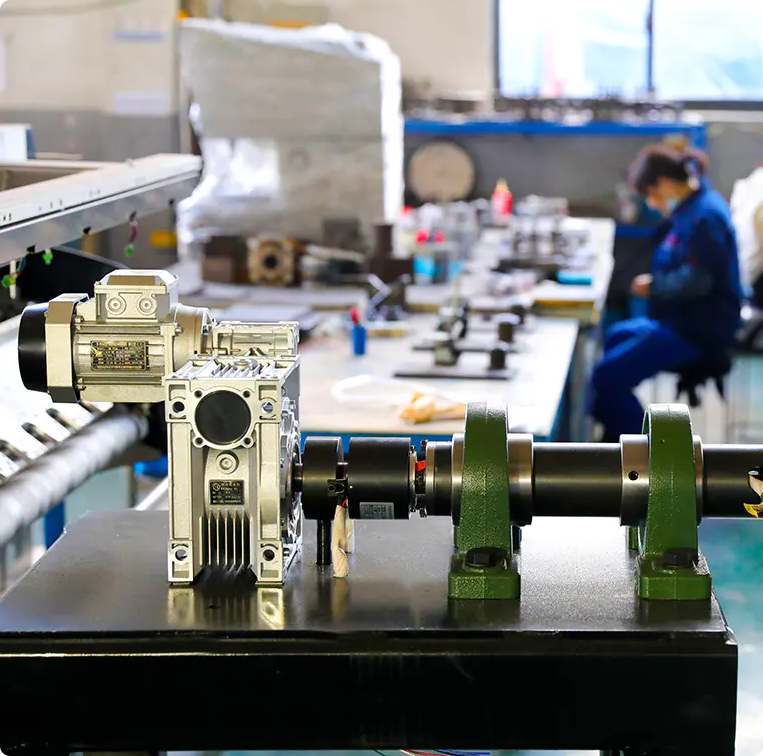

ADDRESS: No.1298, Zhouan Road, Economic and Technological Development District, Jiaxing City, Zhejiang Province
PHONE: +86 19057031687
TEL: 86-0573-83777752
EMAIL: [email protected]