English
 عربى
عربى русский
 简体中文
简体中文







2026-09-30
Home / News / Industry News / PET Flake Drying: Crucial Standards and Technologies for Recycling Lines

A PET flakes dryer is essential equipment in PET recycling lines — it removes residual moisture from washed PET flakes, which is the critical threshold required before extrusion or pelletizing. Without effective drying, hydrolytic degradation during melt processing reduces intrinsic viscosity (IV), weakens the final product, and causes foaming or strand breakage. The right dryer selection and operating parameters directly determine output quality and energy costs.
PET (polyethylene terephthalate) is hygroscopic — it readily absorbs atmospheric moisture. After washing and mechanical dewatering, typical PET flakes carry 3–8% residual moisture by weight. At melt-processing temperatures of 260–280°C, water molecules react with ester bonds in the polymer chain through hydrolysis, dramatically reducing the molecular weight and intrinsic viscosity (IV).
The consequence is measurable: a drop in IV from 0.75 dl/g to 0.60 dl/g can reduce tensile strength by 20–30%, making the recycled PET unsuitable for fiber, sheet, or bottle-grade applications.
Several dryer technologies are used in PET recycling, each suited to different throughput requirements, energy budgets, and end-product specs.
The most common dryer in PET recycling lines. Wet flakes are fed into a rotating drum where heated air (typically 100–160°C) flows counter-current or co-current through the material. Residence time ranges from 20 to 60 minutes depending on initial moisture. A standard drum dryer for a 1,000 kg/h line consumes approximately 80–120 kWh of thermal energy per ton. The rotating action ensures even heat distribution and prevents clumping.
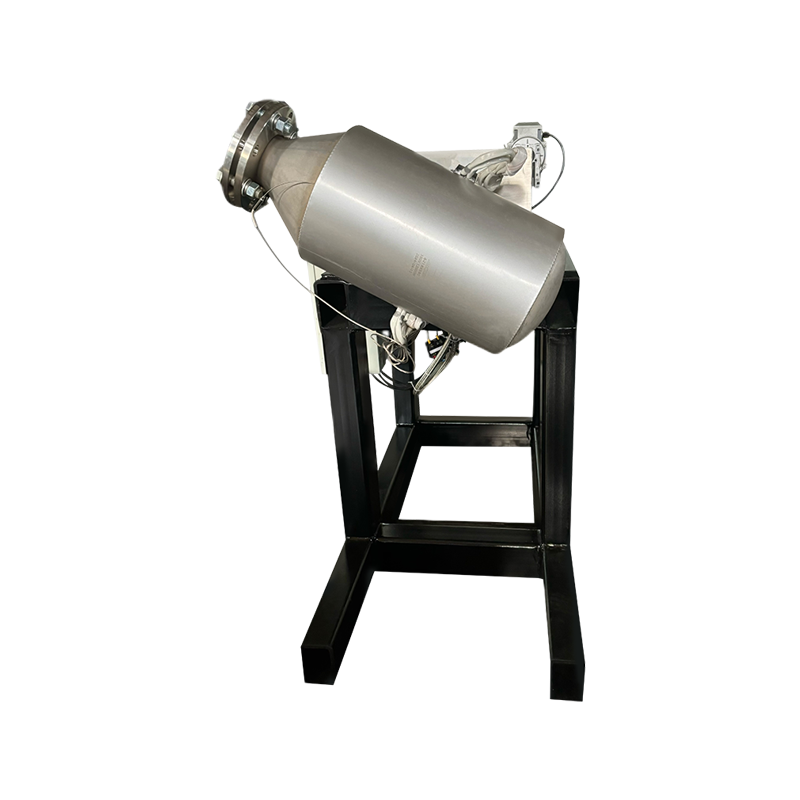
Used primarily as a final-stage dryer before the extruder. Dry air with a dew point of −20°C to −40°C is circulated through a hopper containing PET flakes. The desiccant (typically molecular sieves) continuously removes moisture from the air circuit. This system achieves residual moisture below 100 ppm reliably and is standard for food-contact and bottle-grade rPET lines. Typical drying temperature: 160–180°C; drying time: 4–6 hours.
Positioned immediately after washing, the centrifugal dryer uses high-speed spinning (normally 800–1,500 RPM) to mechanically remove surface water before thermal drying. It reduces moisture from 8% down to approximately 1–3%, drastically cutting the energy load on downstream thermal dryers. A well-designed centrifugal dryer recovers its cost within months by reducing gas or electric consumption of the main dryer.
IR dryers use radiant heat to rapidly evaporate surface moisture without requiring air circulation. They are energy-efficient for thin-flake material and heat up quickly (no warm-up lag), making them useful for batch or variable-volume operations. However, they are less effective for deeply absorbed moisture, so they are typically used in combination with a desiccant or hot air stage.
| Dryer Type | Inlet Moisture | Outlet Moisture | Approximately Energy Use (per ton) | Best Application |
|---|---|---|---|---|
| Centrifugal Dryer | 5–10% | 1–3% | 5–10 kWh | Pre-drying after wash |
| Hot Air Drum Dryer | 1–5% | 0.1–0.5% | 80–120 kWh | General recycling lines |
| Infrared Dryer | 1–4% | 0.2–0.8% | 50–90 kWh | Surface moisture removal |
| Desiccant Hopper Dryer | 0.2–1% | <50–200 ppm | 120–180 kWh | Bottle-grade / food-contact rPET |
Achieving optimal drying results requires precise control of several interdependent variables. Operators who understand these parameters can fine-tune performance without compromising polymer integrity.
PET flakes can tolerate drying temperatures up to 180°C without significant degradation, provided drying time is controlled. Temperatures above 200°C risk surface oxidation and yellowing. For hot air drum dryers, 130–160°C is the standard range. For desiccant hopper dryers, 160–180°C with low dew-point air is typical. Lower temperatures require longer residence time but reduce energy intensity.
Insufficient residence time is a leading cause of under-drying. For a drum dryer at 150°C processing flakes with 3% inlet moisture, a minimum residence time of 30–45 minutes is required to reach the outlet moisture standard. Overloading the dryer reduces effective residence time — many operators underestimate the impact of throughput surges during line startups.
Air flow carries evaporated moisture out of the dryer. Insufficient airflow leads to moisture re-absorption by the flakes. In desiccant systems, the dew point of the process air is critical for bottle-grade applications. Standard ambient air is inadequate for achieving sub-200 ppm moisture levels regardless of temperature.
Smaller flakes dry faster due to higher surface-area-to-volume ratio. PET flakes from bottle recycling are typically 6–12 mm; fines below 2 mm dry nearly instantly but can also cause airflow blockage in hoppers. Flake size uniformity matters — mixed-size batches lead to uneven drying, with larger pieces retaining moisture while smaller ones are fully dry.
A complete PET bottle-to-flake or bottle-to-pellet recycling line integrates multiple drying stages. Understanding the full sequence helps operators identify where bottlenecks or quality failures originate.
Drying is often the largest single energy consumer in a PET recycling line, representing 35–50% of total thermal energy. Optimization strategies can yield significant operating cost reductions without sacrificing output quality.
Operational problems in PET flake dryers usually stem from a few recurring causes. Early diagnosis prevents downstream quality failures and unplanned downtime.
Caused by non-uniform airflow distribution, blocked air channels, or overloading. In drum dryers, worn or bent flights (internal lifters) reduce tumbling efficiency. Solution: inspect and replace flights regularly; verify air distribution with temperature probes across the drum cross-section.
At temperatures above 160°C with high moisture content, PET flakes can soften and stick together, especially fines. This blocks airflow and reduces effective drying area. Solution: ensure centrifugal pre-drying reduces moisture below 3% before thermal drying; avoid temperatures above 170°C in drum dryers.
Molecular sieve desiccants have a finite adsorption capacity. If the regeneration cycle is too short or temperatures during regeneration are insufficient (should reach 280–300°C), making the dryer ineffective. Solution: monitor dew point at the process air inlet continuously; regenerate desiccant on a fixed schedule or dew-point trigger rather than time alone.
Fluctuating outlet moisture is often caused by inconsistent feed rate or variable inlet moisture from the wash line. Installing a surge hopper before the dryer buffers feed variability and allows the dryer to operate at a stable, optimized throughput.

ADDRESS: No.1298, Zhouan Road, Economic and Technological Development District, Jiaxing City, Zhejiang Province
PHONE: +86 19057031687
TEL: 86-0573-83777752
EMAIL: [email protected]