Introduction: New Fiber Demands in the Age of Sport and Wellness
Driven by the global athleisure trend, growing demand for medical and healthcare textiles, and increasingly sophisticated consumer expectations around wearable comfort, moisture management fibers have evolved from a niche technology for sportswear into a mainstream functional requirement spanning activewear, outdoor apparel, medical textiles, and everyday casual wear.
Market data confirms this trajectory:
- The global moisture wicking fabrics market was valued at approximately USD 4.16 billion in 2024, projected to grow at 4.1% CAGR to reach USD 5.09 billion by 2032.
- A broader moisture management fabrics market estimate places the 2025 value at USD 6.33 billion, with an expected 12.45% CAGR from 2026–2033.
- Key growth drivers include the athleisure and hybrid clothing megatrend, the rise of smart textiles and wearable technology, and the transition to eco-friendly durable water-repellent (DWR) finishing technologies.
Core Mechanism: How Moisture Management Works
The fundamental goal of moisture management is to rapidly transport perspiration (liquid sweat or water vapor) from the skin surface to the outer fabric layer, where it evaporates, maintaining a dry, comfortable microclimate. This relies on two cooperating physical mechanisms:
Capillary Action
Liquid sweat transport along fiber surfaces or inter-fiber micro-channels is governed by capillary pressure. Two key strategies emerge:
- Reduce contact angle (increase hydrophilicity): enables spontaneous wetting and spreading
- Optimize channel geometry: profiled fiber cross-sections create efficient capillary micro-networks
Moisture Vapor Transmission
Gaseous perspiration (water vapor) must permeate through the fabric to the external environment. This is quantified by the Moisture Vapor Transmission Rate (MVTR, g/m²·24h), a function of fiber hydrophilicity, yarn openness, and fabric weight.
The ideal moisture management system = rapid wicking at the skin-facing layer + rapid evaporation at the outer layer, typically achieved through bilayer or gradient structural design.
Technology Pathways
1. Cross-Section Engineering (Profiled Fiber)
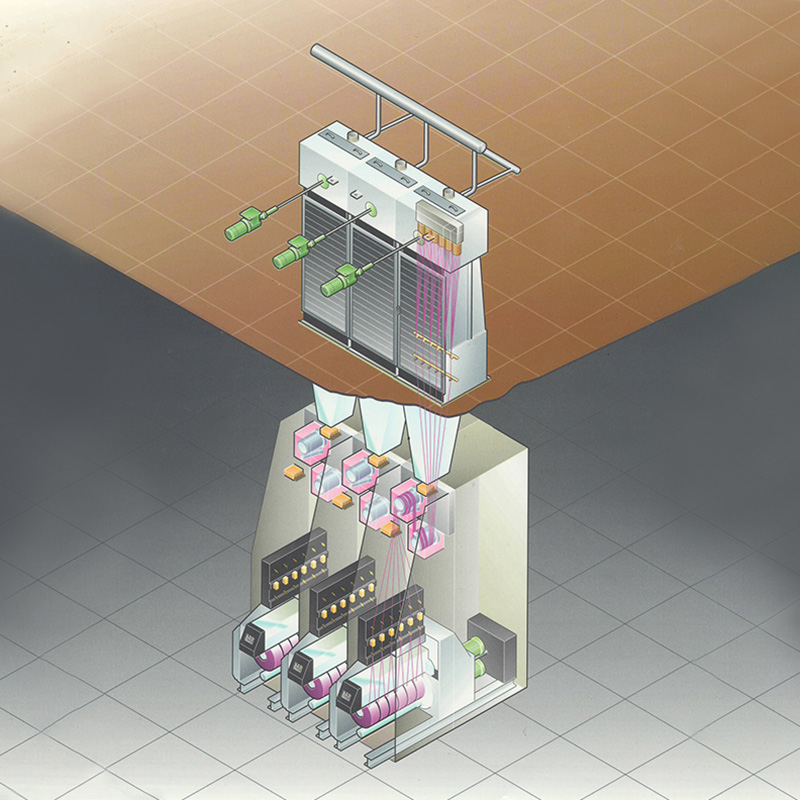
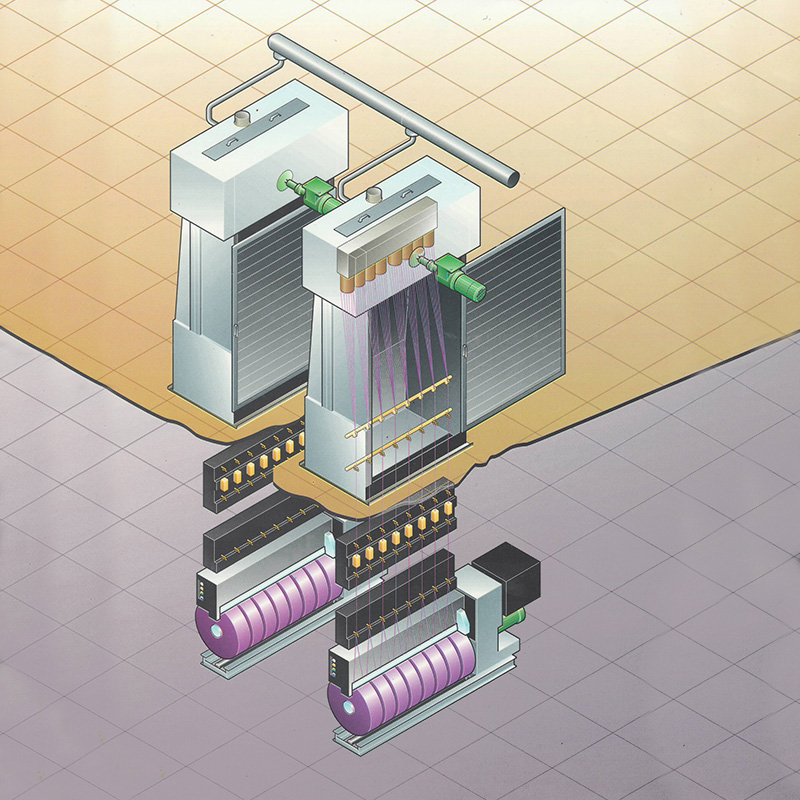
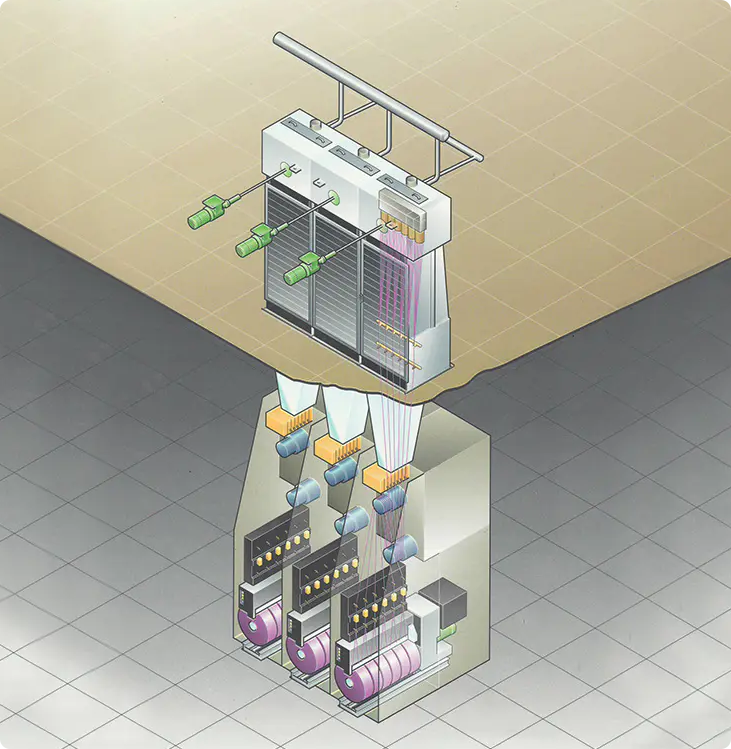
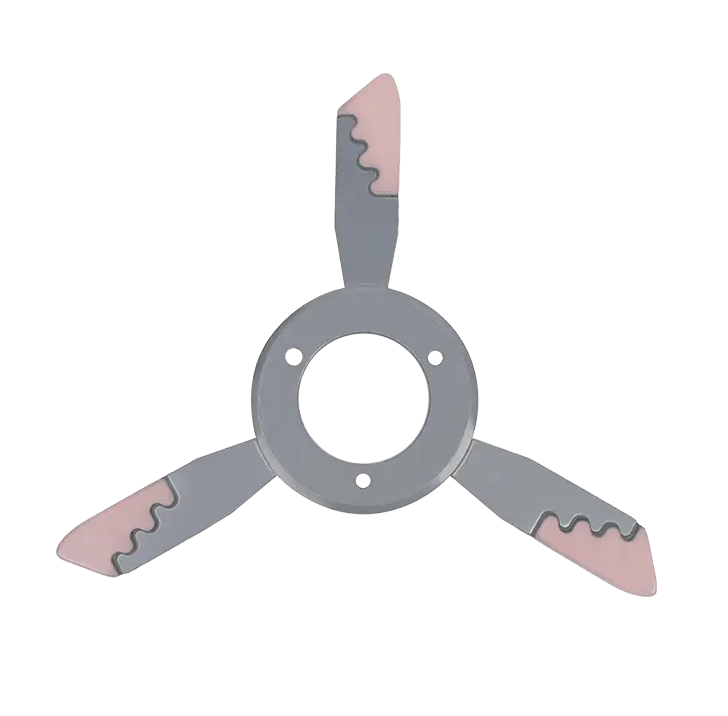
Specialized spinneret orifice geometries produce fibers with micro-groove surfaces that exploit capillary action for rapid sweat transport — a purely physical, permanent modification.
Overview of profiled fiber cross-section types, representative products, wicking principles, and primary applications
| Cross-Section |
Representative Product |
Wicking Principle |
Primary Application |
| Y-shape / Trilobal |
Multiple Chinese suppliers |
Triangular capillary channels, lightweight |
Sportswear, outdoor |
| Hollow profiled |
Multi-function composite fibers |
Hollow insulation + profiled wicking |
Multi-functional outdoor apparel |
- Advantage: Structural permanence — function is unaffected by washing cycles
- Limitation: High precision required in spinneret manufacturing and process control
2. Hydrophilic Finishing
Applying hydrophilic finishing agents to inherently hydrophobic synthetic fibers (PET, PP, PA) to reduce contact angle and impart wicking capability:
- Hydrophilic polyester/silicone finishes: applied by padding or exhaust, low cost but limited wash durability (typically 5–20 wash cycles)
- Atmospheric plasma treatment: introduces polar functional groups (—OH, —COOH) without wet chemistry; environmentally friendly but requires specialized equipment
- Graft copolymerization: chemical grafting of hydrophilic monomers (acrylic acid, HEMA) onto fiber backbone; superior wash durability vs. physical finishing
3. Hydrophilic Copolymerization
Introducing hydrophilic comonomers or blocks at the polymerization stage to fundamentally alter fiber chemistry:
- Modified PET: incorporation of PEG segments or sulfonate groups during polymerization
- Modified PA: products such as NILIT® Aqua (modified nylon 6.6) with inherent hydrophilicity
- Natural/synthetic blends: cotton/PET or cotton/PP blends leveraging cotton's natural hydrophilicity balanced with synthetic quick-dry performance
4. Bilayer and Gradient Structure Design
Fabric engineering to create an inner hydrophilic layer (skin-facing) + outer hydrophobic layer (environment-facing) moisture gradient system, leveraging humidity differential to pump sweat unidirectionally from skin to exterior:
- Inner layer: moisture-absorbing hydrophilic fibers (cotton, hydrophilic modified PET)
- Outer layer: quick-drying hydrophobic fibers (standard PET, PP)
- Commercial applications: Nike Dri-FIT®, Adidas Climalite®/Aeroready®
5. Emerging Technologies
- Stimuli-responsive fibers: temperature/humidity-triggered micropore opening to automatically increase moisture permeability during heavy sweating
- Phase change microcapsule finishing: PCM-embedded microencapsulated materials regulate microclimate temperature through latent heat exchange, complementing moisture wicking for dual thermal-moisture management
- 3D seamless knitting: precise placement of different functional yarns in specific body zones via computerized flat-bed or circular knitting systems
Performance Evaluation Standards
Key international and regional standards for evaluating moisture management performance in textiles
| Standard |
Test Content |
Scope |
| AATCC 195 |
Liquid moisture management (OMMC composite index) |
International; sportswear |
| GB/T 21655.1 |
Moisture absorption and quick-drying (individual indices) |
China; casual/functional garments |
| GB/T 21655.2 |
Moisture absorption and quick-drying (comprehensive method) |
China; performance sportswear |
| ISO 11092 |
Thermophysiological comfort (sweating hot plate) |
Professional sport/protective |
| JIS L 1907 |
Fiber water absorption rate |
Japan standard |
Competitive Landscape and China Market Dynamics
Key market participants span three levels:
- Fiber level: Invista (Coolmax®), Toray (Fieldsensor®), NILIT, Nan Ya Plastics, Formosa Taffeta, Asahi Kasei
- Fabric finishing level: Polartec, Everest Textile, Ahlstrom (nonwoven moisture management)
- End-brand level: Under Armour, Nike, Adidas, DEZTE® Yuan Zhu Slub yarn (made by Jiaxing Shengbang Mechanical Equipment Co., Ltd), and major sportswear labels
China-specific dynamics and opportunities:
- Supply chain strength: China dominates global profiled-cross-section PET fiber production with significant cost advantages; premium hydrophilic-modified polyamide fibers remain largely imported.
- Domestic brand upgrade: Li-Ning, ANTA, and Xtep's accelerating investment in performance fabrics is driving rapid technology upgrade cycles in domestic moisture management fiber supply chains.
- Medical textiles expansion: Surgical drapes, incontinence products, and sports rehabilitation textiles represent fast-growing segments with higher unit values and technical barriers than mass sportswear.
- Sustainability pressure: Growing brand demand for recycled PET (rPET) profiled fibers, driven by ESG compliance requirements, is forcing supply chain-wide upgrades.
Emerging R&D Directions
- Laser microperforation and precision microfabrication: Laser processing to create precise micropore arrays in fibers and fabrics, transcending the limitations of conventional spinneret design.
- Bio-based hydrophilic functional fibers: PLA, PTT, and other bio-derived fibers as substrates for moisture management development, combining sustainability and functionality.
- PFAS-free eco-DWR systems: Regulatory and consumer pressure is accelerating the phase-out of PFAS-based durable water repellent finishes; the synergistic development of fluorine-free DWR with moisture management finishing is a key R&D priority.
- Smart wearable integration: Combining conductive/sensing functions with moisture management architecture for sportswear that simultaneously monitors performance data and maintains dry comfort.
- 3D knit zone-specific engineering: Precision placement of moisture-wicking yarns in high-perspiration zones (axillae, upper back) and non-wicking yarns elsewhere using computerized knitting technology.
Practical Takeaways for Industry Practitioners
- Fiber selection: For performance sportswear, profiled-cross-section PET fibers offer the best cost-performance ratio; for intimate apparel and premium brands, hydrophilic-modified PA provides superior hand feel and wash durability.
- Wash durability validation: Functional finishing products must provide performance retention data after a minimum of 50 standard wash cycles — a baseline requirement for brand customers.
- Standards compliance: Export to European/American markets requires AATCC 195 testing; for China domestic market, verify GB/T 21655 series applicability.
- Sustainability positioning: rPET profiled fibers now match virgin PET in performance with minimal cost premium — they are the preferred choice for ESG-driven brand procurement.
- Medical textile opportunity: Surgical gowns, patient garments, and sports rehabilitation supports represent high-margin, high-barrier segments where moisture management performance commands premium pricing.
Conclusion
Moisture management fibers have evolved well beyond "sweat wicking" into a multi-dimensional technology system encompassing comfort, sustainability, and intelligence. Against the backdrop of the global athleisure megatrend and rising consumer functional expectations, technological iteration and market expansion in this space will continue apace. Textile fiber professionals should seize three key opportunity windows: upgrading profiled fiber spinning technology, transitioning to fluorine-free finishing systems, and expanding into medical functional textiles — to secure a higher-value position in the global supply chain.

 English
 عربى
عربى русский
 简体中文
简体中文