English
 عربى
عربى русский
 简体中文
简体中文







2026-09-30
Home / News / Technical Knowledge / UHMWPE Fiber: Gel Spinning Technology, Performance Advantages & Industrial Applications

The Overlooked Champion of High-Performance Fibers
While aramid and carbon fibers dominate the headlines in high-performance textiles, ultra-high molecular weight polyethylene (UHMWPE) fiber has been quietly reshaping multiple application markets by offering the highest specific strength of any commercially available fiber, near-zero moisture absorption, and outstanding chemical resistance — often at lower cost than aramids.
According to Grand View Research, the global UHMWPE fiber market was valued at USD 1.69 billion in 2024 and is projected to grow at a CAGR of 10.6% from 2025 to 2030, potentially exceeding USD 3 billion by 2030.[1] Protective armor applications accounted for the largest market share (~26%) in 2024 and are expected to grow at 11.2% CAGR through the forecast period.[2] Global demand is estimated at 70,000–80,000 metric tons in 2025, with a year-on-year growth rate of approximately 12%.[3]
UHMWPE is a linear polyethylene with a molecular weight typically between 1.5 and 6 million g/mol. Its simple —CH₂—CH₂— repeat unit enables a highly regular chain architecture, which — when processed through gel spinning and ultra-drawing — produces a highly oriented, extended-chain crystalline structure responsible for its exceptional mechanical properties.
| Property | UHMWPE Fiber | p-Aramid (Kevlar®) | HT PET | E-Glass |
|---|---|---|---|---|
| Tensile Strength (GPa) | 2.4–3.5 | 2.8–3.6 | 1.0–1.4 | 3.4 |
| Tensile Modulus (GPa) | 100–150 | 70–125 | 10–20 | 72 |
| Chemical Resistance | Excellent | Moderate (hydrolysis) | Good | Good |
| Max. Service Temp. (°C) | ~90–110 | ~150–180 | ~150 | >300 |
Unlike aramids, which derive their stiffness from aromatic backbone rigidity but are susceptible to UV degradation, hydrolysis, and compressive loading, UHMWPE maintains structural integrity across corrosive, humid, and impact-intensive environments due to its hydrophobic nonpolar backbone and outstanding resistance to crack propagation.[4]
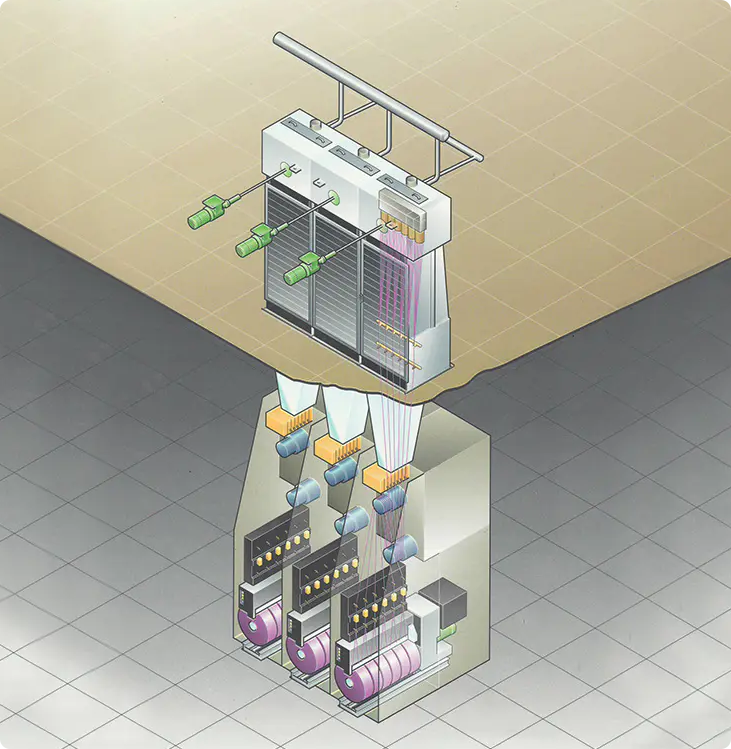
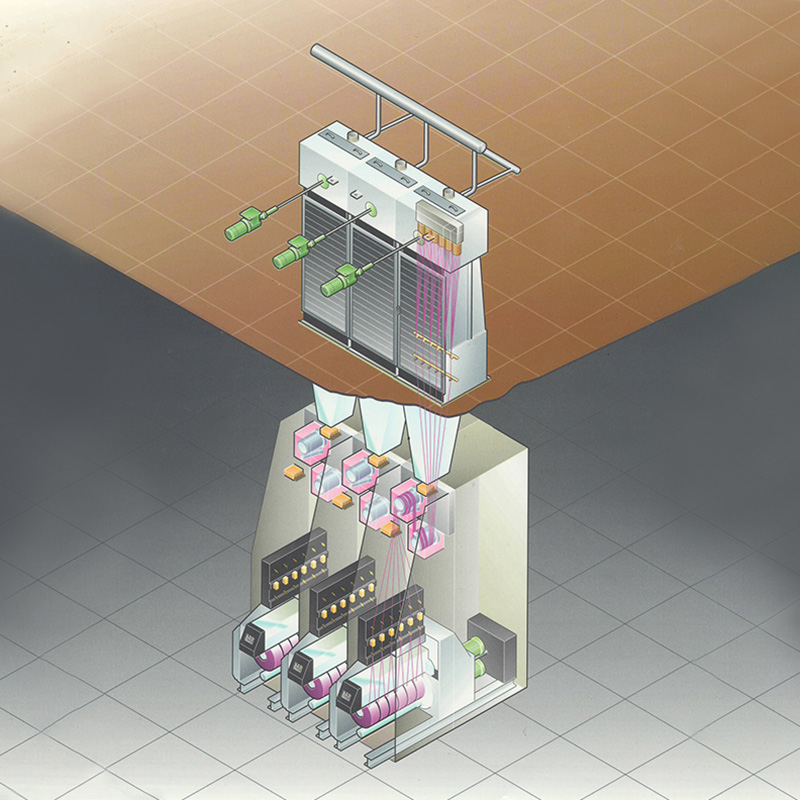
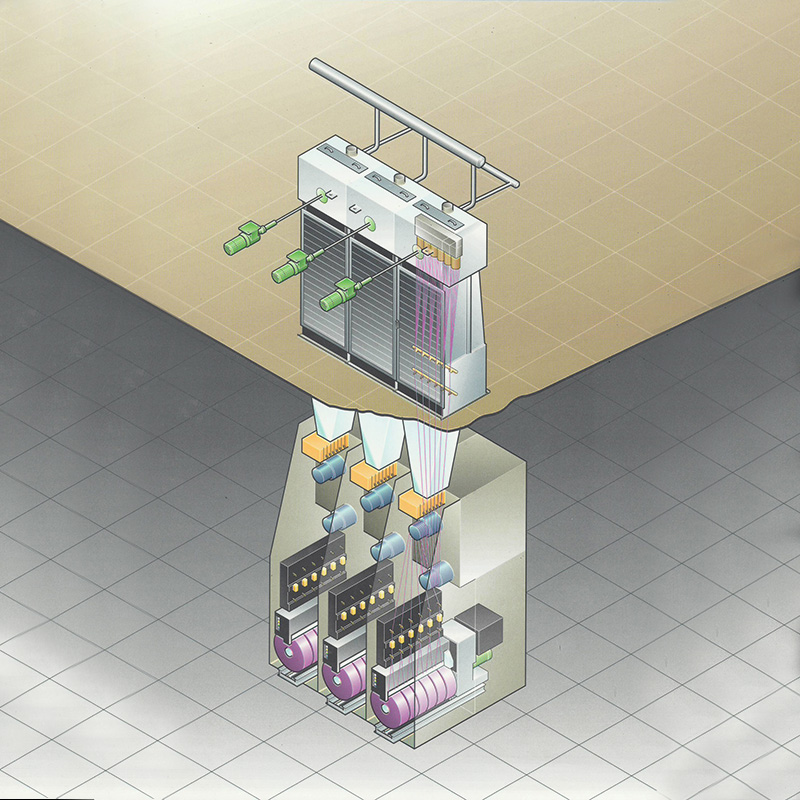
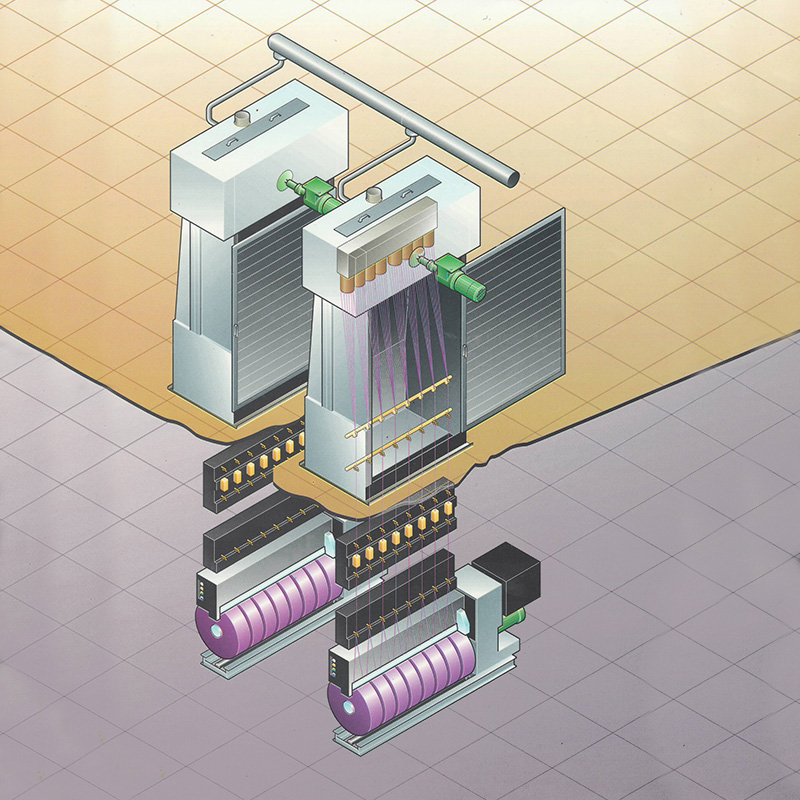
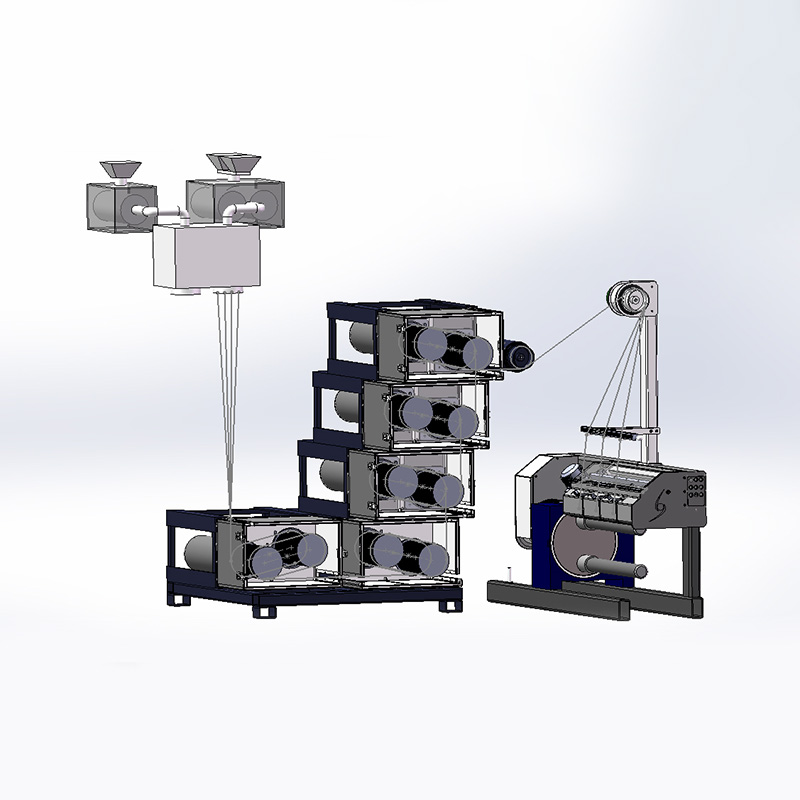
Conventional melt spinning is infeasible for UHMWPE due to its extremely high melt viscosity. The dominant commercial production route is gel spinning (also known as solution-crystal spinning or the Dyneema® process), which involves:
In October 2025, Fibre Extrusion Technology (FET, UK) unveiled the FET-500 Series gel spinning platform, featuring a patent-pending carrier oil recovery and recirculation system.
UHMWPE's unrivaled specific strength and energy absorption capacity make it the material of choice for body armor, ballistic helmets, and vehicle armor panels. Flagship products such as DSM Dyneema® and Honeywell Spectra® are applied in unidirectional (UD) laminate formats compliant with NIJ ballistic standards. Compared to aramid-based armor, UHMWPE systems offer lower areal density and are unaffected by humidity.
UHMWPE ropes are ~85% lighter than equivalent-strength steel wire ropes, with no corrosion and full resistance to seawater. They are the standard solution for deepwater oil platform mooring, ship towing, and aquaculture cage systems.
Orthopedic implants: UHMWPE (bulk form) has served as the bearing surface in hip and knee joint prostheses for decades; radiation cross-linked variants (X-linked UHMWPE) now significantly reduce wear rates in total joint replacement.
Surgical sutures and ligament reconstruction: High-tenacity UHMWPE braided sutures (e.g., FiberWire®) are used in tendon/ligament repair.
Biomedical textiles: The FET-500 platform was specifically positioned for the biomedical market, enabling customized UHMWPE fiber development for medical textile applications.[5]
UHMWPE fiber-reinforced composites are applied in UAV airframes, sports equipment (rowing shells, cycling frames), and marine hull panels. Interfacial adhesion challenges are addressed through atmospheric plasma treatment, UV grafting, or nano-coating approaches.
High cut-resistance gloves (EN 388 / ANSI A6–A9), safety shoe stab-resistant insoles, and high-strength industrial netting represent significant mass-market applications.
| Company | Brand | Country | Competitive Edge |
|---|---|---|---|
| DSM (now Avient) | Dyneema® | Netherlands | Global market leader, premium brand |
| Honeywell | Spectra® | USA | Strong military/defense heritage |
| Sinopec Yizheng | — | China | Largest domestic capacity, cost advantage |
| Shanghai Shirui | — | China | Medical/specialty applications |
| Shenghong Group | — | China | Rapidly expanding capacity |
China has become the world's largest UHMWPE fiber producer by volume, but domestic manufacturers continue to lag behind European and American counterparts in ultra-high-end certified products (e.g., medical-grade ISO 13485, NIJ-certified ballistic), representing significant import substitution opportunity.
With its unmatched specific strength, near-zero moisture absorption, and outstanding chemical resistance, UHMWPE fiber is rapidly penetrating high-value segments across defense, marine, medical, and composite applications. As next-generation green gel spinning technologies mature and Chinese production capacity continues to scale, the competitive dynamics of the UHMWPE fiber market are entering a new phase of realignment. Textile fiber professionals should pay close attention to the technical and commercial opportunities presented by this understated high-performance material.
[1] Grand View Research, Global UHMWPE Fiber Market, 2024–2030.
[2] Protective armor segment forecast, ibid.
[3] Global demand estimate 2025, YoY growth ~12%.
[4] UHMWPE hydrophobic backbone and crack propagation resistance.
[5] FET-500 Series platform launch, Fibre Extrusion Technology, October 2025.
[7] DSM bio-based Dyneema® sustainable product line.

ADDRESS: No.1298, Zhouan Road, Economic and Technological Development District, Jiaxing City, Zhejiang Province
PHONE: +86 19057031687
TEL: 86-0573-83777752
EMAIL: [email protected]