English
 عربى
عربى русский
 简体中文
简体中文






2026-10-09
Home / News / Industry News / Take Up Winder Buying Guide: How to Choose the Right System for Specialty Yarn R&D

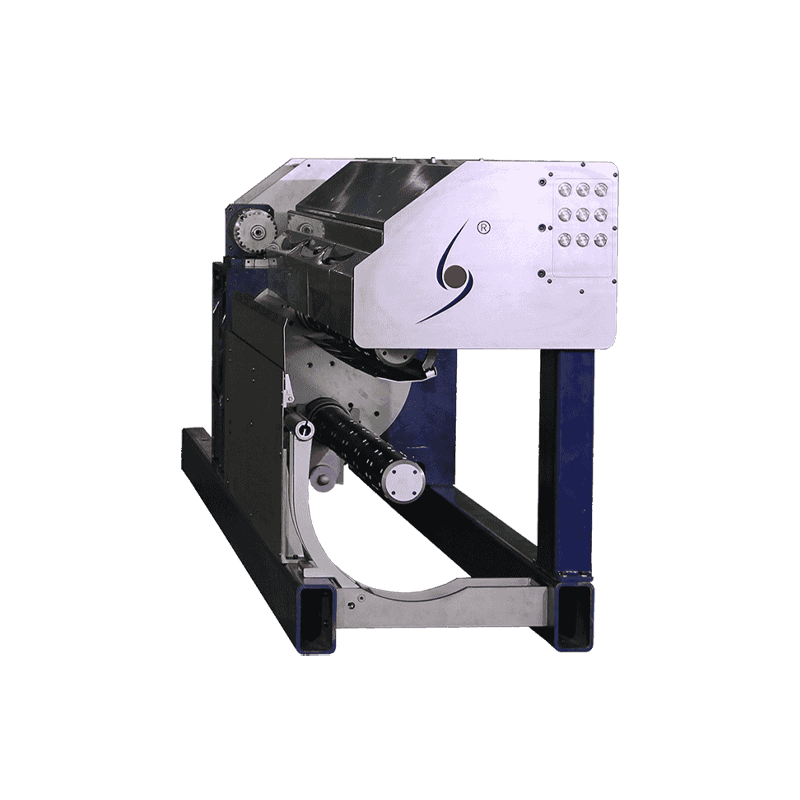
When choosing a take up winder for specialty yarn or fiber research, three specifications decide whether the machine will actually work for you: the achievable winding speed range, the accuracy of any fixed-length cutting function, and whether the drive system can be re-tuned for your specific fiber. A winder built for standard filament production will not automatically work for low-speed or ultra-low-speed research, and getting this wrong wastes far more time and money than the initial equipment cost.
For labs and pilot lines handling fragile or experimental fibers — hollow fiber membranes, medical-grade filaments, bicomponent or multi-component yarns — a custom-engineered take up winder built around your actual process parameters is almost always the better investment, even when a standard machine looks cheaper on paper.
Winding speed is the first specification to check, because it determines whether a machine can physically process your material at all. Industrial POY and FDY lines typically run take up winders at speeds in the thousands of meters per minute. Many specialty and research applications sit at the opposite extreme, and the gap between the two is not a small tuning adjustment — it is a completely different engineering problem.
A concrete example: for the Sichuan Provincial Textile Research Institute, the customer's order specification called for a minimum stable winding speed of 1 meter per 20 hours. At that scale, a standard induction motor and open-loop tension control simply cannot hold the fiber steady — torque ripple that is invisible at high speed becomes a visible stall-and-surge pattern when the takeup shaft is barely turning. Delivering stable motion at this speed required re-engineering both the drive system and the control algorithm specifically for sub-1-RPM operation, rather than adjusting the settings on an existing high-speed winder.
When comparing suppliers, ask them to state the minimum stable speed, not just the maximum. Many manufacturers can quote an impressive top speed, but few can guarantee stability at the bottom end of the range, and it is the bottom end that determines whether your research protocol is even feasible on their machine.
If your application requires every wound segment to be an exact, repeatable length, a plain take up winder is not enough — you need one with an integrated high-precision fixed-length cutting function. This is essential for materials such as semi-permeable membrane fiber bundles used in water purification, where each bundle is later potted into a filtration module, and inconsistent segment length translates directly into assembly rejects or inconsistent flux testing results.
When evaluating suppliers, ask three specific questions:
Timer-based cutting drifts as soon as winding speed varies even slightly, which defeats the purpose in a low-speed research setting. Encoder-based length counting, synchronized directly to the winder's own motion feedback, is the more reliable approach for long, slow winding cycles.
Universities and research institutes rarely run a "standard" process, which is why custom equipment development has become common practice in academic-industry partnerships. A supplier that only offers catalog machines will struggle to support experimental protocols that keep evolving as the research progresses — and re-engineering a stock machine mid-project is usually slower and more expensive than starting with a custom design.
| Factor | Standard Winder | Custom Research Winder |
|---|---|---|
| Speed range | Fixed, high-speed only | Adjustable down to ultra-low speed |
| Cutting function | Rarely included | Encoder-synchronized fixed-length cutting |
| Development process | Buy off the shelf | Protocol review, prototyping, on-site trial |
| Support model | Transactional, warranty-only | Ongoing process optimization support |
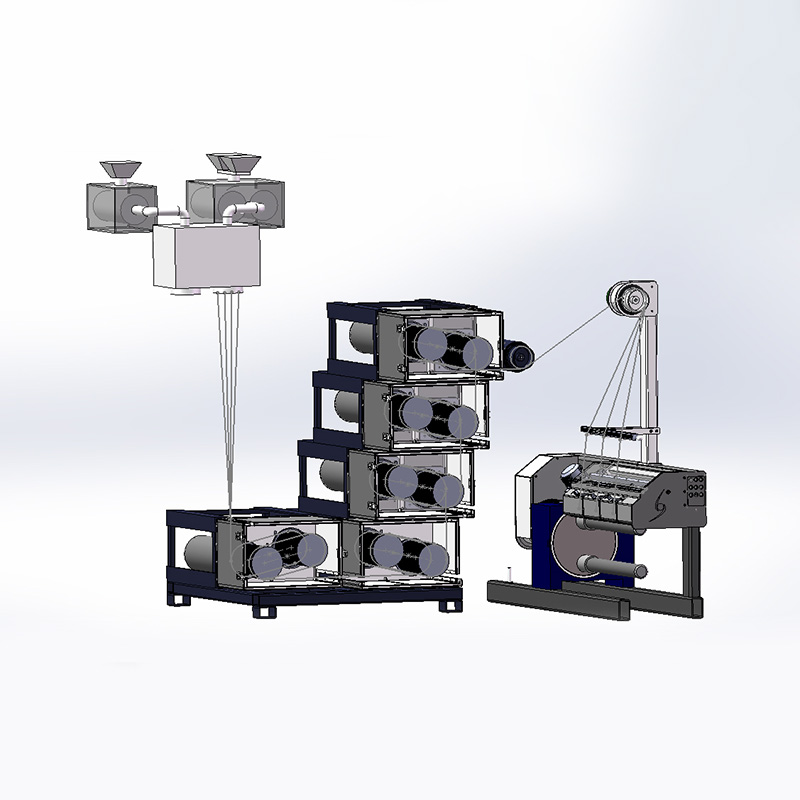
A custom take up winder is only as good as the manufacturing and testing infrastructure behind it. Jiaxing Shengbang Mechanical Equipment Co., Ltd. builds its winders on an in-house production base that includes advanced CNC machine tools for precision parts, a Shenk balancing machine for rotor and shaft balancing, plasma-coating equipment sourced from the AVIC Manufacturing Technology Institute, and hot godet temperature calibration equipment from Barmag. This combination matters directly for winder performance: shaft balancing quality affects vibration at both high and ultra-low speed, and precision machining tolerances affect how consistently the fixed-length cutting mechanism repeats over thousands of cycles.
Shengbang also operates its own yarn spinning lab, where customers can run spinning trials on a self-developed multi-purpose spinning test machine capable of producing single-component, bicomponent, and multi-component yarn, as well as POY, FDY, medium-strength yarn, and filament yarn. In practice, this means a buyer can validate a fiber's behavior on test equipment before committing to a final winder design, which significantly reduces the risk of ordering a machine that turns out to be mismatched to the material.
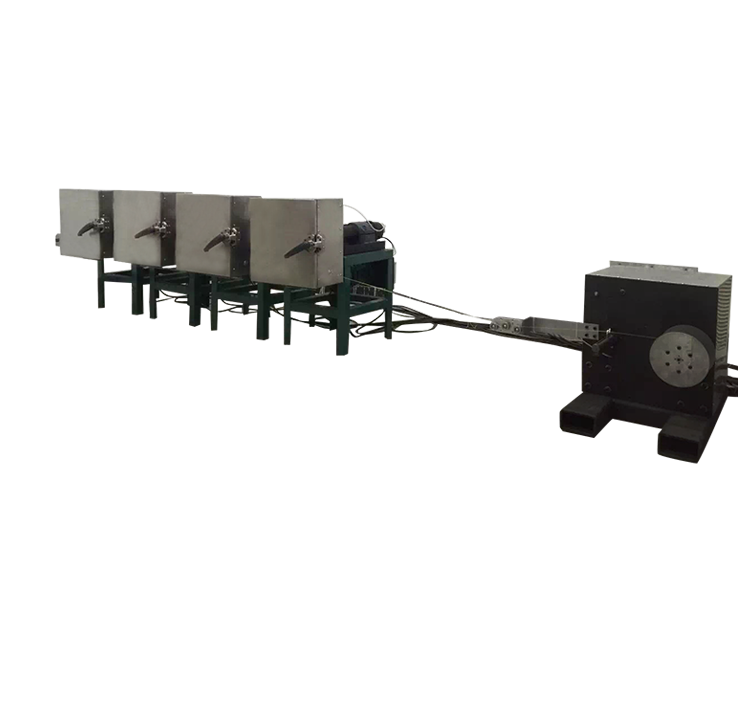
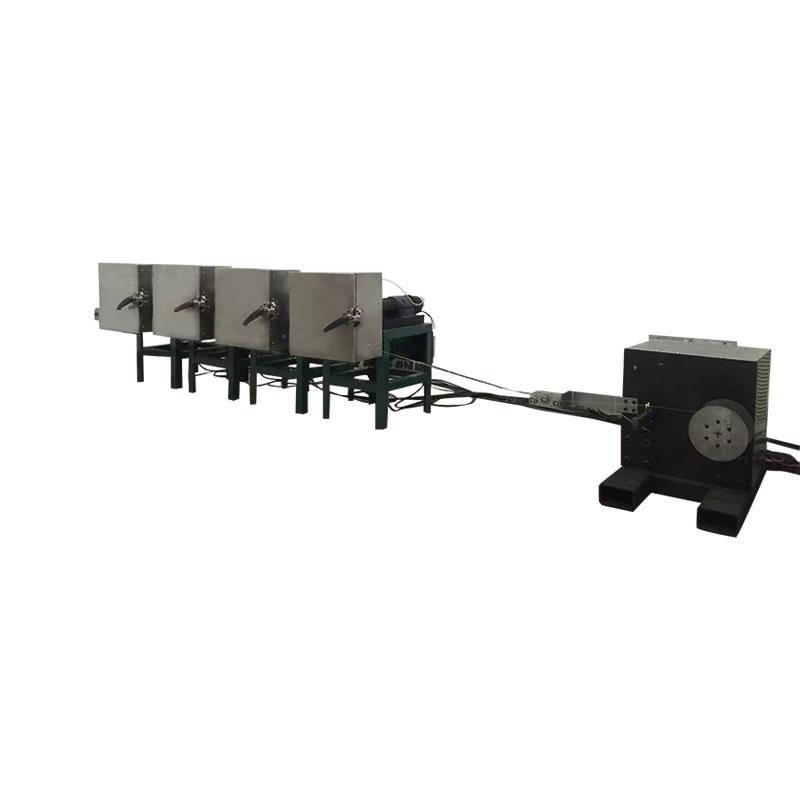
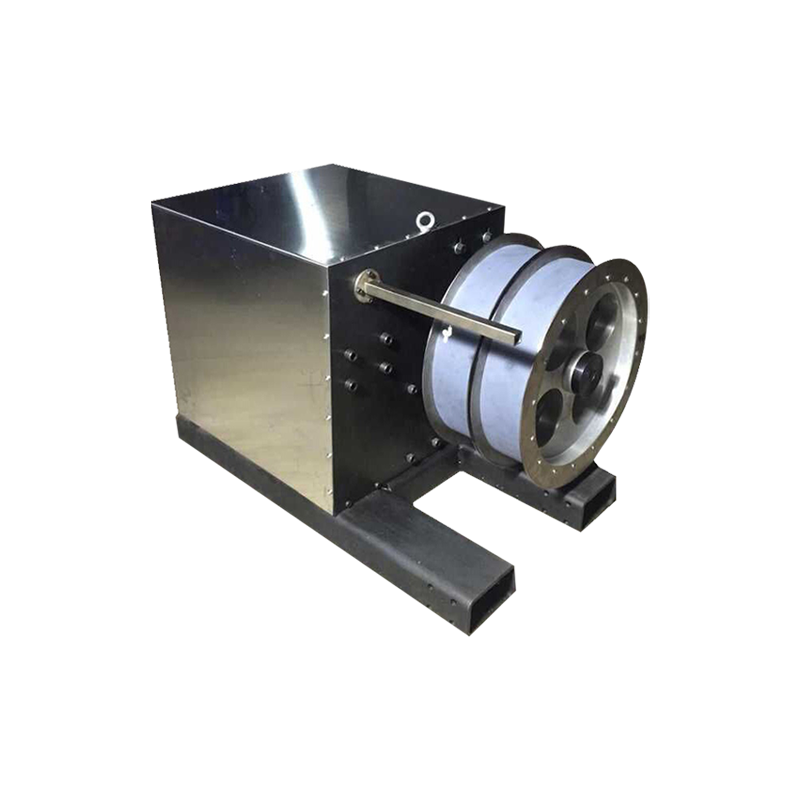
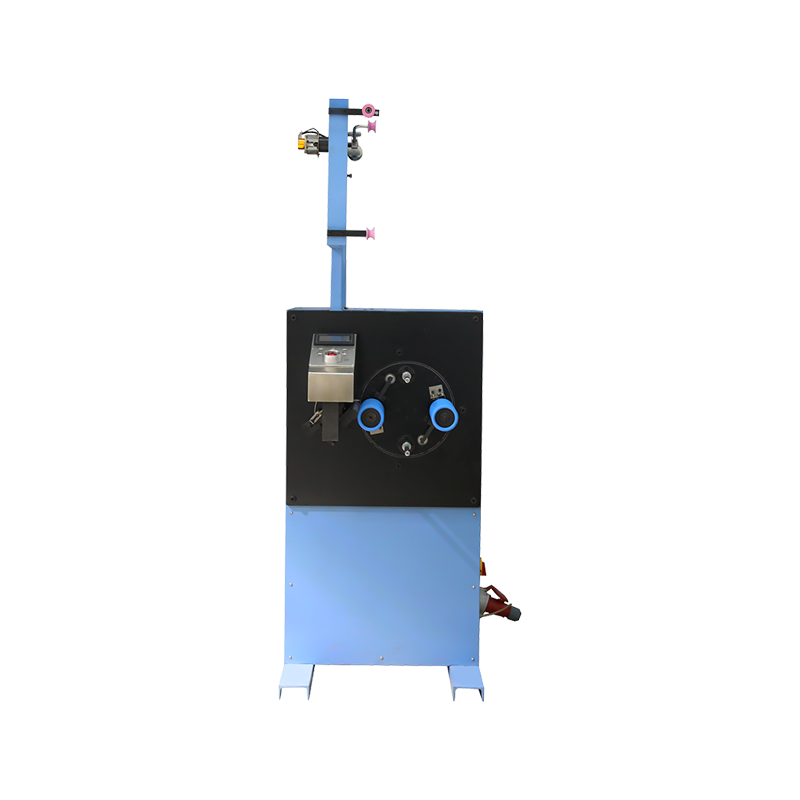
One practical way to judge a supplier is to look at what they have already delivered under similarly demanding conditions. In the Sichuan Provincial Textile Research Institute project, Shengbang's engineering team started from the institute's experimental protocol, then custom-developed a precision winding system to meet its ultra-low-speed operating requirements. The R&D team optimized the drive system and control algorithm specifically to overcome the stability challenges inherent to low and ultra-low-speed winding, rather than adapting an existing product line.
The resulting machine combined a 1 meter/20 hours minimum stable winding speed with an integrated high-precision fixed-length cutting function, purpose-built for semi-permeable membrane fiber bundle research. This kind of project — going from protocol review, to customization, to long-term technical support — reflects the "Industry-University-Research" cooperation model Shengbang has built with multiple academic institutions, and is a useful benchmark when comparing what different take up winder suppliers can realistically deliver for non-standard research needs.

ADDRESS: No.1298, Zhouan Road, Economic and Technological Development District, Jiaxing City, Zhejiang Province
PHONE: +86 19057031687
TEL: 86-0573-83777752
EMAIL: [email protected]