English
 عربى
عربى русский
 简体中文
简体中文






2026-09-30
Home / News / Industry News / Spinning Production Line: Key Components, Types, and Service Essentials

Every spool of filament yarn begins its life on a spinning production line. In the chemical fiber industry, this line is not a single machine but an integrated system that converts polymer raw materials, most commonly PET, PA, and PP, into continuous filament yarn for weaving, knitting, and industrial applications. For plant managers, process engineers, and procurement teams, knowing how a spinning line is designed, where its weak points are, and what support it will need is essential to making sound investment decisions. Drawing from our daily experience in building, upgrading, and repairing spinning equipment, this guide gives a practical overview of spinning production lines and the key considerations for operating them profitably.
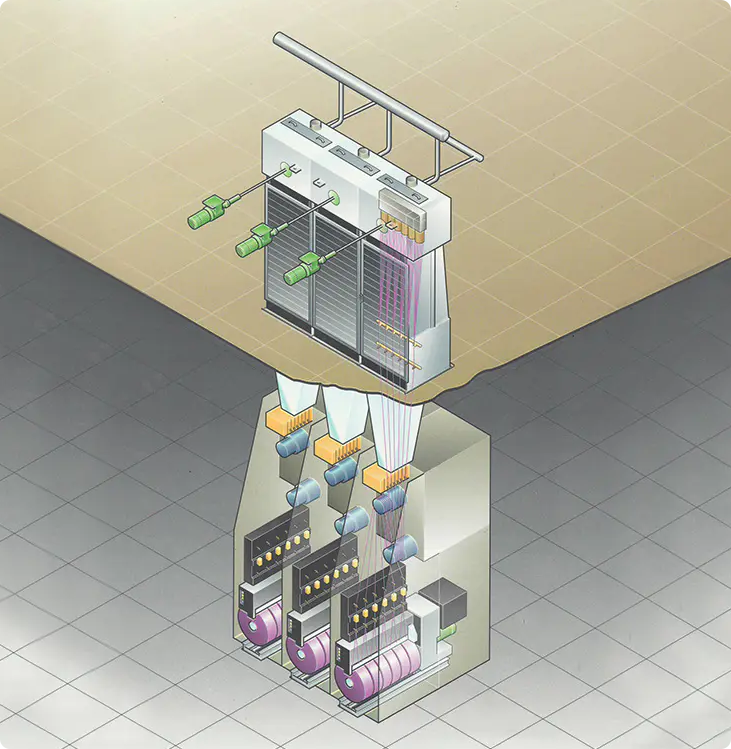
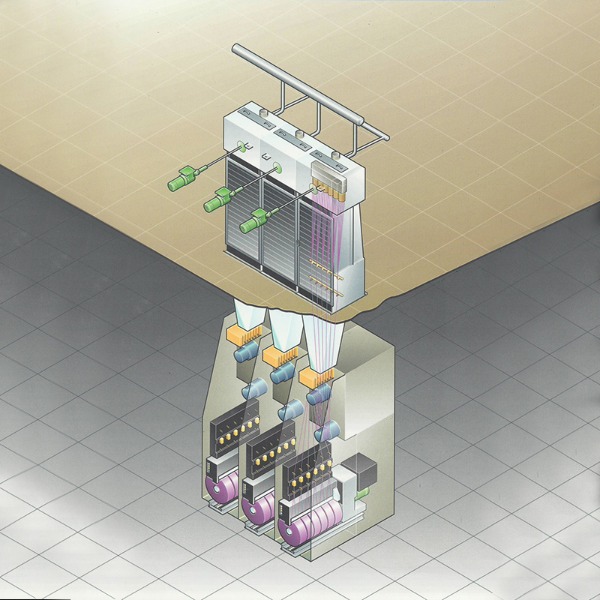
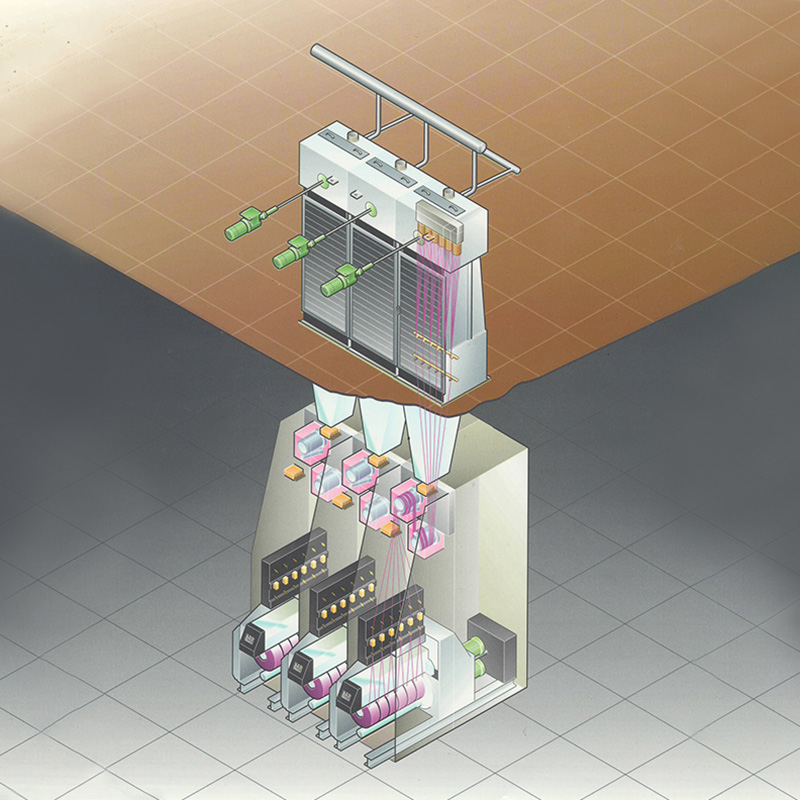
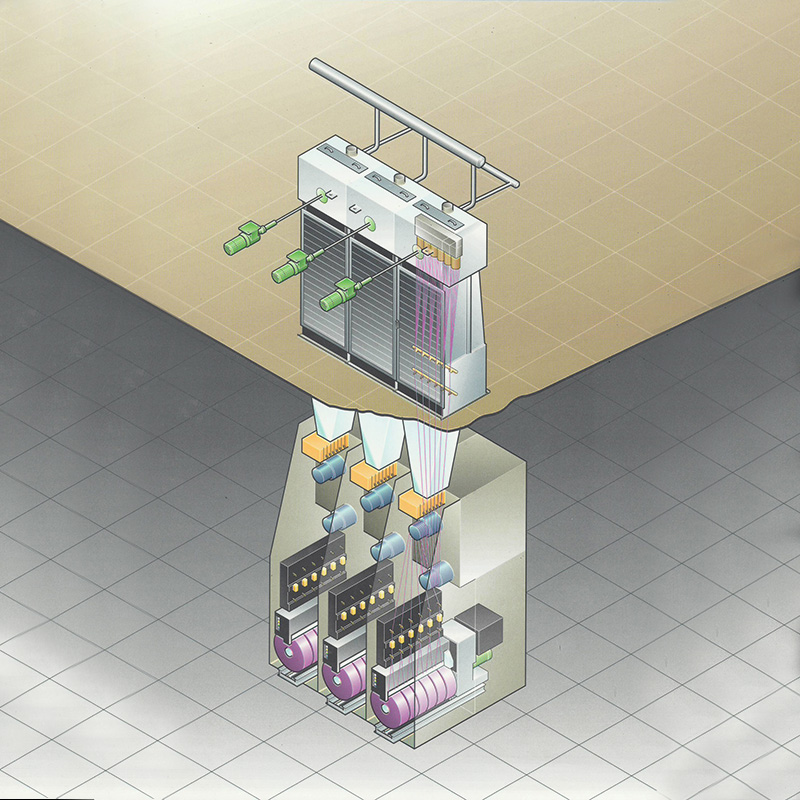
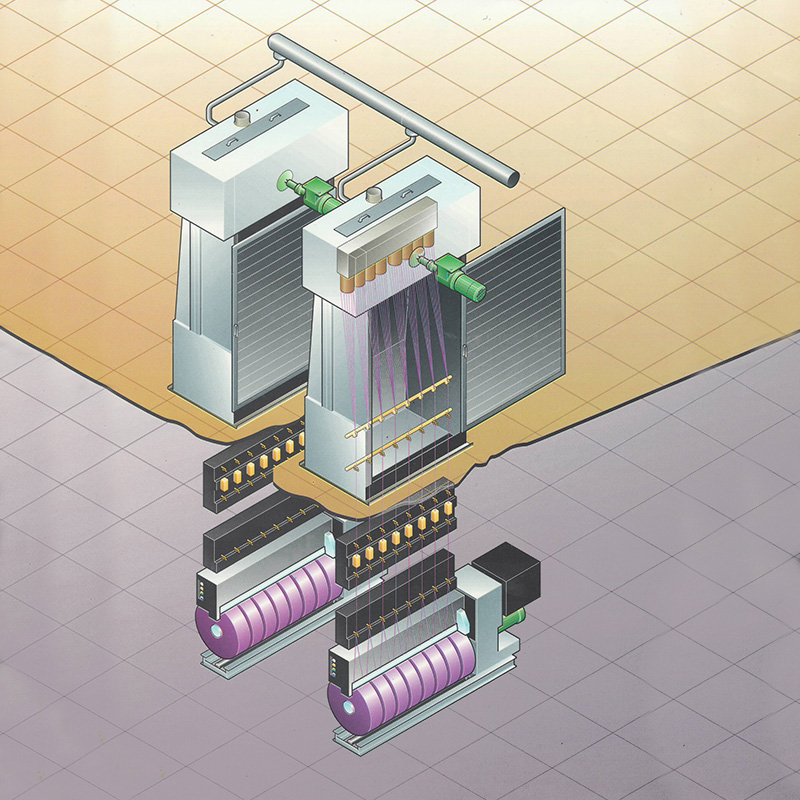
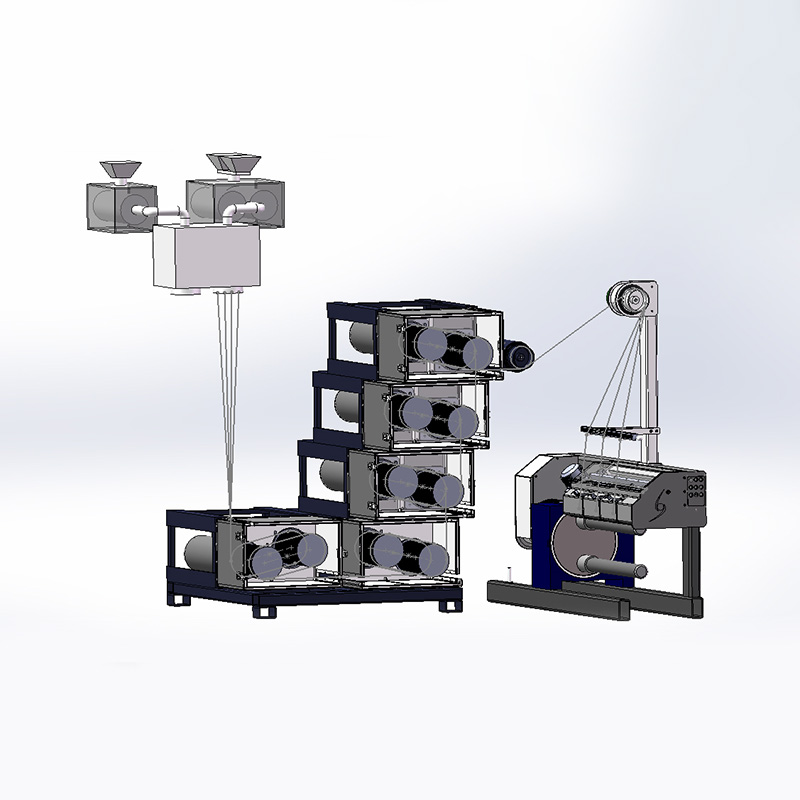
At its core, a spinning production line is a sequence of process steps that turn polymer into yarn with consistent denier, strength, elongation, and appearance. The process starts with melting and homogenizing the polymer, then forces the melt through a spinneret filled with fine holes. The resulting filaments are cooled in a quenching chamber, drawn over godet rolls to orient the molecular structure, treated with spin finish, and finally wound onto bobbins. The same architecture serves a wide range of products, from fine apparel yarn to heavy industrial yarn.
Common raw materials and examples of their end uses include:
We also see growing demand for specialty systems such as melt direct spinning masterbatch adding equipment, which allows color masterbatch and functional additives to be introduced directly into the melt stream, and for lines that produce bicomponent or slub-effect yarns for differentiated fabrics. We explain the fundamentals in our article on spinning production line basics, but the essential idea is this: stability at each stage leads to a consistent yarn at the winder.
Although every spinning production line is engineered around its specific product, the process flow follows a recognizable pattern. By examining each station, operators can identify where quality starts, where tension builds, and where breakdowns are most likely to occur.
| Station | Main Function | Critical Points |
|---|---|---|
| Polymer feeding and extrusion | Melts and homogenizes polymer chips or molten polymer | Temperature stability, melt uniformity, filter condition |
| Spinning beam and spinneret | Distributes melt and forms filaments | Spinneret cleanliness, hole geometry, metering pump accuracy |
| Quenching chamber | Cools and solidifies freshly extruded filaments | Airflow speed, temperature profile, filament cohesion |
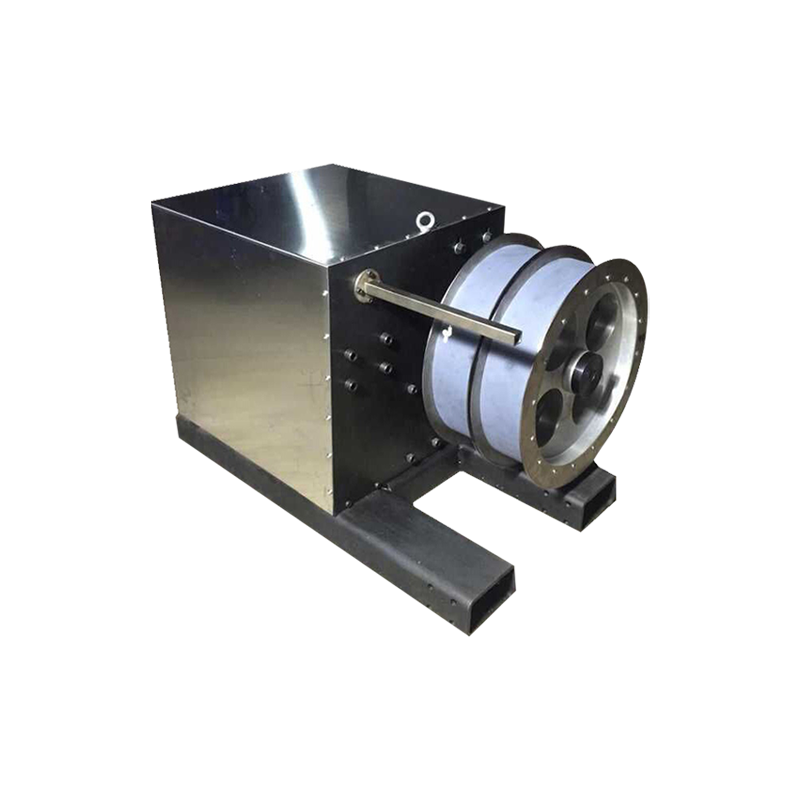
| Godet rolls and draw zone | Stretches filaments to orient polymer chains | Roll speed ratio, surface finish, temperature control |
| Interlacing and finish application | Adds entanglement and spin finish to yarn | Nozzle quality, finish uniformity, yarn tension |
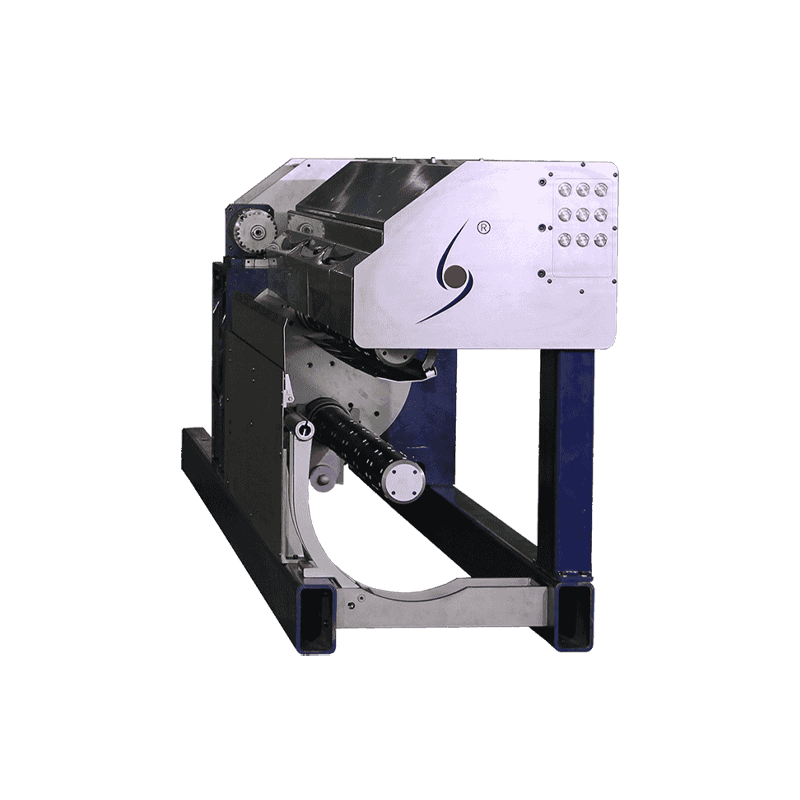
| Winding | Forms yarn into packages with stable tension | Winder alignment, traverse motion, chuck gripping |
In our experience, the draw zone and the winding section are where most maintenance hours accumulate. Hot godets, separator rolls, and contact rolls work under high surface speeds and continuous friction, while winders handle complex motion that can drift over time.
Beyond the main stations, a modern spinning production line includes supporting equipment that is easy to overlook: dryers that remove moisture from polymer chips, dynamic mixers that keep additives dispersed in the melt, lubrication systems for the draw zone, filters that protect the spinneret, and interlacing nozzles that improve downstream processing. The reliability of this auxiliary equipment often determines whether the line can run at its design speed.
Choosing the right spinning production line starts with the yarn specification. The same polymer can be spun into many different products, but the line hardware determines what is economically and technically achievable.
POY lines are the workhorses of the textured yarn industry. They produce partially oriented yarn at high speed, leaving the final draw to downstream texturing machines. FDY lines integrate drawing with spinning, delivering fully drawn yarn directly from the line and eliminating a separate process step. HOY lines occupy a middle ground, producing highly oriented yarn with limited additional draw. Each configuration has distinct economic trade-offs: POY lines offer high productivity and modular downstream flexibility, while FDY lines reduce downstream processing and provide better uniformity for certain applications.
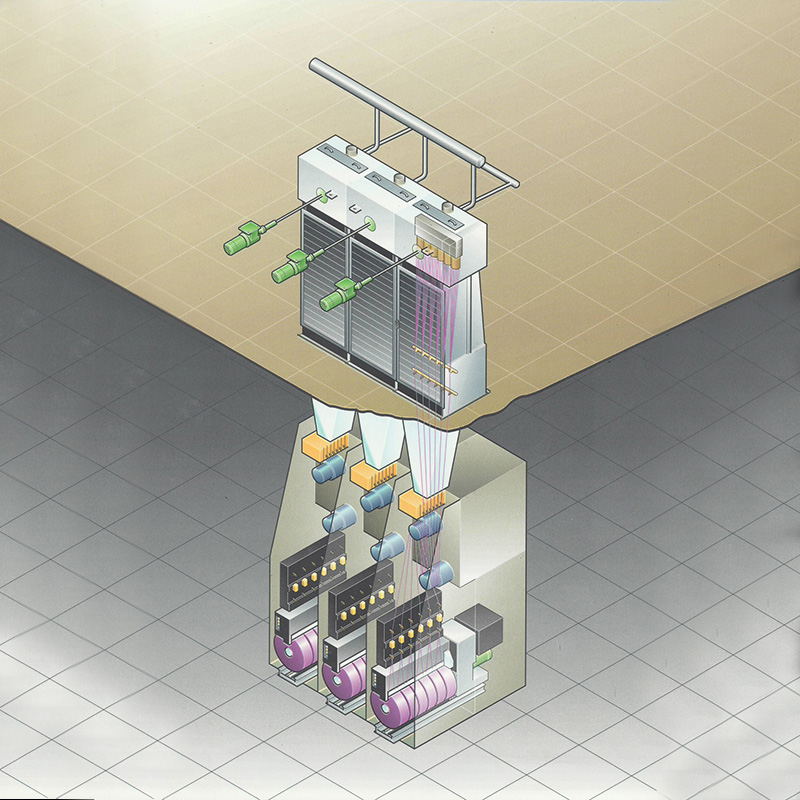 POY Spinning Production Line for PET, PA, PP or Other MaterialsA complete turnkey POY line designed for high-speed partially oriented yarn production, offering stable operation and flexible raw material switching for downstream texturing applications.View Product →
Industrial yarn production raises the bar in a different direction. Higher tenacity demands higher draw ratios, larger godets, and more powerful heaters. The line must maintain temperature uniformity while running at high mechanical stress. This is also where component quality, dynamic balancing, and coating integrity matter most.
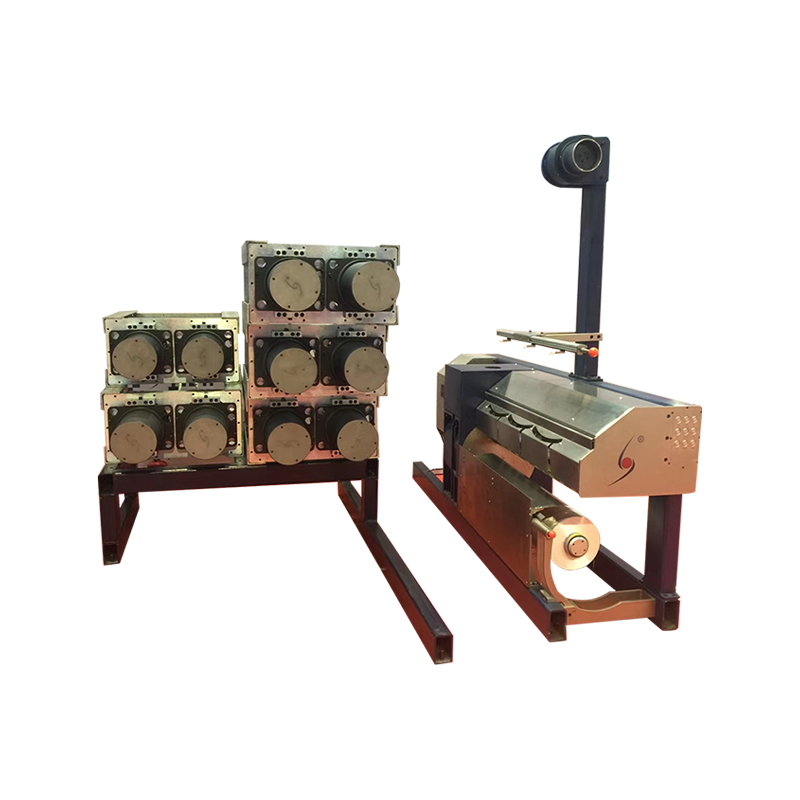 Industrial Yarn Spinning Production Line for PET, PA, PP or Other PolymersAn industrial spinning line engineered for higher tenacity yarns, featuring robust components, precise temperature control, and dynamic balancing to withstand demanding mechanical stress.View Product →
Key selection factors to review before purchasing a line:
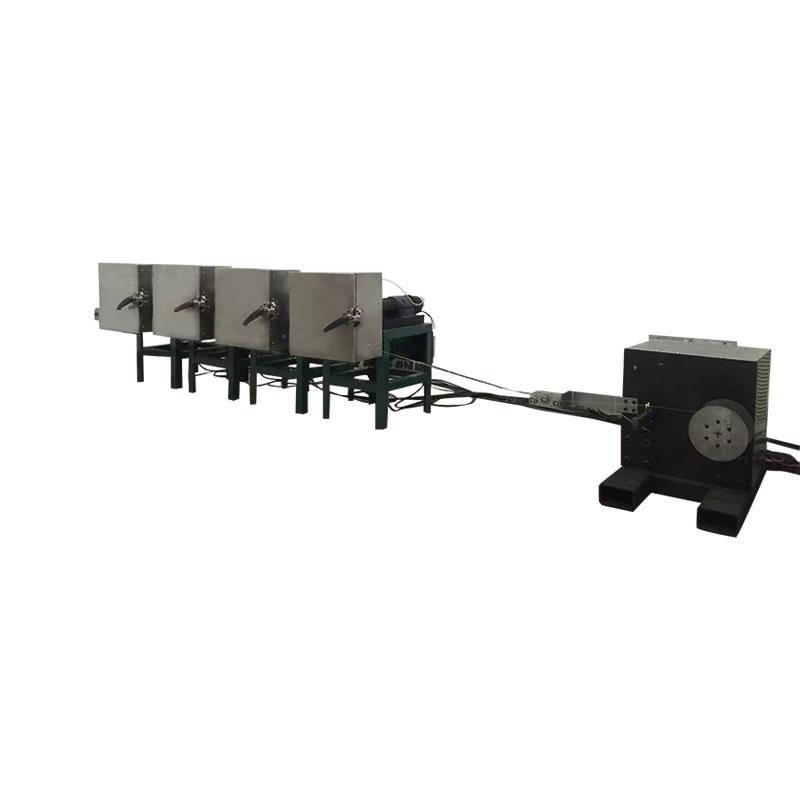
Developing a new product on a full commercial line is expensive and risky. A pilot spinning line offers a controlled environment where operators can test spin packs, adjust temperatures, vary take-up speeds, and evaluate new raw materials without disrupting revenue production. Our multifunctional flexible pilot spinning machines process single-component, bicomponent, and multicomponent yarns, from POY and FDY to medium-tenacity and fine-denier industrial yarns. Researchers can work with small material quantities, typically a few hundred grams, which is particularly valuable when developing functional fibers with expensive additives.
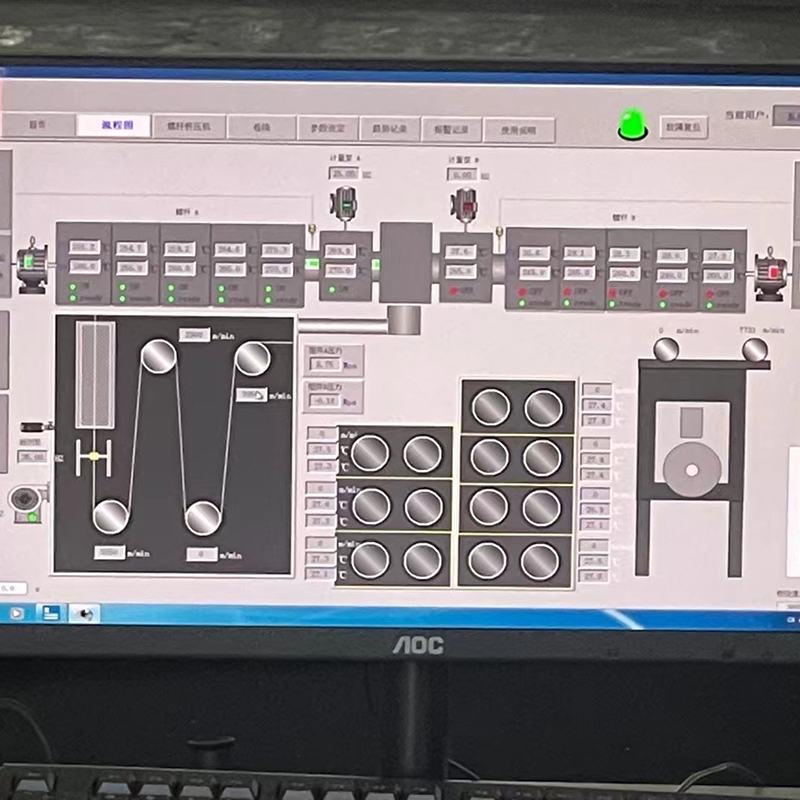 Draw and Spin BCF Pilot Spinning Machine with Hot GodetsA multifunctional pilot machine with seven hot godet pairs and a BCF texturing jet, suited for small-scale testing of PET, PA, and PP yarns in research and development settings.View Product →
The transition from pilot test to production line is much smoother when both are available from one supplier. We have installed special yarn spinning equipment in educational and research institutions, including textile institute and polytechnic university projects, where the emphasis falls on repeatability, quick changeover, and openness to experiment.
A spinning production line is a long-term asset, and the way it is maintained often matters more than the way it was purchased. In the first year, the focus is on process tuning; in later years, mechanical wear begins to dominate. Hot godets develop temperature drift, winder chucks lose their grip, shift forks wear at the tips, bearings develop play, and separator rolls lose their surface quality. Each small defect shows up first as a yarn quality problem: broken filaments, uneven denier, poor package formation, before it causes a complete line stop.
From our repair shop, these are the practices that keep spinning production lines in good condition:
Upgrading is often more economical than replacing. In our equipment upgrading services, we modernize components rather than the whole line: new air quench chambers, spinneret changes, winder upgrades, and godet control improvements allow plants to raise speed, improve uniformity, and reduce energy consumption at a fraction of the cost of a new line.
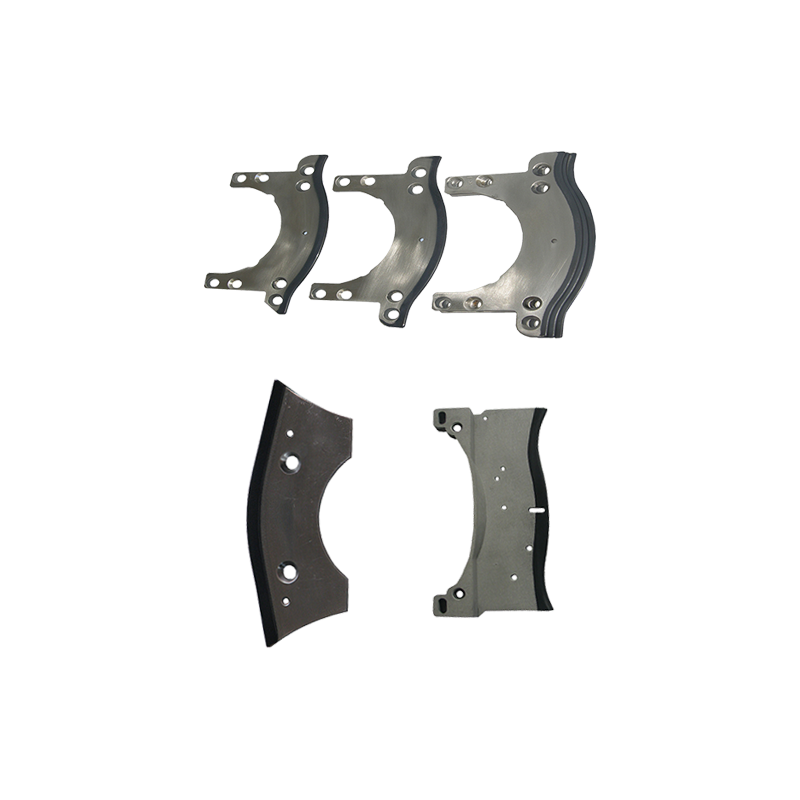
Because we manufacture replacement components and stock parts for popular winder models, we can usually return equipment to service faster than waiting for imported parts. Our service range includes hot godet repair and recoating, roll and chuck repair, shift fork gearbox rebuilding, motor and coil maintenance, and circuit board repairs. For older lines, well-planned upgrades such as winder modernization, spinneret upgrades, and quench chamber improvements also extend useful life.
Whether you are installing a new facility, expanding capacity, or reviving an older spinning production line, the key decisions are always the same: choose a process that matches your yarn, select equipment that can sustain it, and build a maintenance network that keeps you running. With complete lines, pilot spinning machines, precision spare parts, coating technology, and repair services under one roof, we help manufacturers turn raw polymer into reliable output every day.
ADDRESS: No.1298, Zhouan Road, Economic and Technological Development District, Jiaxing City, Zhejiang Province
PHONE: +86 19057031687
TEL: 86-0573-83777752
EMAIL: [email protected]