English
 عربى
عربى русский
 简体中文
简体中文







2026-09-30
Home / News / Industry News / Pilot Spinning Machine: Flexible R&D Equipment for Chemical Fiber Development

Every chemical fiber development project starts with a question: how will this polymer behave when it is melted, extruded, and drawn into a yarn? A pilot spinning machine answers that question before you commit capital to a full production line. It is where polymer chemistry meets process engineering, and where a new fiber idea becomes measurable, repeatable, and ready for scale-up.
For us, building these machines is a partnership with researchers, yarn producers, and educators who need honest answers about how a material spins and orients under real process conditions. We have spent years developing pilot solutions that give our customers that confidence.
On a full production line, trial-and-error testing is expensive: every kilogram of polymer, every hour of labor, and every minute of machine time adds up quickly. A pilot spinning machine reduces that cost and risk by providing a controlled, small-footprint environment where you can test melt behavior, spin pack design, quenching conditions, godet temperatures, and winding parameters without interrupting commercial output.
Many research teams start with small extruders that produce only grams of material. They are useful for characterization, but they rarely replicate the shear rates, residence times, or quenching profiles of a production-scale line. Pilot equipment fills the gap: with throughput in kilograms rather than tons, it generates enough yarn for physical testing, customer sampling, and process optimization, while keeping the modularity to reconfigure for a different polymer or yarn count in hours. For a closer look, our article on multifunctional flexible pilot spinning machines explains the design logic behind a modern platform.
Textile institutes and universities use pilot machines to teach melt spinning fundamentals, bicomponent extrusion, and winding operations. Students can see how spin finish affects yarn cohesion, how air quenching changes filament structure, and how godet speed ratios influence elongation, ideas that are hard to grasp from a textbook alone.
Not every pilot machine is the same. When evaluating one for your laboratory or mill, these capabilities matter most.
Our SF series pilot machines are built around these principles. They are stand-alone systems with all auxiliary units required for melt spinning, and they have supported rapid development of new fiber products across multiple raw materials. The platform is configurable from a basic monocomponent line to a full bicomponent research station, and many customers upgrade over time as their research portfolio grows.
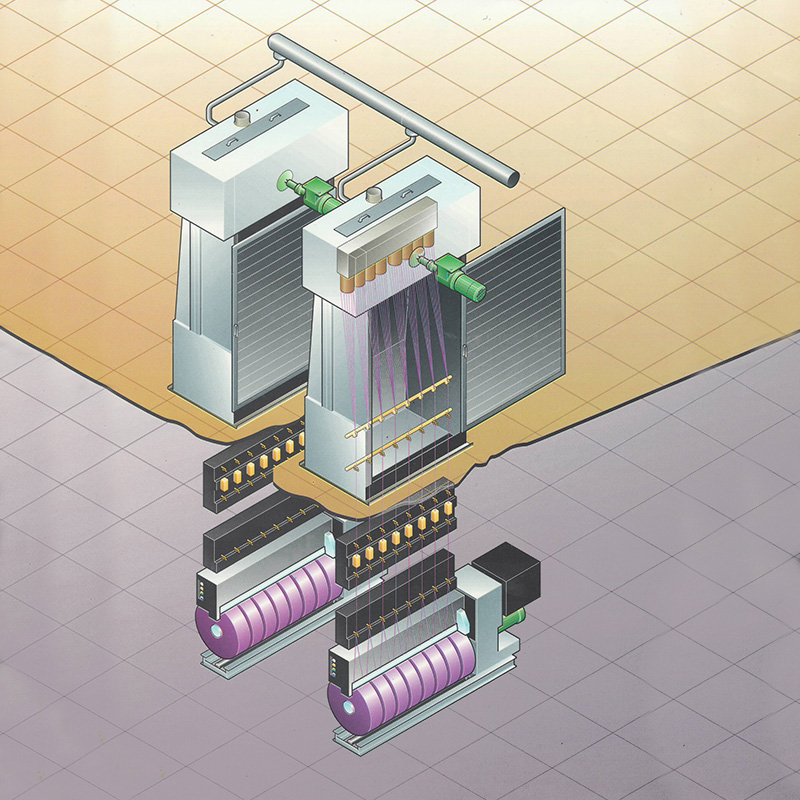
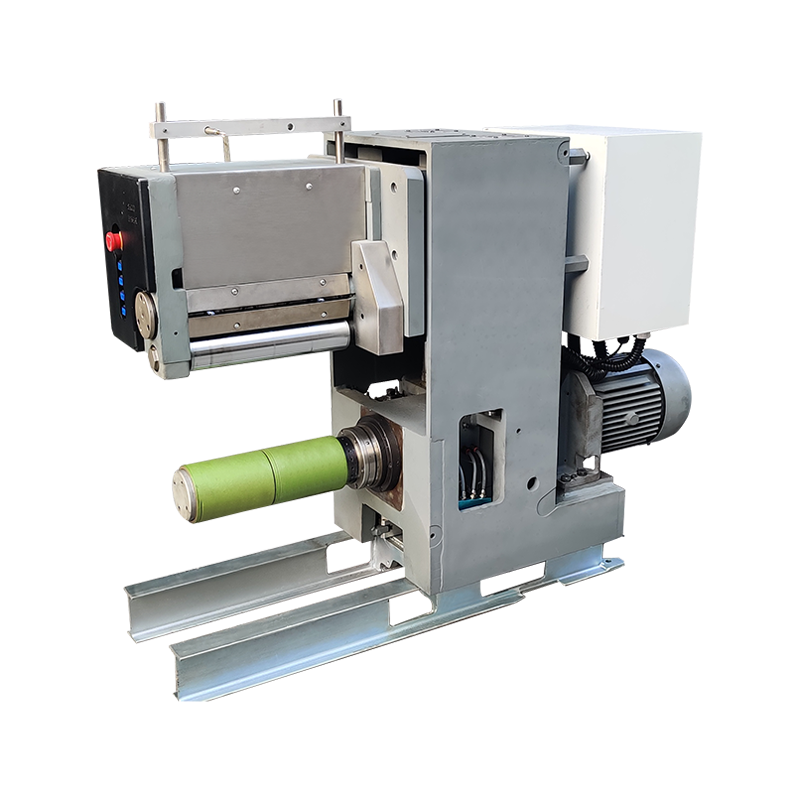 Standard Pilot Melt Spinning Machine with Twin-Screw ExtrusionThis standalone pilot system integrates all auxiliary units for melt spinning, supporting PET, PA, and PP. It is configurable from monocomponent to bicomponent research, making it suitable for validating new fiber products before production scale-up.View Product →
Understanding the boundary between pilot and production equipment is essential when planning investment. Each serves a different purpose, and the strongest strategy often uses both in sequence.
| Aspect | Pilot Spinning Machine | Full Spinning Production Line |
|---|---|---|
| Throughput | Kilograms per trial | Tons per day |
| Purpose | R&D, sampling, training | Commercial production |
| Flexibility | High: frequent product changes | Low: dedicated to a product family |
| Investment | Lower, knowledge-driven | High, volume-driven |
| Auxiliary equipment | Integrated in the pilot system | Distributed across the plant |
Once a yarn has been validated on a pilot machine, the challenge is translating the recipe to commercial scale. Our POY spinning production line follows the same process logic as the pilot systems, so lab-developed parameters, including spin temperature, quench airflow, draw ratio, and winding speed, transfer with fewer surprises and less re-tuning.
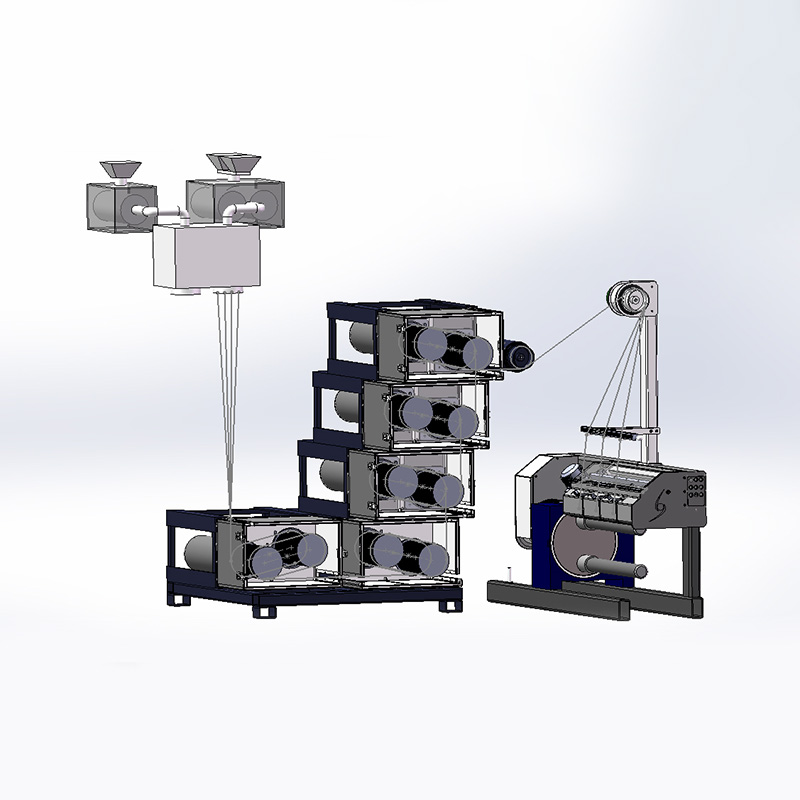
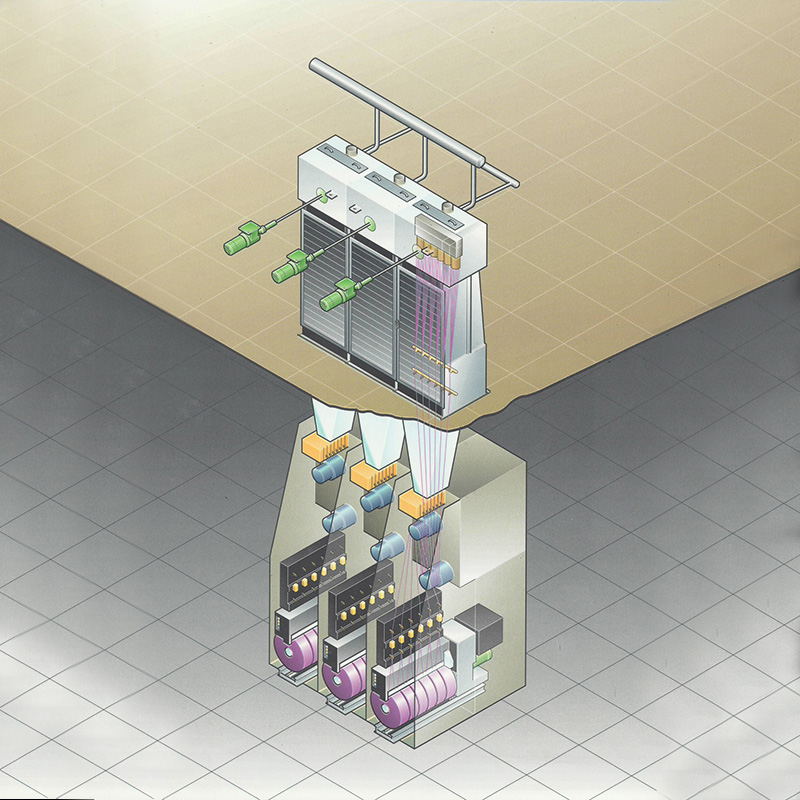 POY Spinning Production Line for PET, PA, PP and Other PolymersThis production line mirrors the process logic of pilot systems, enabling lab-developed parameters to transfer with minimal re-tuning. It supports multiple raw materials and offers turnkey engineering for stable, flexible commercial POY production.View Product →
Pilot machines appear in many environments. In the textile industry, they pre-screen new polymers before reactor time is committed. In research institutions, they support collaborative projects on biobased materials and specialty yarn structures.
We have supplied special yarn spinning equipment to projects at Sichuan Textile Institute and Tianjin Polytechnic University. These installations support both technical coursework and applied research, giving students and faculty a reliable platform for melt spinning experiments.
Beyond conventional PET and PA, a flexible pilot machine can be configured for polypropylene, UHMWPE, and other polymers. You can review the full range of application scenarios we support to see how pilot equipment connects with broader production strategies.
Even the most flexible pilot machine depends on its thermal and winding components. A hot godet with uneven surface temperature causes cross-sectional variation across the yarn bundle; a winder with unstable traverse motion ruins an otherwise perfect spin. We apply the same engineering discipline to pilot equipment as to our industrial machinery.
Godet surface temperature directly affects polymer orientation and crystallization. We manufacture textile and industrial-yarn hot godets with precision-ground surfaces and calibrated heating elements, verifying each unit with original Barmag calibration instruments during production.
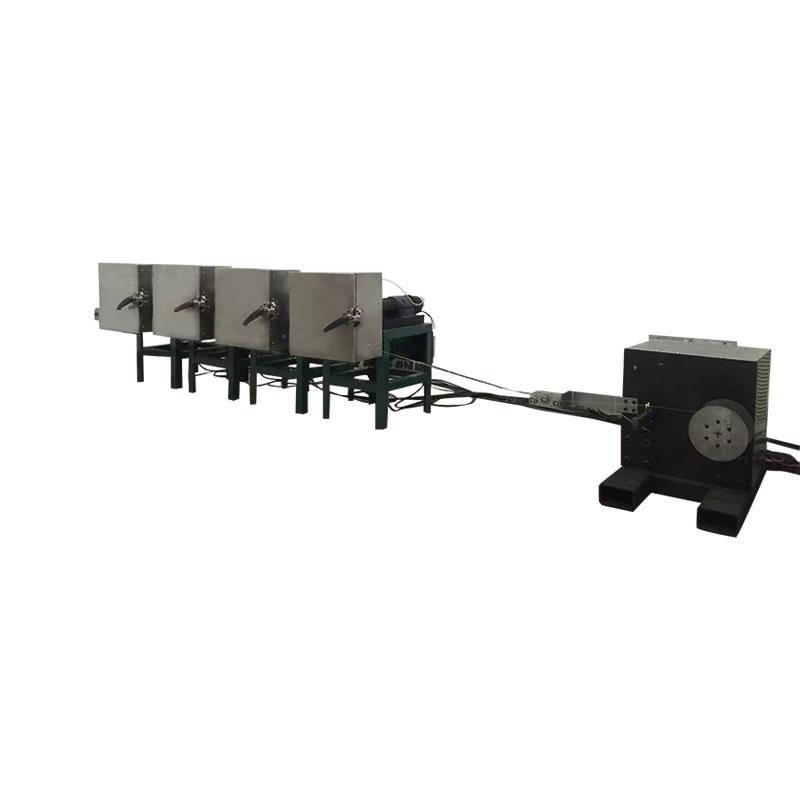
 Precision Hot Godet for Textile and Industrial Yarn SpinningManufactured with precision-ground surfaces and calibrated heating elements, this hot godet ensures accurate temperature control for polymer orientation and crystallization. Each unit is verified with original Barmag calibration instruments, supporting consistent yarn quality.View Product →
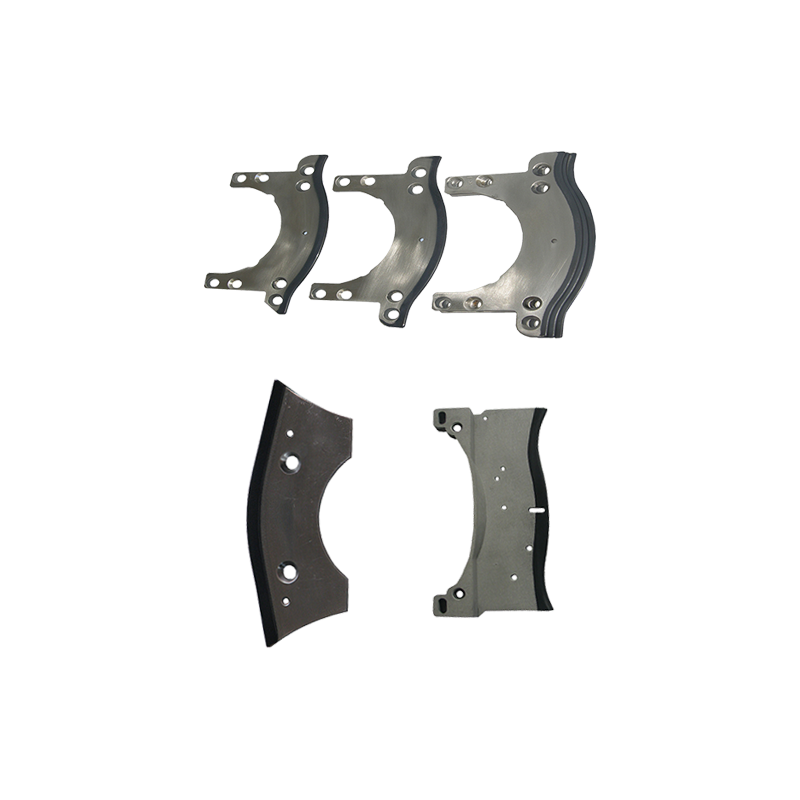
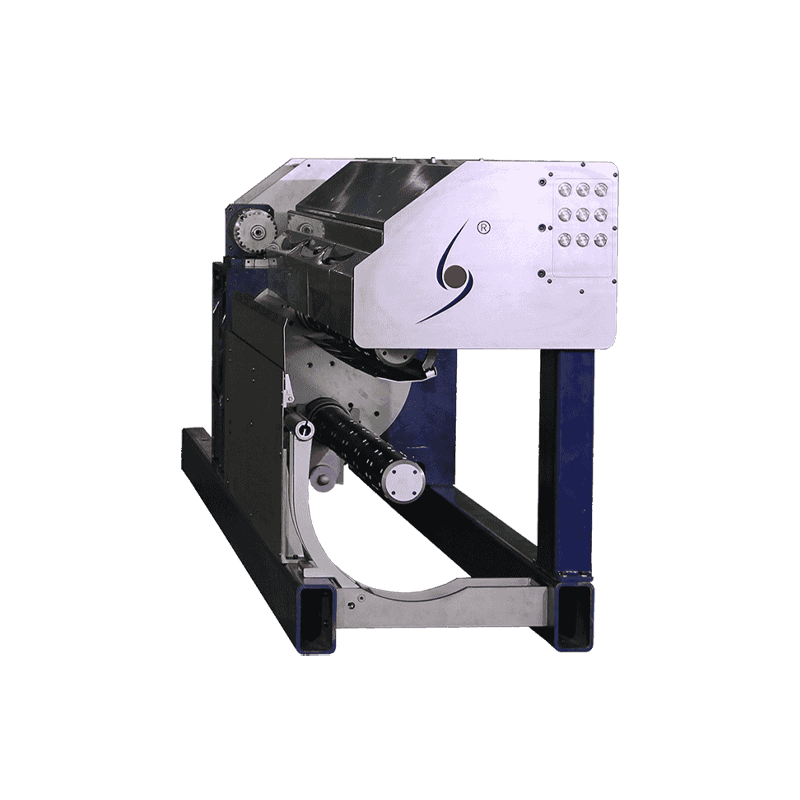
Traverse, tension, and package quality matter as much on a pilot winder as on a production winder. Our service expertise covers yarn guide plates, guide rods, and shift forks, and we can upgrade existing take-up systems to keep pilot trials running smoothly.
Before you decide, ask the supplier these practical questions.
The last question matters more than most buyers realize. A pilot machine built with hard-to-source parts becomes a legacy problem. We build our equipment around proven components, including many compatible with Barmag and TMT systems, so you are never trapped by a closed architecture.
We have designed, manufactured, and maintained spinning machinery long enough to know the difference between a machine that merely runs and one that accelerates research. Whether you are planning a new pilot lab, expanding an existing spin center, or supporting a specific research project, our engineering team is ready to help.
Bring us your process goals, your polymer list, and your target yarn properties. We will help you configure a pilot spinning machine that fits your research today and can evolve with your ideas tomorrow.

ADDRESS: No.1298, Zhouan Road, Economic and Technological Development District, Jiaxing City, Zhejiang Province
PHONE: +86 19057031687
TEL: 86-0573-83777752
EMAIL: [email protected]