English
 عربى
عربى русский
 简体中文
简体中文







2026-09-11
Home / News / Industry News / Take-Up Winder Industry Trends 2026: Automation, Market Growth & What It Means for Spinning Mills

The take-up winder sits at the end of every melt-spinning line, yet it is increasingly at the centre of the industry's most important conversation: how to run faster, with fewer operators, while maintaining the package quality that downstream texturing and weaving machines demand. In 2025 and into 2026, a cluster of developments — new machine launches, automation milestones, and a reshaping market landscape — have pushed take-up winder technology firmly into the spotlight.
This article brings together the key international developments and explains what they mean for spinning mill operators evaluating their equipment strategy today.
The single most-discussed winder development of 2026 is Barmag's WINGS POY 2.0, previewed at ITMA Asia + CITME 2025 in Singapore and scheduled for its first full public showing at ITM Istanbul in June 2026. The headline feature is an automatic string-up function — something spinning mill managers have been requesting for years.
The significance of automatic string-up goes beyond operator convenience. Manual string-up is one of the most skill-dependent tasks on a POY line. Inconsistent execution lengthens start-up waste, increases end-breakage during the critical first minutes of a new package, and creates quality variance across positions. An automated solution standardises the process regardless of which shift is running, which directly addresses the skilled-labour shortage that has become a persistent operational challenge across spinning mills in China, Turkey, South-East Asia, and beyond.
The POY 2.0 concept also incorporates a wiping robot — already proven in Barmag's own filament spinning mill — which synchronises cleaning cycles with can changes and splice management, reducing consumable use and extending cleaning intervals. Together, these features represent a meaningful step toward the semi-automated winding level that Industry 4.0 integration requires.
Italian manufacturer Savio Macchine Tessili, now part of the Vandewiele Group, is also exhibiting at ITM Istanbul 2026 with an enhanced-digital version of the Phoenix Assembly Winder. The machine targets assembly winding applications — where two or more yarns are combined onto a single package — and is designed around high productivity with consistent package geometry at yarn take-up speeds reaching 1,000 m/min.
The return of the Phoenix with stronger digital integration reflects a broader industry direction: even specialised winding segments that previously relied on mechanical simplicity are now integrating data collection and process monitoring as standard, not optional, features.
The structural backdrop to these product launches is a winding machine market in sustained expansion. The global textile winding machine market was valued at approximately USD 2.11 billion in 2025, with Asia-Pacific accounting for around 63% of total demand as of 2026. By 2035, the market is projected to reach approximately USD 3.49 billion, growing at a compound annual rate of roughly 5%.
| Metric | Figure |
|---|---|
| Market size (2025) | ~USD 2.11 billion |
| Market size (2035, projected) | ~USD 3.49 billion |
| Projected CAGR (2026–2035) | ~5.16% |
| Asia-Pacific market share (2026) | ~63% |
| Dominant winder type by share | Precision winder (~42%) |
| Dominant end-use segment | Spinning mills (>52% of demand) |
China and India together account for the largest share of that Asia-Pacific dominance. China alone produces approximately 7.2 million tons of cotton and cellulosic yarn annually, and its polyester and nylon filament sectors are even larger — creating sustained underlying demand for both new winding equipment and replacement parts.
High-speed automation systems — those capable of yarn traversal speeds above 2,000 m/min — hold the largest share within the automation segment, reflecting the continued shift away from lower-speed, manually intensive lines toward capital-efficient, high-throughput production.
Looking across the product announcements and market data, four technology directions stand out as the clearest signals for where take-up winder development is heading.
Automatic string-up, doffing robots, and wiping robots are all targeting the same pain point: reducing dependence on skilled shift operators at the winding station. As labour costs rise in traditional textile-producing regions and skilled workers become harder to retain, automation that removes the most skill-dependent manual tasks provides compounding returns over a machine's service life.
FDY lines now routinely operate at 4,500–6,000 m/min, and leading winder platforms are designed to handle speeds up to 7,000 m/min and beyond. At these speeds, yarn tension stability tolerances tighten considerably. Even minor mechanical inconsistencies in the traverse system, contact roll, or chuck bearings translate into measurable package-quality defects and elevated end-breakage rates — which in turn affect downstream texturing yield.
Modern winding platforms increasingly ship with integrated HMI dashboards that log tension trends, position-level performance data, and maintenance alerts. This data layer allows production managers to identify which winding positions are drifting before defects appear in finished packages, shifting maintenance from reactive to predictive.
Energy efficiency has moved from a selling point to a baseline expectation. Barmag's eFK EvoSmart texturing machine, which has sold 84 units since its ITMA Asia launch, cites up to 45% energy savings through its heater design as a primary commercial driver. Winding equipment is following the same trajectory, with servo-motor optimisation and reduced contact-roll pressure profiles contributing to per-kilogram energy reductions on high-volume lines.
Not all the news from the sector is straightforward growth. Several structural challenges are shaping purchasing decisions in 2026.
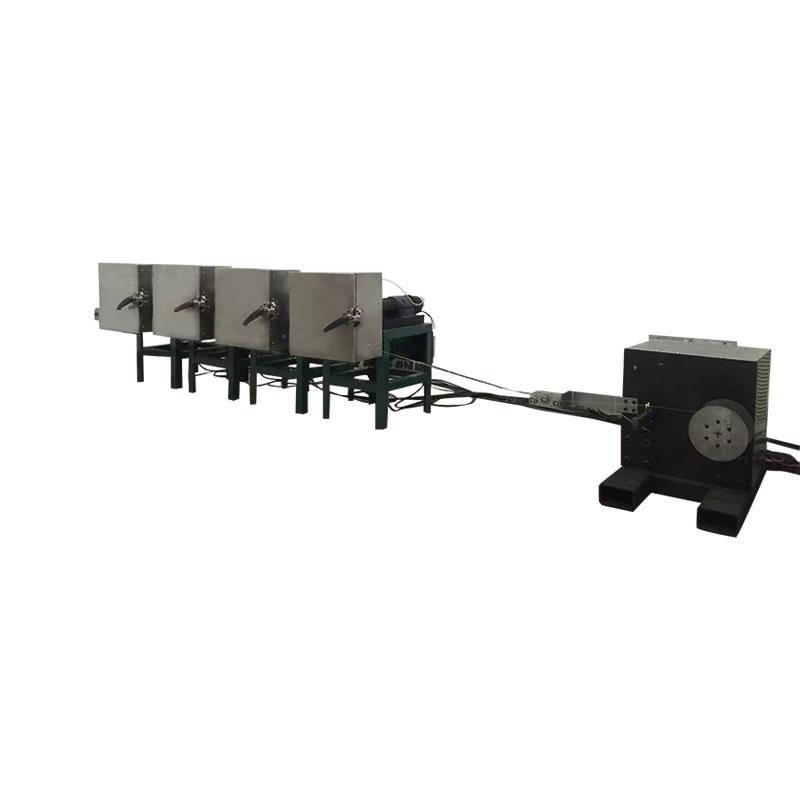
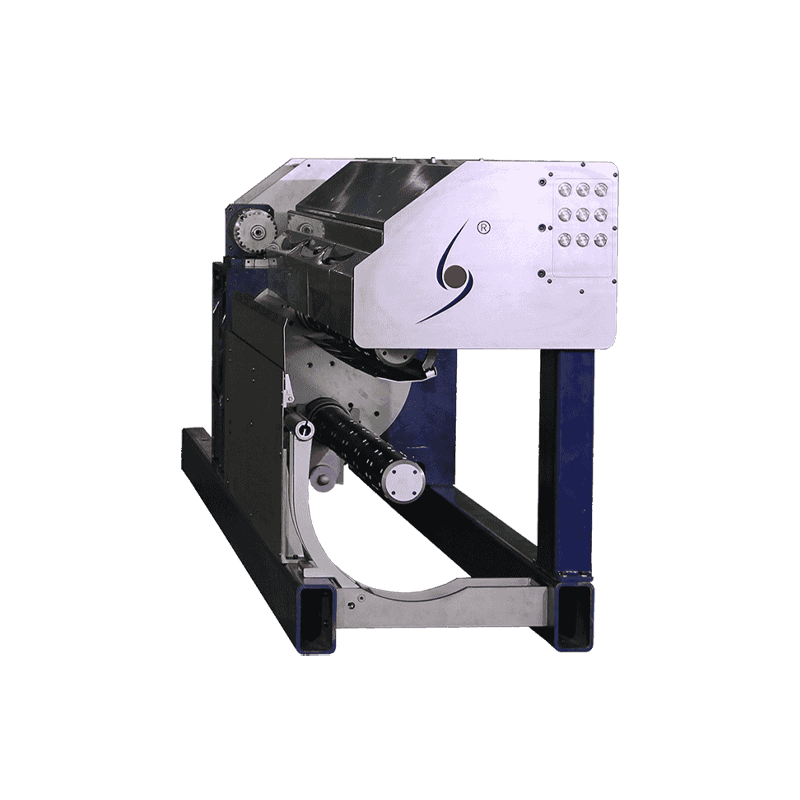
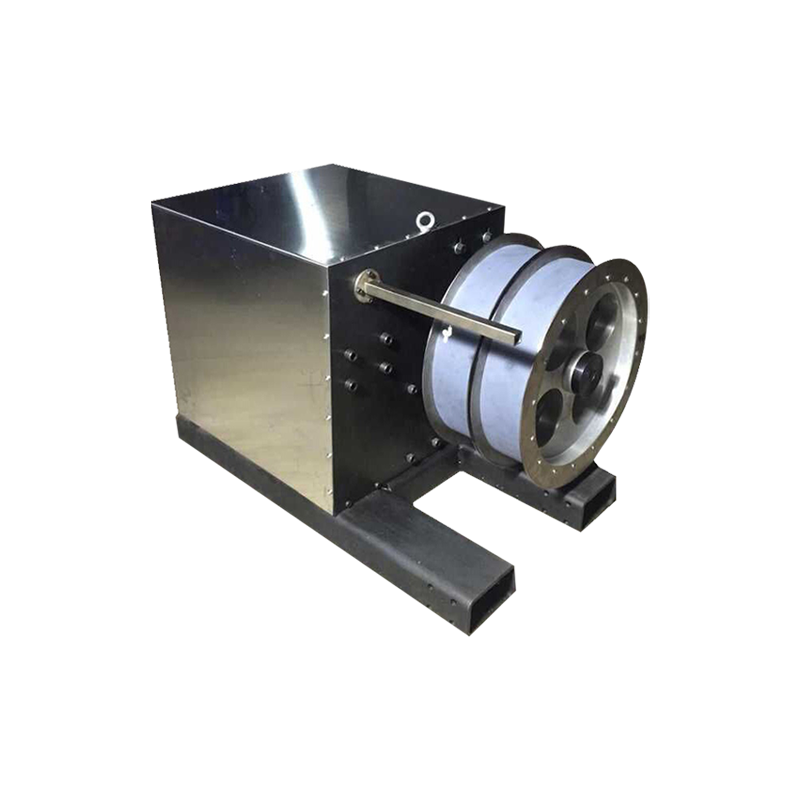
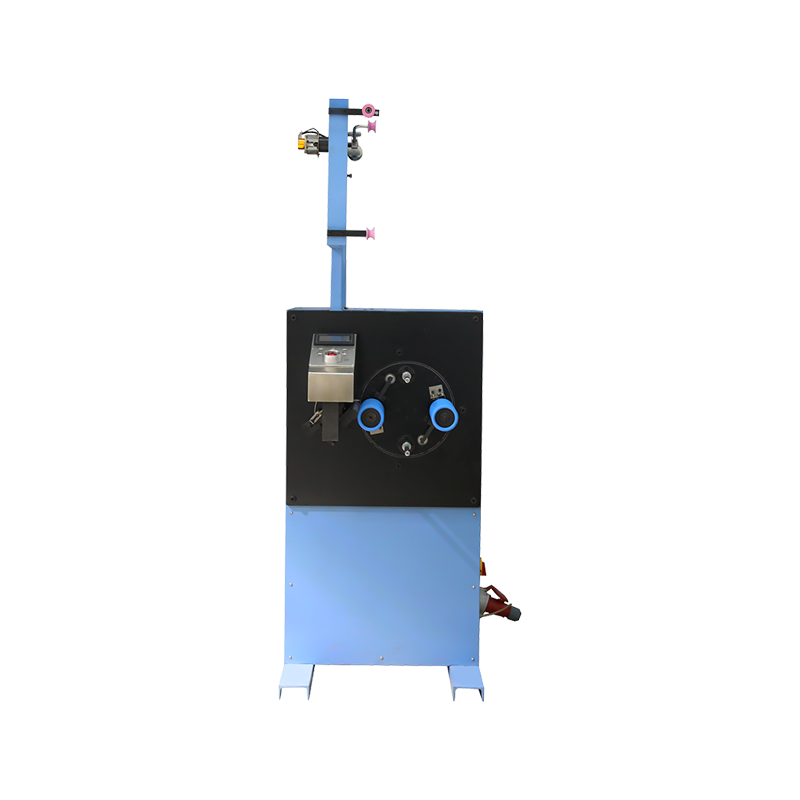
Jiaxing Shengbang Mechanical Equipment Co., Ltd. occupies a position in this landscape that addresses both ends of the market's current challenges. On the equipment side, Shengbang offers a complete range of automatic take-up winders designed for POY, FDY, HOY, BCF, and industrial filament lines, with mechanical winding speeds reaching up to 7,000 m/min and support for PET, PA6, PA66, PP, and spandex yarn types.
On the parts and maintenance side — which matters especially for the many mills that operate Barmag-platform equipment and need to manage running costs carefully — Shengbang manufactures and supplies a comprehensive range of compatible winder components: chuck sleeves, Y-shaped forks, tensioning blocks, traverse guides, and related precision parts. Shengbang's R&D team continuously optimises component design and material selection, including plasma-coating processes developed in-house, to extend service life at high running speeds.
The company also operates a spinning laboratory where component performance can be tested under real production conditions — a capability that supports both quality assurance for existing designs and development of solutions for new fibre types and winding parameters.
Whether the immediate need is a capital equipment upgrade, a parts supply partnership, or technical consultation on winding parameter optimisation, Shengbang's team is available to discuss your specific line requirements.

ADDRESS: No.1298, Zhouan Road, Economic and Technological Development District, Jiaxing City, Zhejiang Province
PHONE: +86 19057031687
TEL: 86-0573-83777752
EMAIL: [email protected]