English
 عربى
 русский
 简体中文







2026-11-13
Home / News / Industry News / PET Flakes Dryer Machine: Moisture Control for Recycled Polyester Lines

Recycled PET has a way of humbling even experienced line operators. The flakes look dry, the washer is running well, and then the extruder tells a different story. A PET flakes dryer machine is not a single box that blows hot air. It is a small process chain, and when the steps are matched to the final product, the rest of the line becomes easier to run. We have spent years around spinning equipment, hot godets, winders, and the maintenance work that follows. The lesson is always the same: moisture control depends less on one machine and more on the handover between washing, drying, and extrusion.
After washing, PET flakes carry two kinds of water: free water on the surface and moisture absorbed into the polymer. A centrifugal dryer removes most of the free water, but it cannot pull absorbed moisture out of the flake. That is why a complete drying line usually combines mechanical dewatering with thermal drying, and sometimes with crystallization and desiccant drying.
The right combination depends on what you make. A strapping line and a bottle-to-bottle line do not need the same moisture level, and they do not need the same equipment. The table below gives a simple view of the stages.
| Stage | Main job | What to watch |
|---|---|---|
| Mechanical dewatering | Spins off free water after washing | Screen condition, feed rate, flake size |
| Thermal flash drying | Evaporates surface moisture with hot air | Air temperature, retention time, sticking |
| Crystallization | Raises surface temperature and prevents agglomeration | Residence time, temperature control, energy use |
| Desiccant drying | Brings moisture down to a tighter range | Dew point, desiccant condition, seal integrity |
Not every line needs all four stages. Fiber and strapping may stop after thermal drying; bottle-to-bottle and sheet grades often need crystallization and tighter control. Let the end product set the specification.
Start with the end use, then work backward. If you produce fiber or strapping, the dryer's main job is to deliver stable surface moisture at a steady rate. If you produce sheet or higher-grade fiber, you may need crystallization to keep flakes from sticking and to prepare them for the next stage. For bottle-to-bottle recycling, the drying section usually needs a desiccant stage and reliable dew-point control.
Size the drying section for the surges that happen after a shift change, a new batch, or an upstream cleaning stop. Then check centrifugal outlet moisture, not just the final number.
If your next step is spinning, it helps to look at the dryer as part of the spinning line rather than a standalone unit.
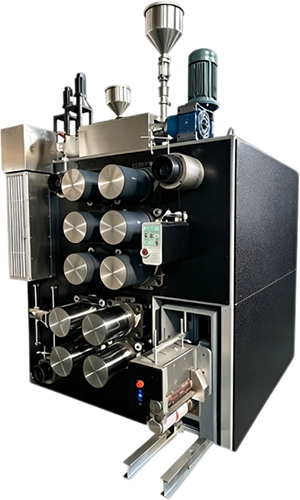
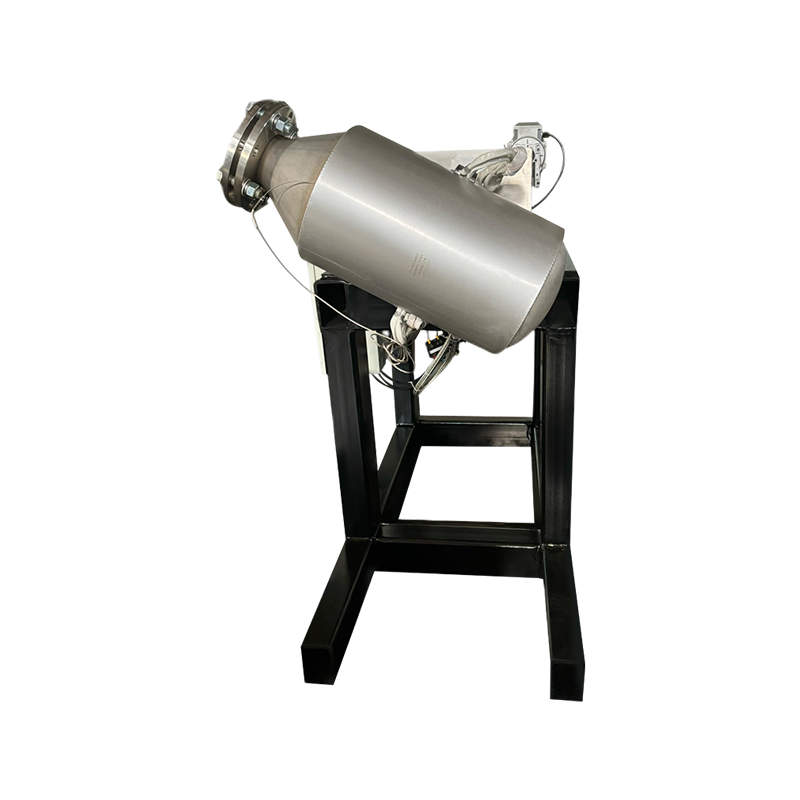
 SZG-A Vacuum Rotary Drum Dryer for Chemical Fiber ChipsBatch vacuum dryer for spinning-line chip preparation, combining low-pressure dehydration, gentle tumbling and precise temperature control to protect intrinsic viscosity.View Product →
Most drying problems are not mysterious. They usually come from a mismatch between feed, temperature, residence time, and the final moisture target.
Sticking usually points to feed rate, air temperature, or residence time. If the flake surface gets too soft before the moisture is removed, it can clump and block airflow. Lowering the temperature is not always the answer; sometimes the line needs a steadier feed or better-controlled retention time.
If the dryer has enough time but the final moisture is still high, check the desiccant dew point, seal integrity, and air handling. A small air leak or a saturated desiccant bed can make a good dryer look like a bad one.
Moisture is only one part of intrinsic viscosity loss. Temperature, residence time, and oxygen exposure also matter. If IV drops, look at the whole drying and extrusion window, not just the final moisture reading.
Over-drying is expensive. Every extra degree and every extra minute costs energy, and it can also damage the material. Set a realistic target with the downstream process, then control to it.
It is easy to add stages "just in case." A better approach is to define the minimum reliable configuration for your product, then add capacity where it protects uptime.
Maintenance access matters more than many buyers expect. Desiccant beds, filters, seals, and air ducts all need attention. If the layout makes them difficult to reach, the dryer will be run longer than it should be, or it will be bypassed when production pressure rises. Our repair and maintenance team works on hot godets, motors, pumps, and other line components, so we tend to look at the drying section as part of the wider plant rather than an isolated purchase.
Once the flakes leave the dryer, they move into extrusion and, for many producers, into spinning. Residual moisture at this stage can cause hydrolysis, viscosity loss, bubbles, and breaks. The dryer's job is to deliver a consistent feed, not just a low number on a test report.
Recycled PET adds another variable: the flake source. Bottles, sheet, and fiber waste do not behave the same way. A dryer that works well on one source may need different settings on another. That is why incoming moisture testing and batch control are worth the effort. PET processing rewards this kind of attention because small changes upstream show up quickly downstream.
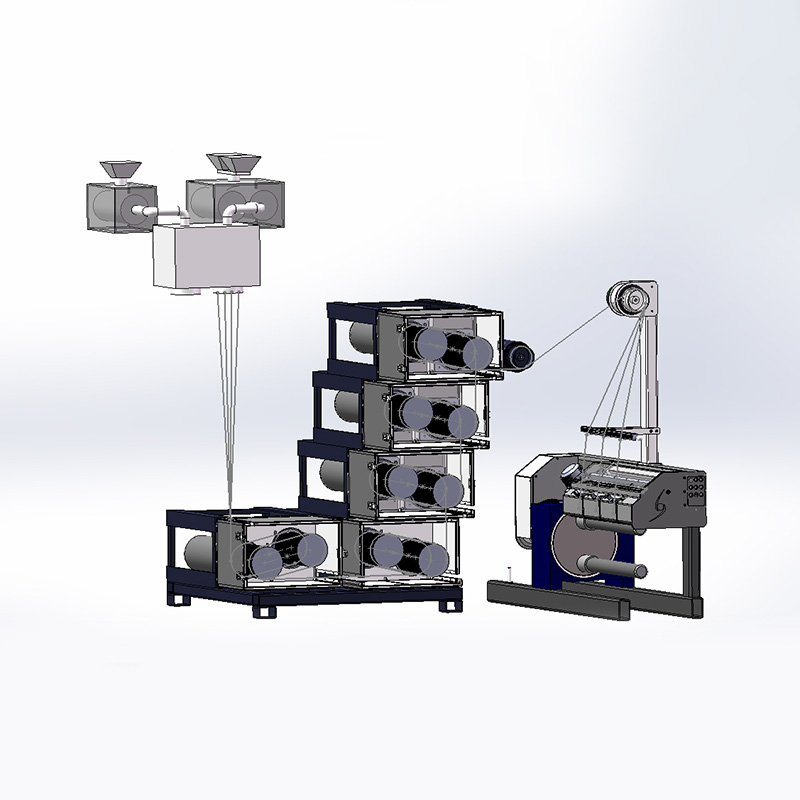
For producers turning recycled flakes into polyester yarn, the drying step has to hand over cleanly to the spinning line. Our POY spinning production line for PET, PA, PP, or other raw materials is built with that handover in mind.
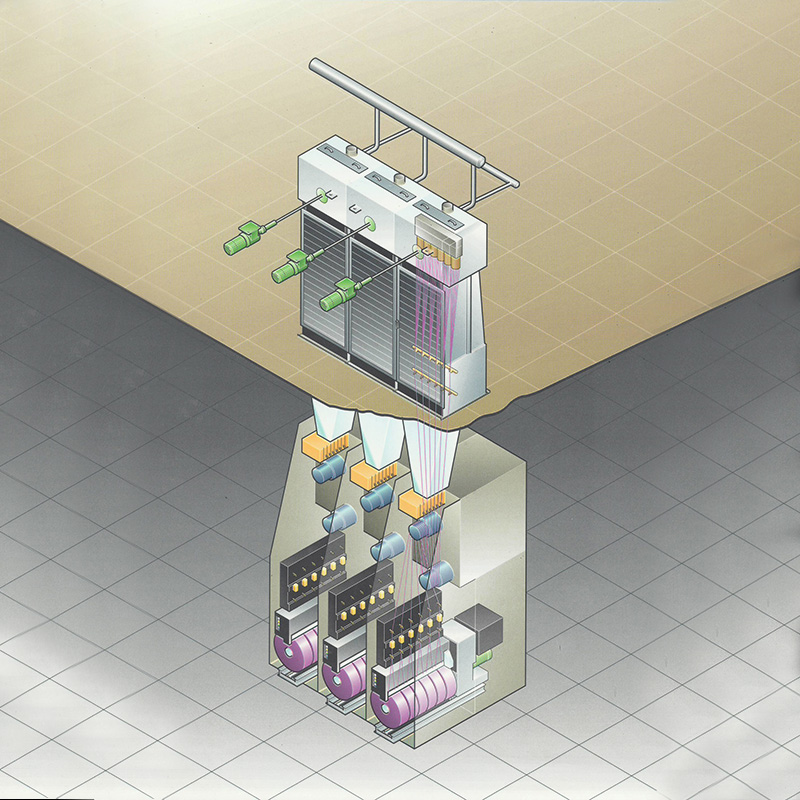 POY Spinning Production Line for PET, PA and PPTurnkey POY spinning line covering chips to wound yarn, with extruder, metering pump, quenching, godets and high-speed winding for stable package formation.View Product →
The same logic applies to hot godets, winders, and the rest of the spinning train. If one section is unstable, the next section spends its time compensating. A steady dryer gives the spinning line a fair chance to do its job.
Before you compare quotes, gather a few facts from your own line. They will make the conversation more useful and help you avoid paying for capacity you do not need.
A trial is not always practical, but when it is, it is worth more than a brochure. It shows how the dryer handles your flake size, your moisture range, and your production pace.
A PET flakes dryer machine does not have to be complicated, but it does need to be honest about the process. Mechanical dewatering does one job. Thermal drying does another. Crystallization and desiccant drying add control where the final product needs it. When those stages are matched to the end use, the dryer becomes a quiet part of the line instead of a daily problem.
If you are planning a new drying section or trying to fix one that never quite settled down, start with the material, the moisture target, and the peak rate. Then choose the equipment. That is the order we use when we look at a line, and it usually saves time, energy, and a few unnecessary upgrades.

ADDRESS: No.1298, Zhouan Road, Economic and Technological Development District, Jiaxing City, Zhejiang Province
PHONE: +86 19057031687
TEL: 86-0573-83777752
EMAIL: [email protected]