English
 عربى
 русский
 简体中文







2026-11-13
Home / News / Industry News / Barmag Original Parts: Wear Points, Identification, and Sourcing Guide

Every winder on a polyester or nylon line is a compromise between speed and precision, and the parts that hold that compromise together are rarely the ones you see. A tension block, a lock ring, a guide plate — these are the pieces an operator touches only when package build starts to drift. This guide looks at Barmag original parts from the workshop side: what the "original" designation actually protects, which components wear first, how to match a part number to the machine standing in front of you, and where a precision-made alternative fits without putting yarn quality at risk.
The word "original" on a Barmag parts list is doing more work than it appears to. It refers back to a drawing, and that drawing fixes four things at once: the geometry of the part, the tolerance band around that geometry, the material grade, and the heat treatment or surface finish applied afterwards. Change any one of the four and the part may still bolt on, but it will not behave the same way at production speed.
This matters most at interfaces. A chuck base is only useful if its taper matches the spindle it seats on. A lock ring only preloads correctly when the thread flank angle and the seating face are cut to the same values as the original. A yarn guide plate only protects the filament when the groove radius and the surface polish are right, because that is exactly where broken filaments begin.
The second thing the original designation protects is documentation. A winder built in the mid-2000s and one built a decade later can share a model name and almost nothing else inside the frame. Knowing the original part number — and knowing which generation it belongs to — is often the difference between a one-week repair and a three-week argument.
In our experience, the failures that stop a line are rarely dramatic. They accumulate: a fork tip loses a tenth of a millimetre, a bearing seat picks up a polished ring, an O-ring hardens and stops sealing. The table below is the wear map our technicians work from when a customer describes a symptom over the phone.
| Assembly area | Parts that carry the load | What you notice first | Where the check starts |
|---|---|---|---|
| Chuck and package build | Chuck base, chuck sleeve, lock ring, yarn guide rod | Tube slip, package vibration, uneven ends | Taper contact pattern and lock ring seating face |
| Traverse and transfer | Shift fork, Y-shaped fork, shift fork gear box, tension block | Soft package edges, ribboning, transfer faults | Fork tip wear and gear box backlash |
| Yarn guide path | Yarn guide plate, finish guide assembly plate, interlacing nozzle, O-rings | Broken filaments, unstable interlacing knots | Groove polish, nozzle bore, O-ring hardness |
| Godet and draw zone | Hot godet bearings, separator roll bearings, contact roll bearings | Temperature deviation, running noise, surface marks | Bearing clearance and godet temperature calibration |
| Drive and transmission | Coupling, rod, shaft bearings | Vibration, axial play, torque ripple | Coupling wear and bearing seat condition |
Most ordering mistakes we see are not about quality. They are about identity. Before a part number leaves your desk, four details should be confirmed:
We are not the OEM, and we do not pretend to be. What we do is manufacture and repair parts to the original interface specification, in-house, on equipment chosen for that job: CNC machining for the geometry, a SCHENCK dynamic balancing machine for rotating components, plasma spray equipment for surface work, and a Barmag hot godet temperature calibration instrument for verifying the parts that have to hold a temperature set point rather than just a dimension.
That capability matters when a genuine part is weeks away and the line is not. It also matters for the parts nobody stocks — the intermediate generations, the discontinued guide plates, the fork variants that exist only on machines built in one particular year. Our Barmag parts range covers winder components, hot godet parts and the small consumables that quietly decide yarn quality, and each item is checked against the drawing that governs its position on the machine rather than against a generic size.
Practical sourcing usually comes down to a simple rule: buy the genuine part where the design margin is thin and the risk is high, and use a qualified alternative where the geometry is stable, repeatable and measurable. On most lines, that split leaves plenty of room in both directions.
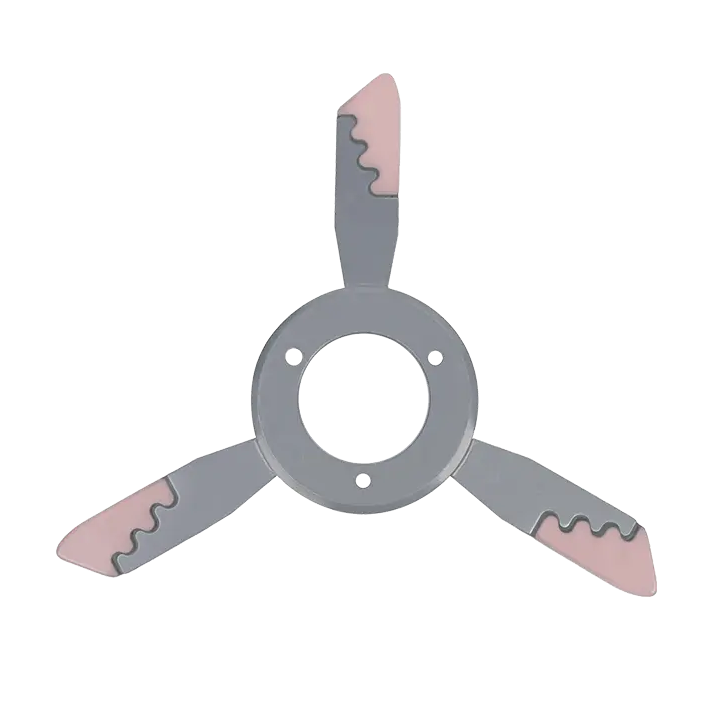
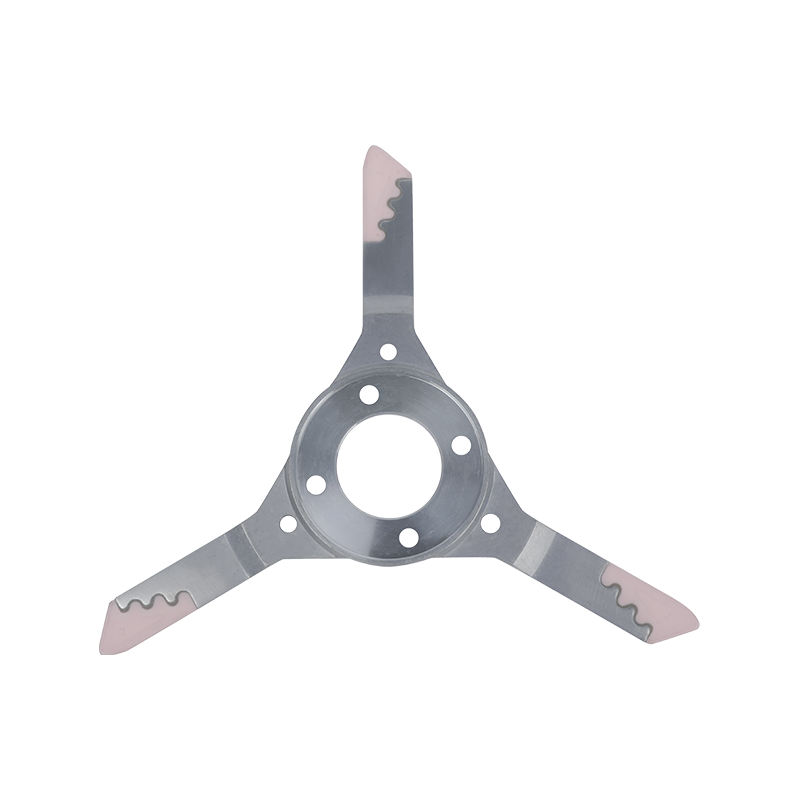 Custom Barmag Spinning Machine Parts CatalogReview the catalog’s winder, hot godet and other Barmag spinning machine parts, including shift fork models S-1011 to S-1024, when comparing genuine and qualified alternatives.View Product → Barmag Spinning Machine Shift Fork CategoryBrowse S-1011 through S-1024 shift fork variants in RO, LO, LU and RU, listed as Barmag-compatible winder regulating components.View Product →
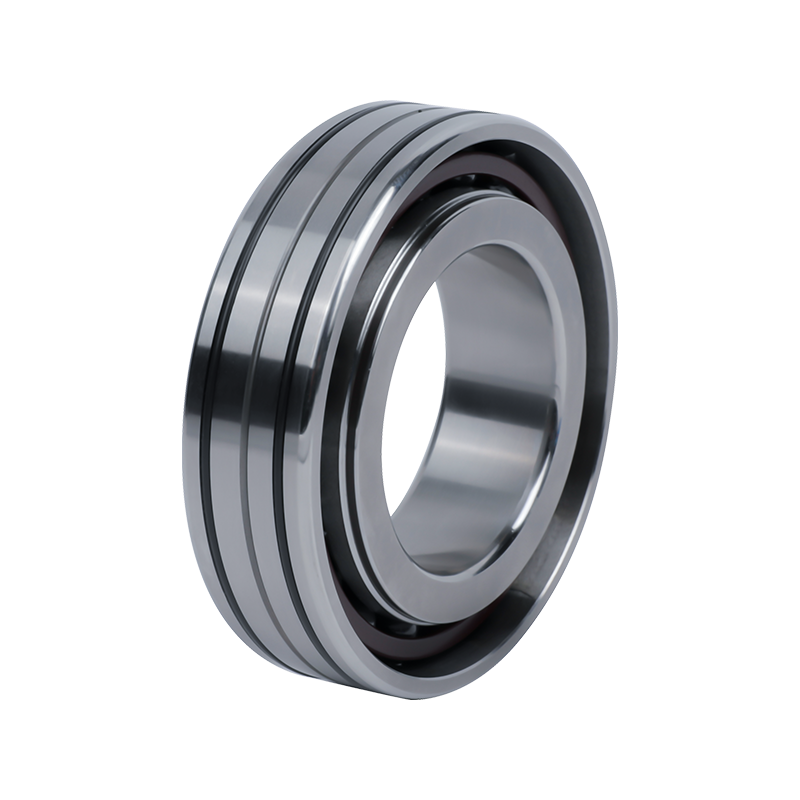 Bearing for Barmag Hot Godet 13011800030Replacement bearing for Barmag hot godet assemblies, with φ50mm × φ90mm × 23mm dimensions, suited to spinning machinery maintenance and wholesale replacement needs.View Product →
Five minutes of documentation at this stage routinely saves a returned shipment later. It also gives whoever repairs the part a much better chance of restoring the original condition rather than simply replacing what failed.
Replacement is only one answer. Many Barmag components are worth repairing, particularly when the wear is a surface phenomenon rather than a structural one. Plasma spray coating on godets, guide plates and separator rolls restores a working surface without scrapping the body of the part, and it is a route we use often for components that are otherwise dimensionally sound.
Shift fork gear boxes and fork assemblies fall into the same category. Wear lands on the fork tip and on the gear box bearings long before it reaches the casting, so a rebuild — including repairing of shift forks — usually costs a fraction of new and restores the original clearance. Our repair workshop handles hot godets, chucks, contact rolls, separator rolls, motors, coils and pump units alongside the mechanical work.
For older lines, the more interesting question is whether the original assembly should be kept at all. Winder upgrading and chuck motor and fan upgrades can address the reason a part keeps failing, rather than replacing it on a fixed cycle. That is often a cheaper conversation than a new winder, and it is one we are always willing to have on the shop floor rather than in a catalogue.
So the useful way to think about Barmag original parts is not as a binary choice between genuine and everything else, but as a question of interface integrity. Understand what the drawing controls, know which parts carry the consequence of failure, and verify identity before you order. Do those three things and the source becomes a logistics decision instead of a quality gamble — which is exactly where it belongs.

ADDRESS: No.1298, Zhouan Road, Economic and Technological Development District, Jiaxing City, Zhejiang Province
PHONE: +86 19057031687
TEL: 86-0573-83777752
EMAIL: [email protected]