English
 عربى
 русский
 简体中文







2026-11-06
Home / News / Industry News / PET Flakes Dryer: Dewatering, Drying and Spinning Line Integration Guide

Ask five people in a recycling plant what a PET flakes dryer should do, and you will usually get five different answers. One wants the flakes dry enough to bag. One wants them dry enough to feed an extruder without steam flashes. Another has just spent a shift clearing bridges out of a hopper and simply wants the line to run. They are all talking about the same piece of equipment, but they are talking about different problems.
This article is written from the perspective of people who build drying equipment, spinning lines, hot godets, winders and spare parts for polyester plants, and who have spent years watching what moisture actually does downstream. We will keep it practical: what the dryer has to remove, where it sits in the process, and what to check before you buy one.
The first thing worth clearing up is that "drying" in a PET flake line covers two very different operations, and confusing them is the most common reason a project ends up with equipment that disappoints.
Flakes leaving a washing and rinsing stage come out genuinely wet. Water sits in the film on every surface, in the gaps between flakes and in the fines that travel with them. This water is free water, and the cheapest way to remove it is mechanically: a horizontal dewatering screw that pushes and squeezes the flake bed, or a centrifugal dryer that throws the water off at speed. Neither machine needs much heat. Both can take a dripping flake stream down to something that feels damp rather than soaked.
What is left after dewatering is far more stubborn. Some water remains as a thin film; some has already diffused into the polymer itself. Mechanical force cannot reach it. You need time, temperature and dry air — normally a crystallization or preheating stage followed by a hopper dryer fed with dehumidified air, where the supply air dew point matters as much as the temperature setpoint. For melt spinning, the moisture level at the extruder throat is usually measured in tens of parts per million, not percent.
The table below is the short version we use when explaining the split to a customer who is planning a new line or replacing an old one.
| Question | Mechanical dewatering | Thermal drying |
|---|---|---|
| Main job | Lifts free water off the flake surface | Removes the remaining film and the moisture inside the polymer |
| Typical result | Flakes leave damp but no longer dripping | Moisture reduced to the low ppm range required for spinning |
| Position in the line | Directly after washing and rinsing | Between dewatering and the extruder |
| Energy profile | Mostly electrical, little heat input | Heat plus dry air, usually the largest running cost of the two |
| What to watch | Screen wear, fines build-up, throughput swings | Dust on filters, channelling in the hopper, over-drying |
In a PET flake spinning project, drying is never a standalone step. It is a link in a chain, and each link constrains the next one. A typical sequence looks like this:
Notice that steps two to four work together. If the dewatering stage is passing lumps and extra water, the dryer has to work harder and the residence time becomes unstable. If the dryer is undersized, the extruder sees a moisture level that drifts with ambient humidity, and the spinning positions inherit that drift.
We have been called to more than one plant where the winder was blamed for breaks that actually started in the drying hopper. The chain of effects is fairly predictable:
Recycled flake makes all of this more sensitive, because bulk density, fines content and residual surface contamination vary from batch to batch. If you are still building your understanding of the material itself, our technical notes on PET are a reasonable starting point before you size anything.
When we quote a dryer, we ask for the same handful of details every time. They are not difficult questions, but the answers change the machine significantly.
Our own
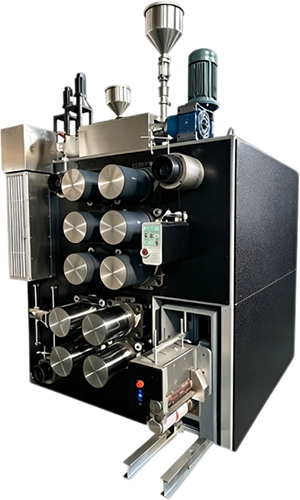
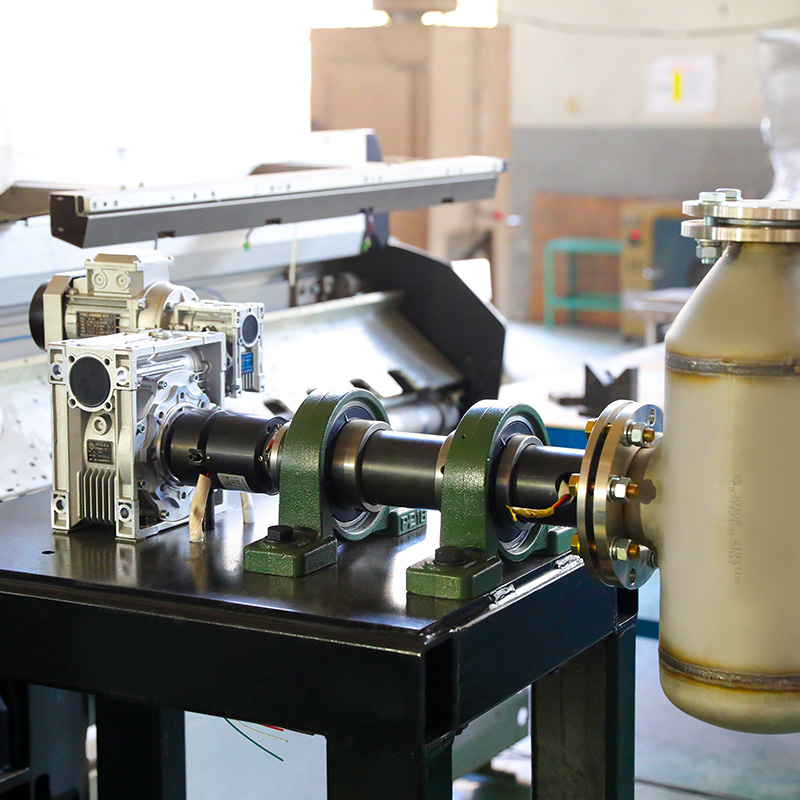 SZG-A Vacuum Rotary Drum Dryer for Chemical Fiber ChipsBatch chip dryer for PET, PA6/PA66, PLA and engineering plastics, using high vacuum and gentle tumbling to protect intrinsic viscosity before melt spinning.View Product →
dryer range is built around these variables rather than a single fixed configuration, because a line running washed flake at variable quality is a very different duty from a line running consistent virgin chip.
One habit we recommend to anyone moving into recycled flake spinning: dry and spin a representative sample before you sign for a full line. Batch-to-batch variation in flake quality is real, and a trial run tells you more about filtration, break rates and godet condition than any data sheet.
Our spinning laboratory is open for this kind of work, and the multifunctional flexible pilot spinning machine we build is designed to move quickly between single-component, bicomponent and multicomponent trials, including POY, FDY, medium-strength and fine denier industrial yarn.
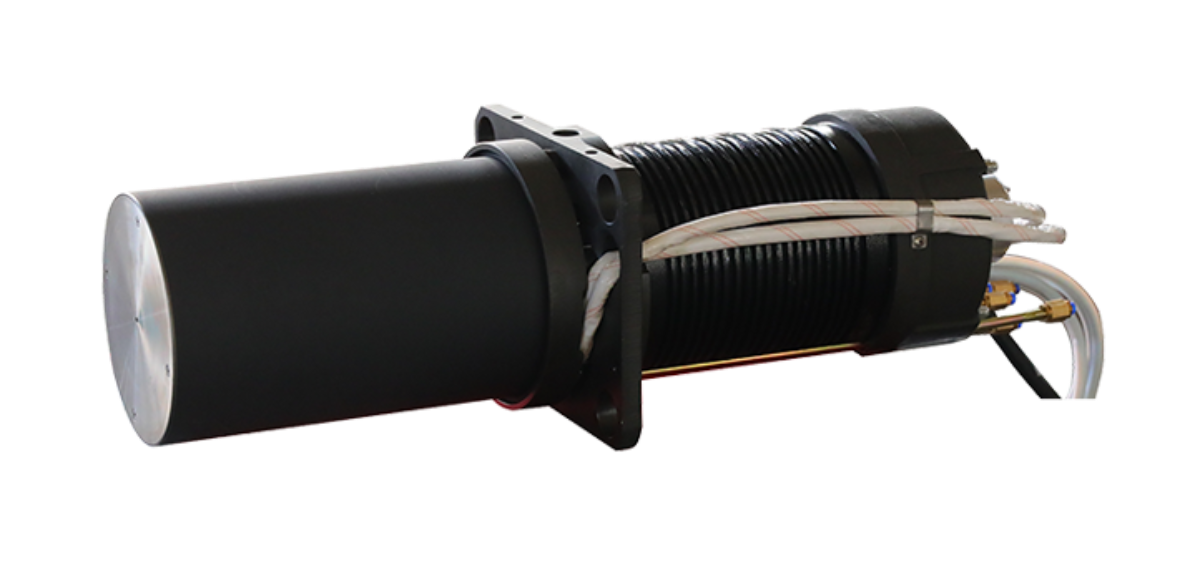
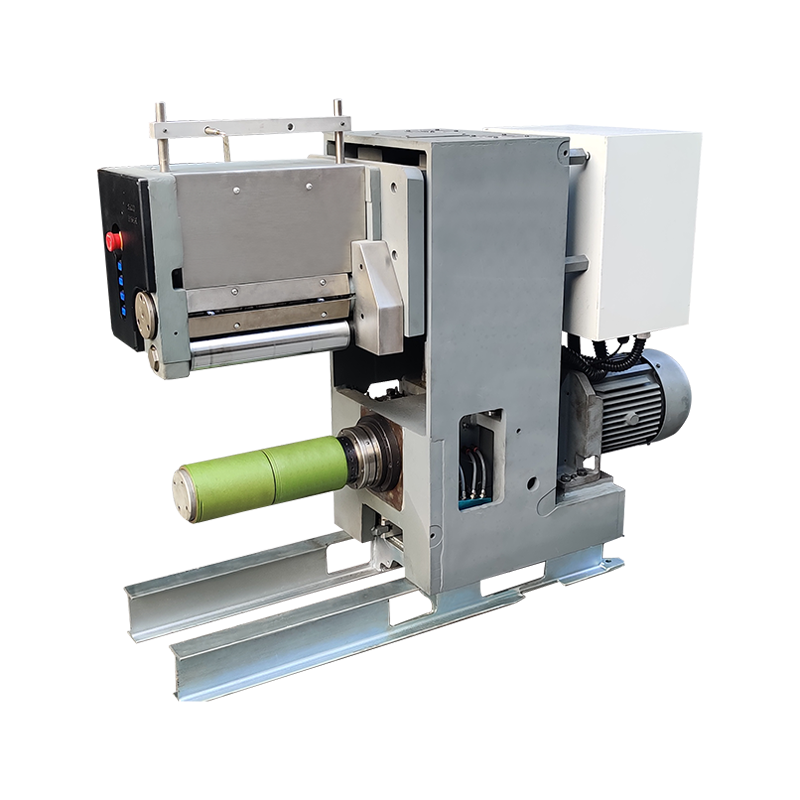 SF-01 Standard Pilot Melt Spinning MachineCompact pilot spinning machine for PET, PA and PP filament trials, supporting UDY, POY, MOY and FDY with twin-screw extrusion and semi-automatic winding.View Product →
It is a much cheaper place to discover that your flakes need a longer drying time than to discover it on a production line at three in the morning.
Drying is only one link, but it is the link that decides whether everything after it behaves. The dryer has to match the dewatering stage in front of it, the extruder and spinning positions behind it, and the actual material you intend to run — not an idealized version of it.
Because we work across POY, FDY, HOY and industrial yarn spinning lines as well as hot godets, winders, coated parts and repair services, we tend to look at a dryer question as a line question. That is usually more useful to the customer, even when it means the answer is "your dryer is fine, your dewatering screen is worn".
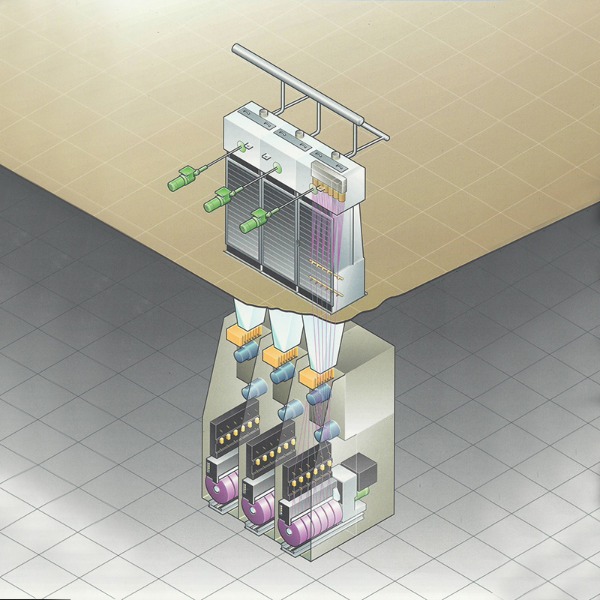
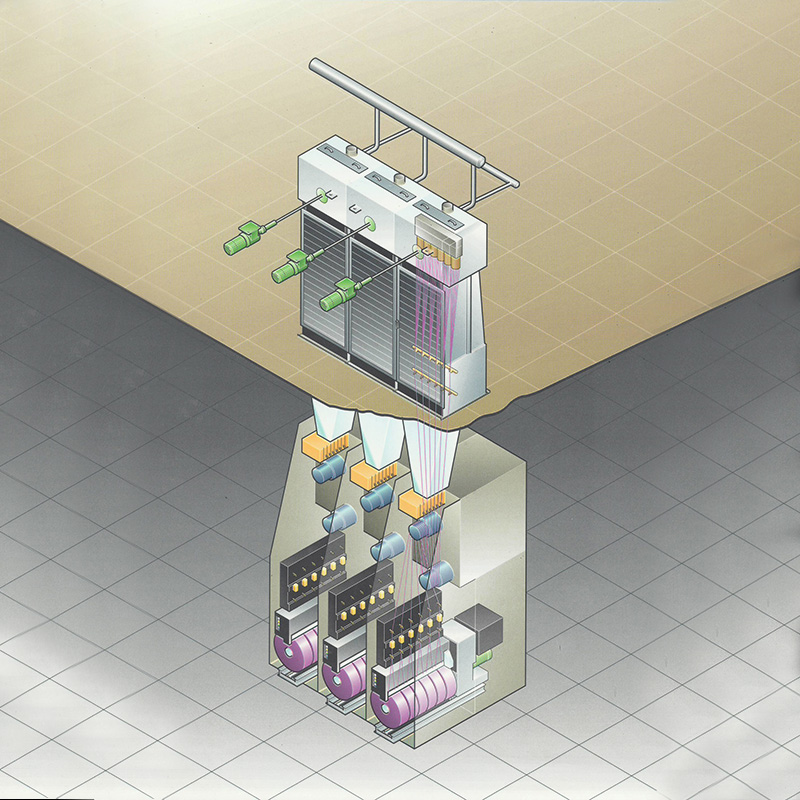 Turnkey POY Spinning Production Line for PET, PA and PPComplete POY line from chips to wound yarn, covering extrusion, metering, quenching, spin finish, godets and high-speed precision winding for stable filament production.View Product →
If you are at the early stage of a flake-to-yarn project, send us your throughput, your moisture figures and a sample description. We would rather spend an hour on the process with you than sell you a machine that turns out to be the wrong size.
Whatever stage you are at — sizing a first dryer, replacing a tired dewatering unit, or chasing breaks that everybody has so far blamed on the winder — the useful conversation always starts with the material and the moisture numbers. Everything else in the line follows from those two facts.

ADDRESS: No.1298, Zhouan Road, Economic and Technological Development District, Jiaxing City, Zhejiang Province
PHONE: +86 19057031687
TEL: 86-0573-83777752
EMAIL: [email protected]