English
 عربى
عربى русский
 简体中文
简体中文







2026-09-04
Home / News / Industry News / Barmag Repair: What It Takes to Restore Winder, Godet, and Chuck Performance

A Barmag line rarely signals a pending failure with a clear alarm. The first symptom is usually one that only an experienced operator notices: a winder producing a slightly uneven package, a contact roll that cannot hold its speed, or a hot godet that reads 15–20°C above its set point. Production continues because the deviation starts small. By the time it shows up as a quality problem, the original fault has often caused secondary wear in bearings, seals, and guide surfaces. That secondary damage is what turns a straightforward repair into an expensive rebuild.
The conclusion up front: Barmag repair is a precision engineering task, not a parts-replacement routine. The goal is to restore the original component to factory tolerances so that it performs as it did when new. That means dynamic balancing, temperature calibration, and surface treatment are part of the repair, not optional extras. Replacing a component makes sense only when it cannot be returned to specification or when repair would cost nearly as much as a new part.
Barmag repair covers more than a single part. In a filament spin line, repair work applies to every rotating, heated, and yarn-contacting component that contributes to final package quality. The work usually falls into four groups:
Each group has its own failure signature, and misdiagnosis is common. A winder that produces irregular package hardness is often attributed to a shift fork problem, yet the same symptom can be caused by chuck runout, a worn yarn guide, or a failing tensioning block. The distinction matters, because repairing the wrong component costs time and money without eliminating the fault.
Hot godets are the most thermally stressed components on the line. The classic failure pattern starts with a temperature drift. A godet that reads 10–20°C above setpoint at steady state usually has a heater coil that is partially grounded or a thermocouple that has drifted out of calibration. In older units, the coil insulation degrades gradually, which produces exactly this symptom. If the godet stays in service, the elevated surface temperature alters yarn orientation and creates variations in dye uptake across the package.
When assessing a hot godet, check coil resistance and isolation resistance first, then the temperature sensor response. If the heater and sensor are healthy but the roller surface has discolored or roughened, surface re-treatment may be required. In many cases, a hot godet repair service that combines coil replacement, surface re-treatment, and calibration against an original Barmag temperature calibration instrument is more economical than a new unit.
Separator rolls usually fail at the bearing set. The first sign is a faint high-frequency noise at steady speed. Vibration amplitudes rise as the rolling elements wear, and the roll can start to mark the yarn. Because separator rolls run at very high revolutions, every repair must include dynamic balancing. A separator roll returned without balancing transmits vibration to the winding package and can significantly shorten bearing life on the adjacent winder.
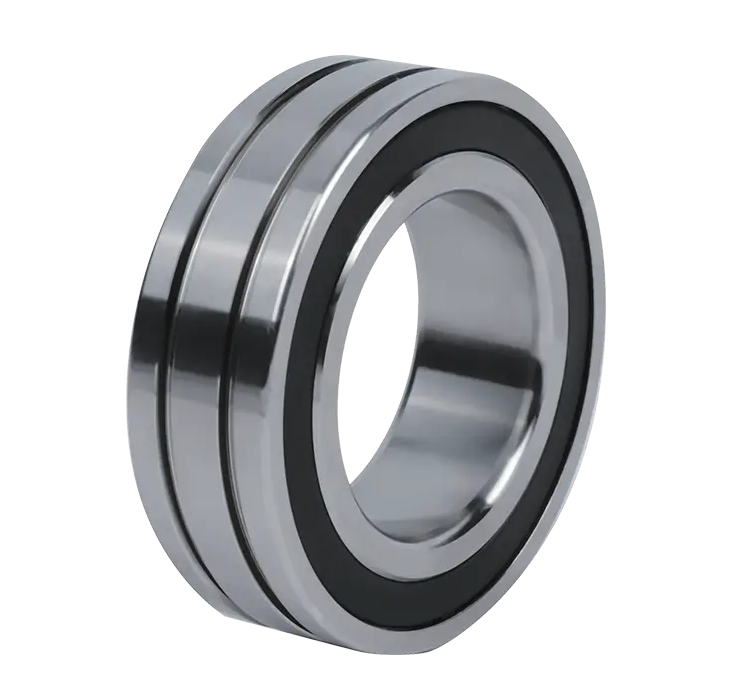
If the bearing set is worn, replacing the Barmag hot godet bearing while balancing the completed assembly is the standard route back to stable operation.
 Replacement Bearing for Barmag Hot Godet Part 13011800030This bearing is engineered specifically for the Barmag hot godet and has passed practical testing in chemical fiber plants, meeting or exceeding original machine standards to help restore stable operation when your current bearing set is worn.View Product →
The winder chuck is the component that defines package quality. Chuck runout translates directly into radial runout of the aluminum tube and uneven package density. A practical threshold used by many workshops is 0.03–0.05 mm total indicated runout at the clamping surface. Above this value, the chuck should be inspected before a production-grade package can be produced.
Chuck repair typically involves regrinding the base and sleeve to recover concentricity, but the bearing seat must still be true. If the seat has worn beyond roughly 0.05 mm, the shaft must be hard-chromed and reground, or the component replaced. The lock ring in this assembly is a consumable: a worn lock ring lets the chuck clamp unevenly, reproducing the same symptoms as chuck runout. Replacing the Barmag 1200 and 1380 chuck lock ring is a low-cost fix that prevents much larger repairs later.
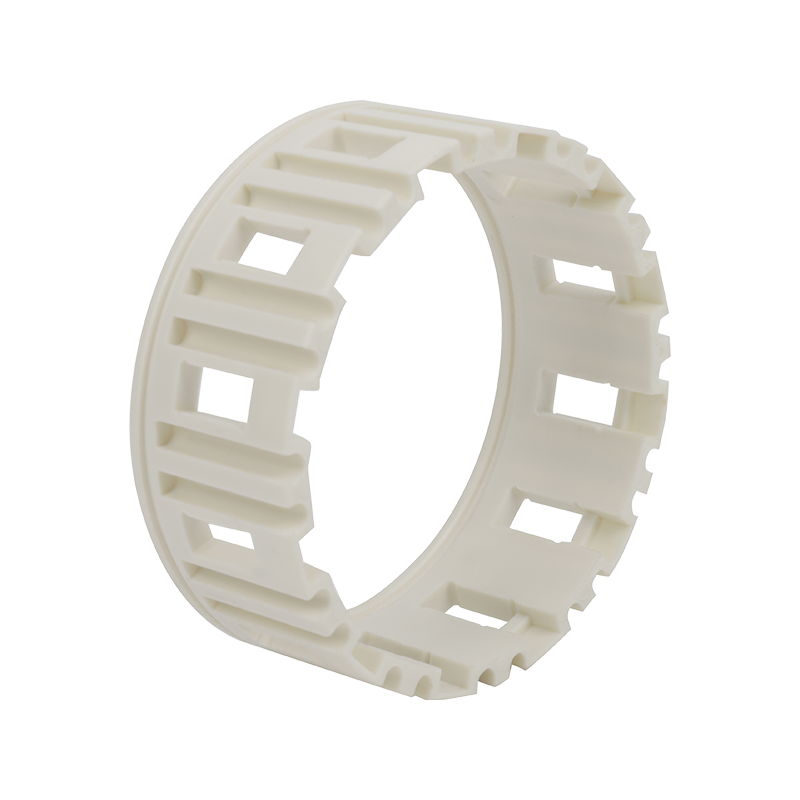 Lock Ring for Barmag 1200 and 1380 Winder ChucksThis lock ring fits the Barmag 1200 and 1380 chuck assemblies and is a cost-effective consumable that prevents uneven clamping and avoids larger repairs when the ring is worn or damaged.View Product →
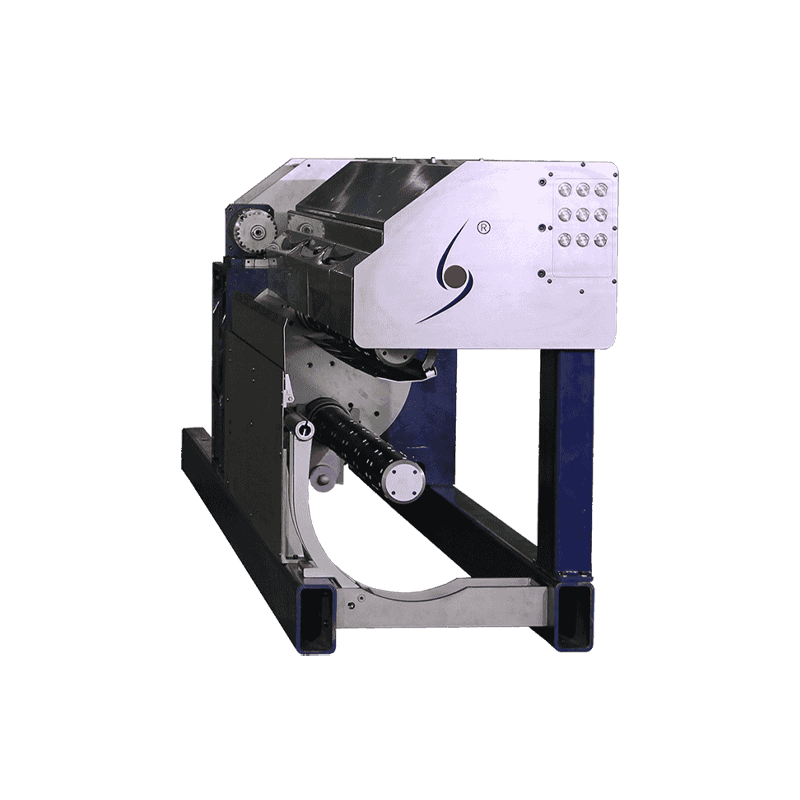
The shift fork gear box controls the automatic package change cycle. When a winder starts to show delayed or incomplete changeovers, the gear box is frequently the cause. Worn fork pins, broken spring packs, or a leaking seal all cause erratic shifting. Installing a Barmag winder shift fork gear box is often the fastest route back to reliable changeover, but a repair that replaces the worn fork set and seals can also be a sound choice when the housing remains intact.
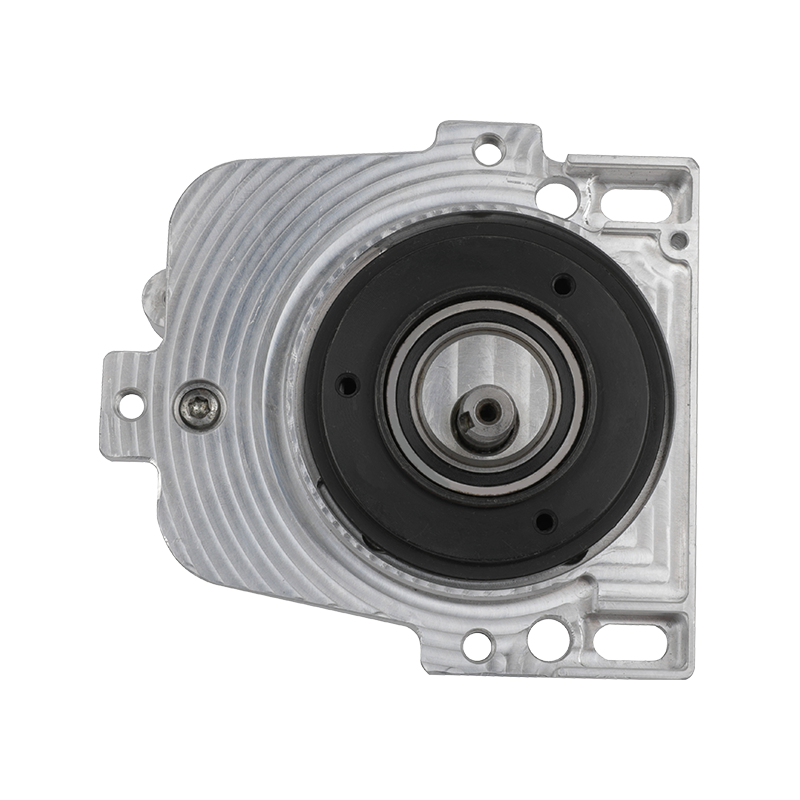 Shift Fork Gear Box for Barmag Automatic WindersThis gear box controls shift fork movement for precise package changeover in Barmag winders, addressing delayed or incomplete changes caused by worn components, and is a direct replacement for restoring reliable operation.View Product →
Any rotating component – separator roll, contact roll, chuck assembly, or winder rotor – must be balanced after repair. A precision dynamic balancing machine, such as those used for high-speed rotor work, is the reference standard for this job. The balancing quality grade should be documented, and the residual unbalance should be reported in gram-millimetres so that the maintenance team can compare it with the original specification.
Hot godets must be calibrated after any repair that touches the heater, sensor, or coil. The only meaningful calibration is against an original Barmag thermal calibration instrument, because the control algorithm of the spinning machine is matched to the original sensor curve. A godet calibrated with a generic instrument may read correctly on the bench but behave differently when reconnected.
Guide surfaces, godet rollers, and separator rolls that contact the yarn need a controlled surface finish. Plasma spray coating, applied with equipment capable of controlling both thickness and porosity, restores wear resistance and ensures a consistent coefficient of friction. The coating thickness should be measured, and the final surface finish should be matched to the original specification.
The table below summarizes a practical decision framework for common Barmag repair items.
| Component | Typical failure | Repair option | Replacement threshold |
|---|---|---|---|
| Hot godet | Coil insulation breakdown, surface wear | Replace coil, re-coat, calibrate | Case deformation beyond 0.1 mm |
| Winder chuck | Runout at clamping surface | Regrind base and sleeve | Bearing seat wear beyond 0.05 mm |
| Shift fork gear box | Worn fork pins, seal leakage | Replace fork set and seals | Cracked housing |
| Separator roll | Bearing noise, vibration | Replace bearing, balance assembly | Scored shaft surface |
| Lock ring | Edge wear, uneven clamping | Replace lock ring | Always replace on re-assembly |
The rule of thumb is that repair is worthwhile when the component can be brought back to spec at 50–60% of the replacement price. Above that ratio, a new part reduces downtime risk and gives a full warranty. For consumables like lock rings, O-rings, guides, and small bearings, replacement is always the correct choice.
Before sending a component out for repair, verify that the workshop has four capabilities:
The workshop should also be able to state, in writing, the tolerances it will meet and the test data it will provide. A repair partner that cannot supply balancing reports or calibration records is not prepared to work on high-speed winder components.
Barmag repair is most successful when it is planned around root cause, measured tolerances, and original specification. A component that is diagnosed correctly, repaired with the right equipment, and balanced and calibrated before return will be worth more than a cheap repair that leaves the line running for weeks before the same symptom appears again.
For suppliers and maintenance teams, the practical takeaway is simple: invest in the diagnostic step, use a workshop that has the right measuring and balancing equipment, and treat consumables as consumables. That is the path to maintaining the reliability of an installed Barmag line over a long service life.

ADDRESS: No.1298, Zhouan Road, Economic and Technological Development District, Jiaxing City, Zhejiang Province
PHONE: +86 19057031687
TEL: 86-0573-83777752
EMAIL: [email protected]