English
 عربى
عربى русский
 简体中文
简体中文







2026-10-09
Home / News / Industry News / PET Flakes Dryer for Spinning Lines: Moisture Targets, IV Preservation, and Specs

When a recycled PET washing line delivers flakes at 30-40% moisture into a fiber spinning line, the intrinsic viscosity can drop by more than 0.05 dL/g inside the extruder before the first screw element has finished its job. That failure mode shortens filament strength, causes shingled breakage, and pushes a production rate below plan. A PET flakes dryer is the equipment that closes that gap, but only if it is specified with the right moisture target, throughput, and integration approach for the yarn grade in question.
The conclusion is simple: if the flakes are not dry, the filament will not meet its strength spec. PET is an ester polymer, and its ester bonds are vulnerable to hydrolysis at melt temperature. Water absorbed on the flake surface or inside the polymer matrix hydrolyzes the chains at a rate that depends on the melt temperature, residence time, and moisture concentration. In practice, that means the IV of the melt drops directly with the moisture feed rate.
Polyolefins such as PE and PP can be extruded with surface moisture because they do not hydrolyze. PET cannot. A dryer for PET flakes is therefore a process conditioner, not simply a dewatering tool. It also acts as the first line of defense against sticking, agglomeration, and uneven crystallinity in the feeding system.
For recycled PET fiber, the standard moisture target is below 50 ppm at the hopper inlet. For fine-denier filament or high-tenacity industrial yarn, the target can be as low as 20-30 ppm.
The moisture target is not a single number shared by all recycled PET products. It depends on the downstream process and the quality grade you need to produce.
| End Application | Moisture Target (ppm) | Why It Matters |
|---|---|---|
| Strapping / Monofilament | 100-150 | Lower IV requirement, more forgiving |
| Fiber (POY / FDY) | 40-50 | Hydrolysis limits IV retention |
| Fine Denier Filament | 20-30 | Thin cross-section, higher surface/volume ratio |
| Bottle-to-Bottle / Sheet | 30-40 | Food contact, both IV and color |
Drying is never a single operation. A complete PET flake dryer combines mechanical and thermal stages to bring the material from 30-40% moisture down to the target specification.
Washed PET flakes leave the washing line with 30-40% moisture, most of it on the surface. A high-speed centrifugal dryer spins the wet flakes in a basket with internal rotor blades, flinging the surface water through screen mesh. Rotor speeds are typically 2800-3500 rpm, and the outlet moisture after the spin stage should be 3-8% by weight.
The dewatered flakes are then conveyed through a hot-air pipeline at 100-160°C. Fast-moving air strips the remaining surface and bound moisture. Residence time is short, usually 10-15 seconds, which is why this stage is called flash drying.
For certain fiber grades and for bottle-to-bottle applications, the flakes must be crystallized before pellet drying. Crystallization prevents the flakes from clumping in the desiccant dryer hopper and raises the bulk density, which stabilizes the feeding rate. A crystallizer operates at 160-180°C with a rotating or vibrated bed.
At the highest quality end, dried and crystallized flakes pass through a desiccant dryer with a dew point of -40°C or lower. This stage brings the final moisture to 20-30 ppm and is mandatory for fine-denier filament or bottle-to-bottle.
Before you compare dryer models, lock three numbers: end application, peak throughput, and flake moisture input.
Production lines rarely run at the nameplate speed for the full shift. A dryer sized on the average throughput will become the bottleneck during ramp-up, grade changes, or after a section restart. Most dryer specifiers size the unit for 100-120% of the line's maximum continuous capacity.
Your washing line determines how much moisture the dryer has to remove. If the centrifugal outlet is 5% instead of 8%, the thermal load on the hot-air stage drops substantially. The cost of the dryer's heating capacity is directly proportional to that number.
Hot-air dryers operating at 100-160°C consume electricity or steam depending on the heat source. Customers with a steam-condensate loop can lower running cost; customers on electricity should verify the installed kW and the specific energy per kg. The temperature range must also be sufficient for crystallization if you plan to add that step later.
At the equipment level, a spinning machine dryer or a standalone PET flake drying module must match the line's metering system to prevent the flakes from bridging in the hopper.
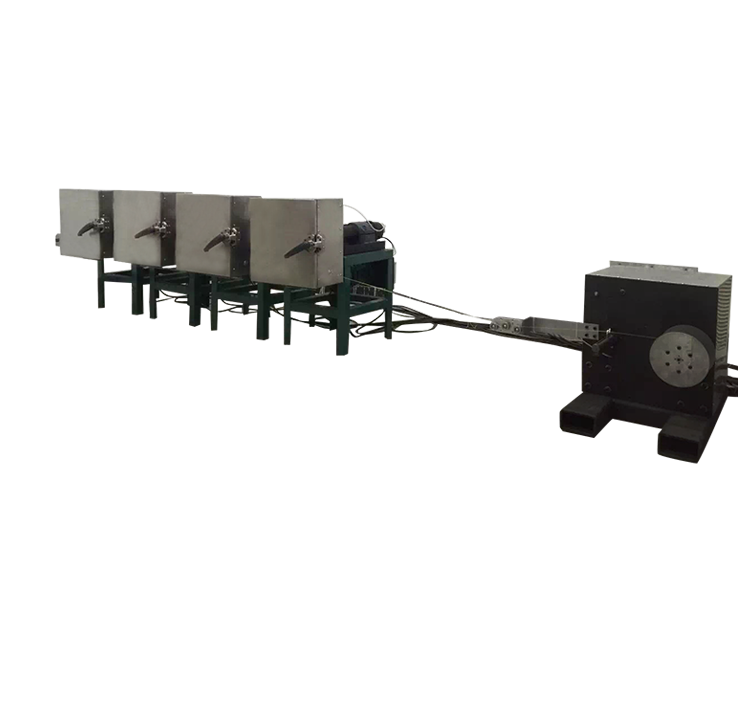
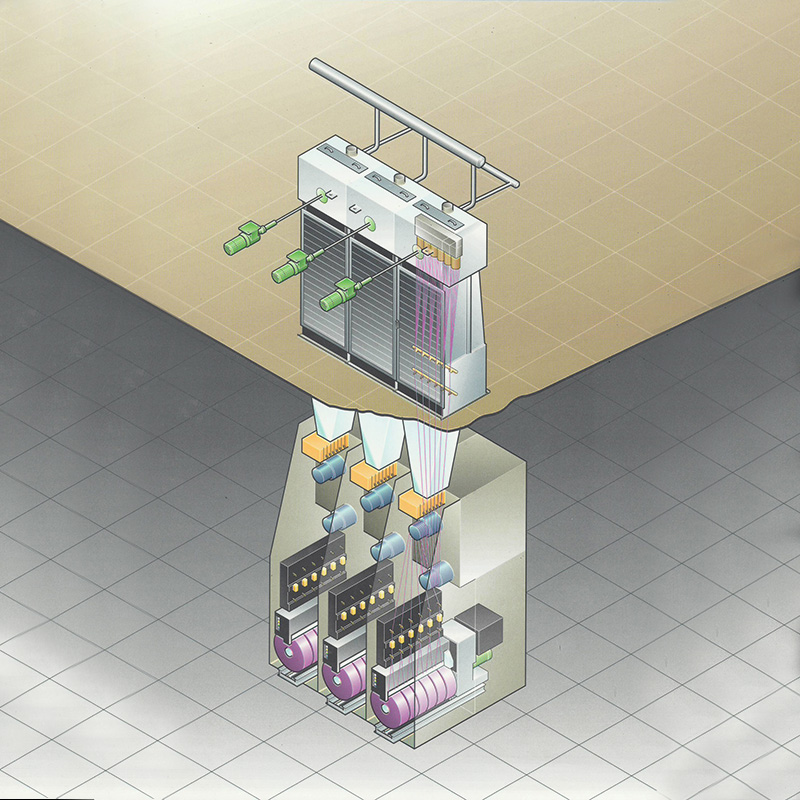
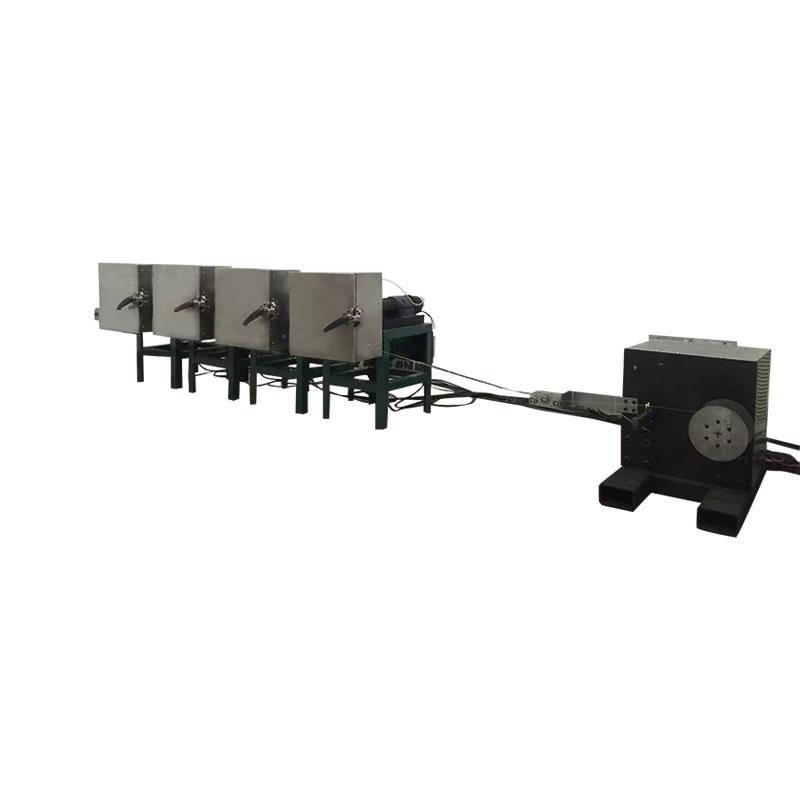
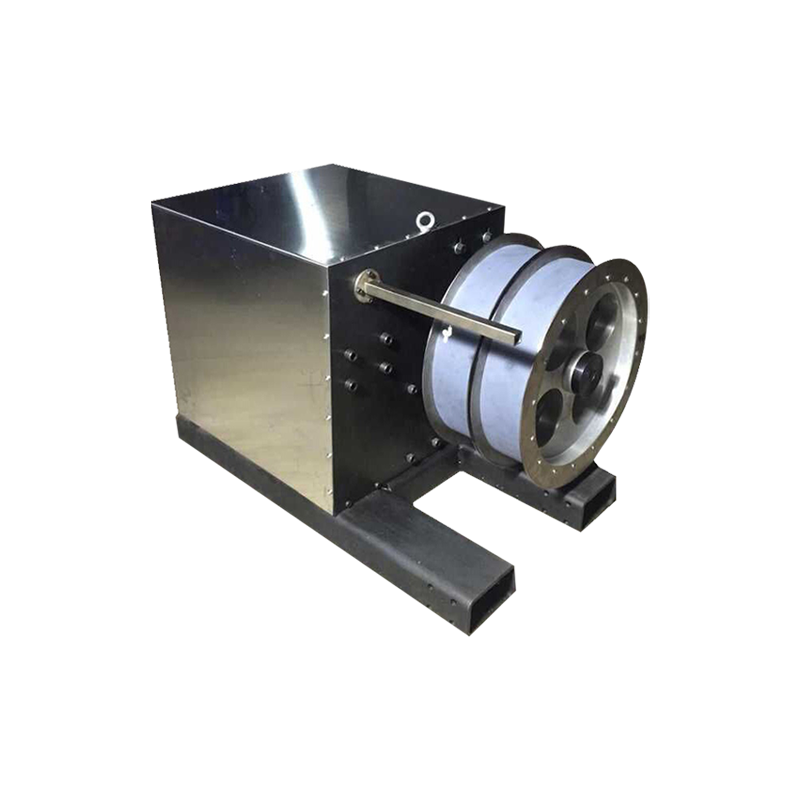
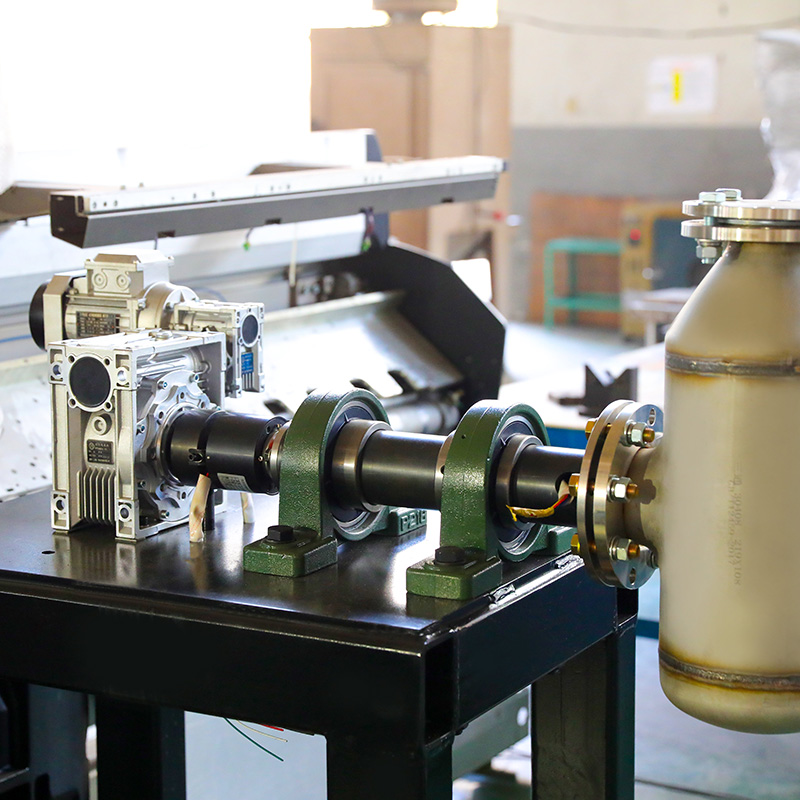 SZG-A Vacuum Rotary Drum Dryer for Chemical Fiber ChipsThis batch dryer pretreats polymer chips before melt spinning, using vacuum and heat to remove moisture and prevent IV loss. It fits the context of ensuring dry material reaches the metering hopper.View Product →
The symptoms appear as either quality defects or rising energy bills. Both point back to one root cause: the dryer is not operating at the specified dew point, residence time, or temperature.
High residual moisture combined with insufficient velocity in the pipeline can make flakes stick to the pipe wall. The result is charring and an uneven feed. A well-designed drying loop includes a high-velocity carrier and a coarse filter before the cyclone.
This is often a dew point problem. If the desiccant dryer is not regenerated properly, the dew point drifts upward and the absorbent capacity falls. Verify the dew point sensor and inspect the desiccant charge every season.
If the melt IV falls while the dryer is working, check the residence time in the extruder and confirm that the dryer is truly delivering the claimed moisture. Sometimes the flakes pass through a cold spot in the dryer and exit with more moisture than the probe reads.
The drying section can consume 15-20% of the line's total energy. Insulating the hot-air pipeline, optimizing the centrifugal rotor speed, and reducing the conveyed air volume are the fastest fixes. A larger dryer than necessary is the biggest cause of wasted energy.
Ask for a moisture-in / moisture-out specification sheet, not just a throughput figure. Good suppliers offer a dew point reading on the desiccant unit and provide a test run on your actual flakes before shipment.
The power figure is the first place to look for hidden operating costs. Your drying equipment must also be compatible with your existing recycling line. If you are purchasing a POY spinning production line, the dryer needs to deliver consistent moisture at the line's metering hopper. The same principle applies to an FDY line, where the moisture target is tighter because the filament is drawn.
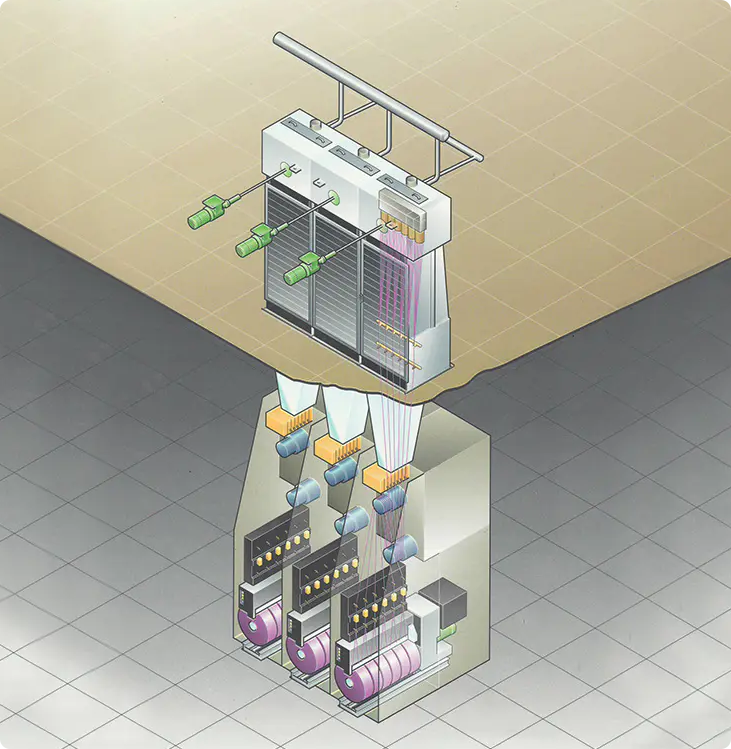
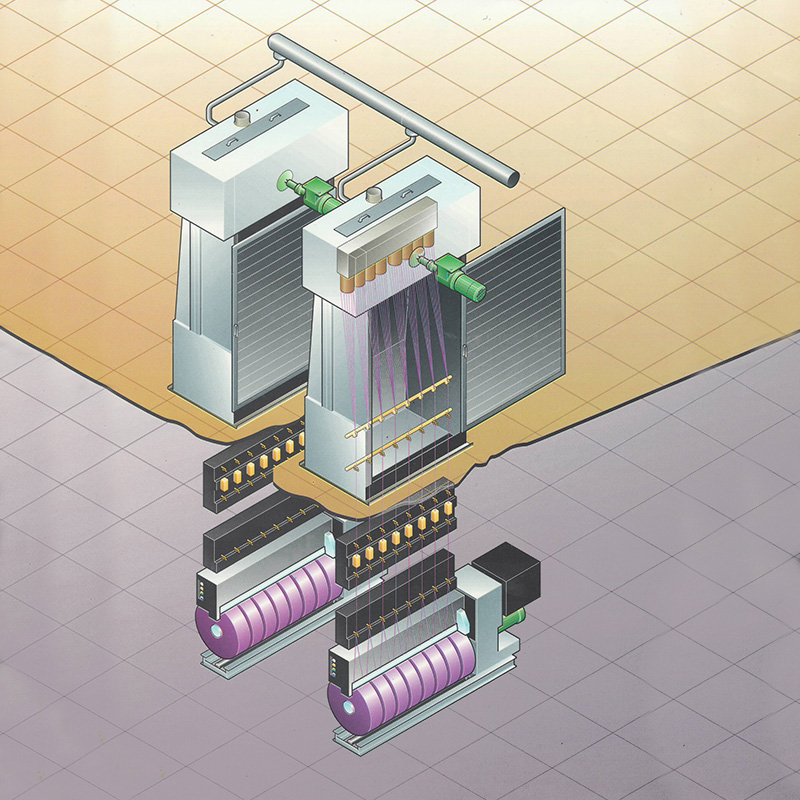
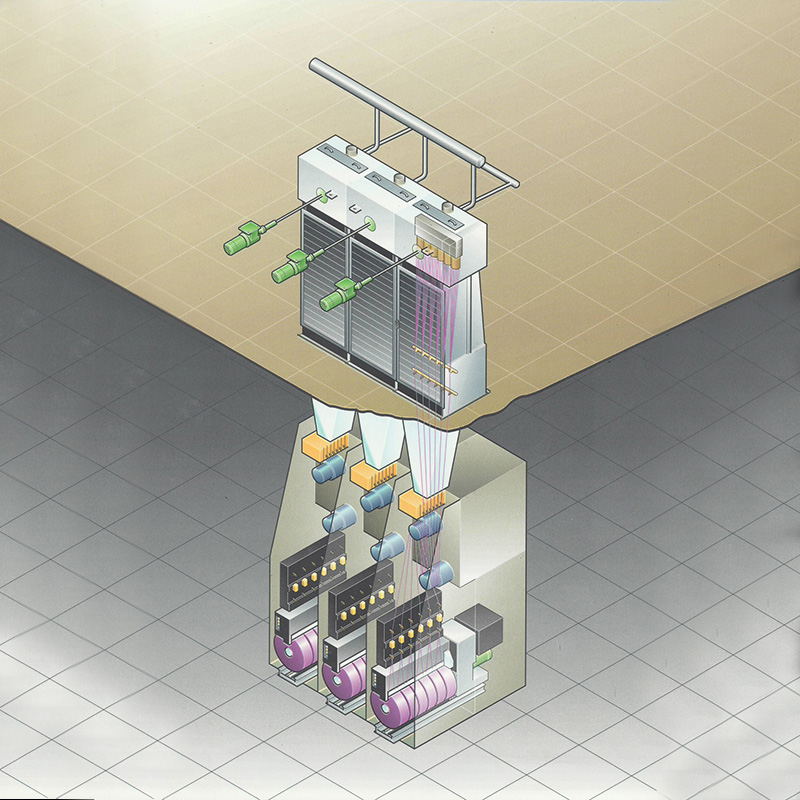 Complete POY Spinning Production Line for PET, PA, PPThis turnkey POY line handles raw material processing through winders, with flexibility for multiple polymers. It pairs with drying equipment to supply consistent moisture-controlled flake to the spinning machine.View Product →
A PET flakes dryer does not run in isolation. It is part of a sequence: drying, crystallization, extrusion, filtration, and spinning. The dryer's hopper must be sized to hold enough dried flakes for a steady feed, and the metering device must adjust flake flow as the extruder speed changes.
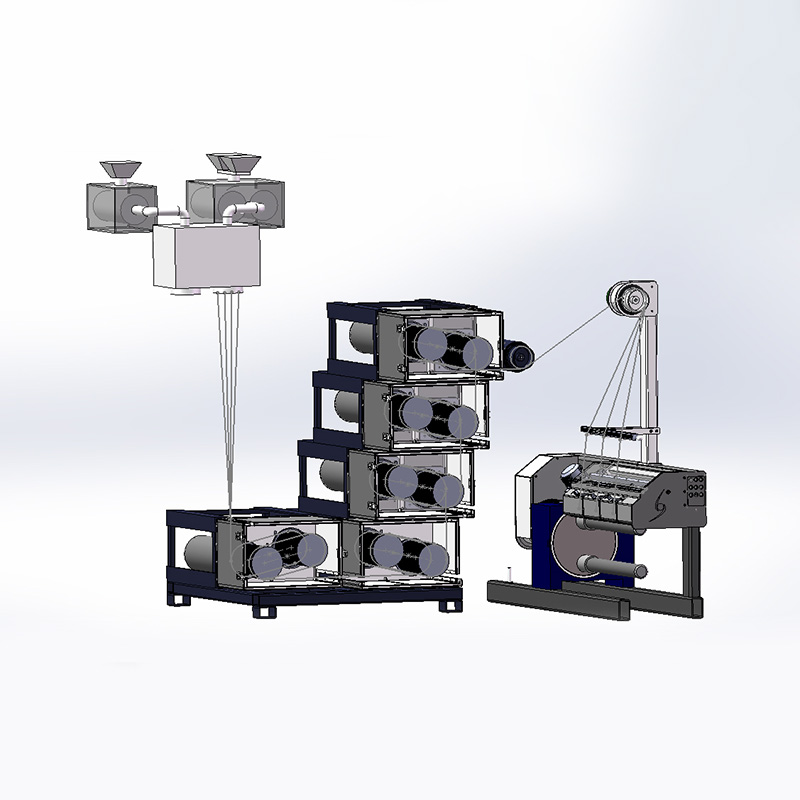
Understanding how a spinning production line operates helps the operator coordinate the dryer with the downstream process. If the dryer is undersized, the extruder will run without material for short intervals, causing the melt temperature to fluctuate and the yarn denier to wander.
For an FDY configuration, the flake feed needs the same stability. Pairing the dryer with an FDY spinning production line is only viable when the dryer can hold the moisture spec during line speed changes.
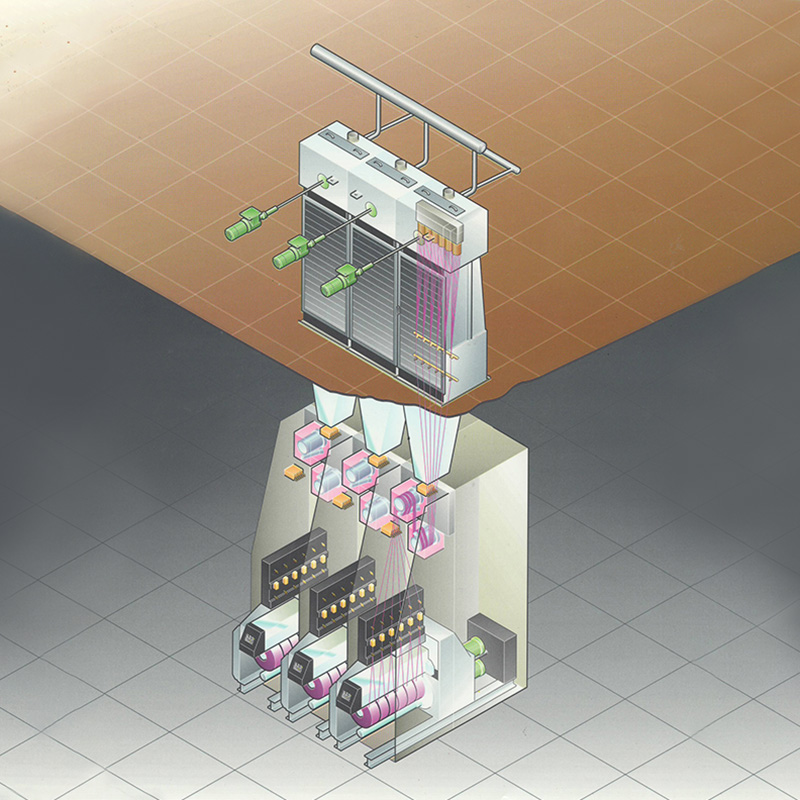 FDY Spinning Production Line for PET, PA, PP and OthersThis FDY line is designed for high-performance filament, integrating with drying systems to maintain moisture specs during speed changes. It supports instant production and technical textile applications.View Product →
It is easy to treat a PET flakes dryer as a secondary conveyor accessory. It is not. It is the gate that opens or closes the IV retention of a recycled PET fiber line. Start from the end application, lock the peak throughput, define the moisture input from the washing line, and only then compare dryer suppliers. The result will be a dryer that protects the quality of every filament you spin.

ADDRESS: No.1298, Zhouan Road, Economic and Technological Development District, Jiaxing City, Zhejiang Province
PHONE: +86 19057031687
TEL: 86-0573-83777752
EMAIL: [email protected]