English
 عربى
عربى русский
 简体中文
简体中文







2026-09-04
Home / News / Industry News / Barmag Parts Guide: Winder, Godet, and Bearing Replacements for Spinning Lines

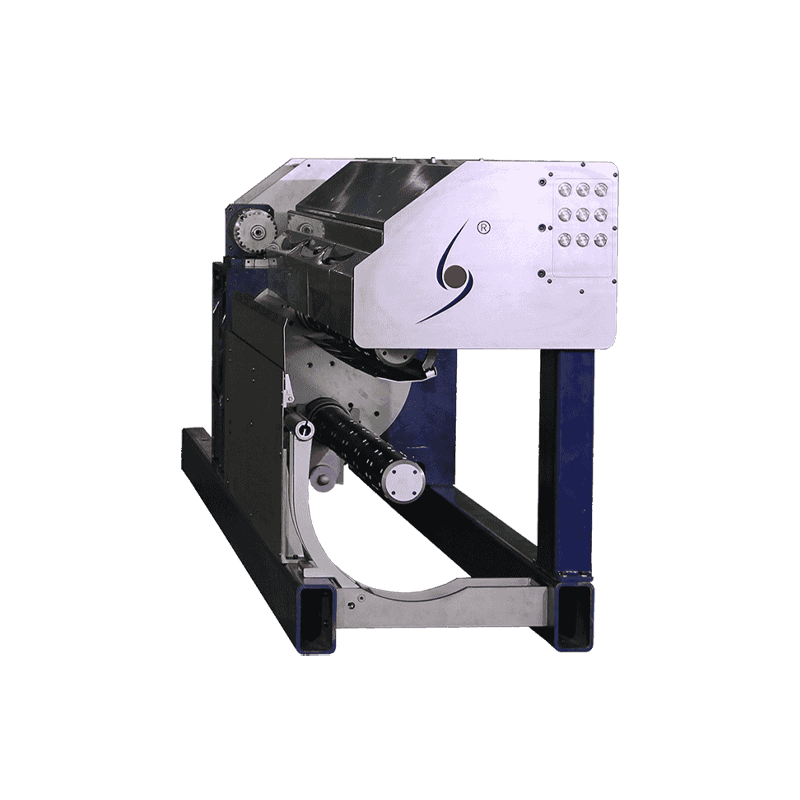
Machine failure never gives you a convenient appointment. A maintenance engineer in a POY plant opens the side cover of a Barmag winder and sees the shift fork edge rounded from years of cycling. The reaction time now decides whether one line continues at 99 percent efficiency or drops into slow reel-change cycles. The practical conclusion is that Barmag parts do not have to be a sourcing headache when you know which components matter, how to match them to your machine, and when to repair rather than replace.
Small differences in part condition produce large differences in downstream yarn quality. A shift fork transfers the axial movement that controls yarn crossing; once the fork edge wears, the tension profile changes and the yarn cake starts showing soft bands. The impact of that wear on the finished package is well documented in a practical look at how shift fork precision affects Barmag winding quality. The same cause-and-effect logic applies to a lock ring. If the lock ring's radial runout exceeds the chuck's concentricity specification, the package rotates with a slight eccentricity that doubles as vibration and leads to bobbin defects.
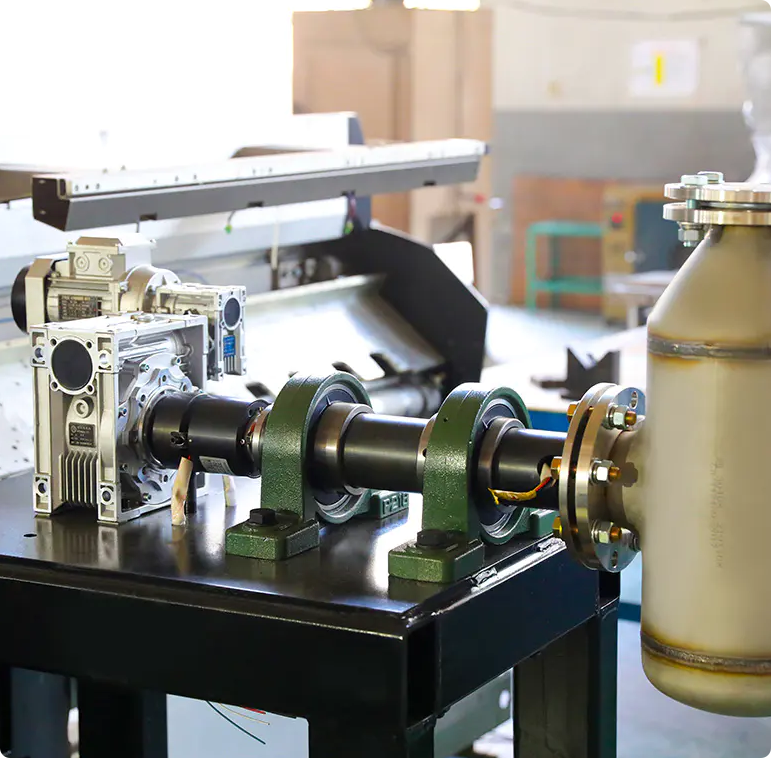
A hot godet is even more demanding. The bearing's preload and lubrication condition influence the surface temperature of the transfer roll, and temperature drift affects the polymer crystallinity and the tenacity of the fiber. In many cases, production teams spend whole shifts chasing yarn breakage only to trace the fault to a worn tensioning block. Barmag machines are engineered as a closed system. A single component operating outside its tolerance will announce itself through a winding defect, a broken guide, or an unplanned stop.
The maintenance teams that replace Barmag components most often see a predictable pattern: the wear concentrates in a handful of critical parts. The table below summarizes them and the way each failure presents on the line.
| Part Category | Typical Location | Failure Signature | Priority Level |
|---|---|---|---|
| Shift fork | Winder, gearbox | Rounded edge, misaligned yarn crossing | High |
| Lock ring | Chuck | Radial runout, eccentric package | High |
| Chuck bearing | Winder chuck | Noise, heat, uneven winding | High |
| Hot godet bearing | Hot godet | Temperature wobble, vibration | High |
| Yarn guide plate | Winder | Grooves, ceramic damage, filament abrasion | Medium |
| Interlacing nozzle | Yarn path | Decreased entangling strength | Medium |
| Tensioning block | Winder | Uneven tension, constant loss | Medium |
| Coupling | Godet to motor | Backlash, misalignment | Medium |
Identification starts with the winder generation and the chuck size. Barmag winders are commonly grouped around the 1200, 1380, 1500, 1600, and 1800 chuck series, and the ACW 1380 and ACW 1500 aluminum tubes are two of the most widely used formats. Every part is tightly coupled to a specific chuck size. A 1600 lock ring will not seat correctly on a 1380 chuck; forcing it creates a false fit that quickly damages the chuck surface.
Read the stamped or engraved part number before you order. Bearings carry codes such as 12120500018 or 13040900119 and are often different between a contact roll and a shifting fork gearbox. If you cannot find a part number, measure the worn component and compare it to the catalog drawing. Pay attention to the material grade as well. A yarn guide plate is not just a ceramic insert; its curvature and the surface finish of the ceramic control the yarn angle and friction.
The Barmag winder shift fork is the component that takes the most abuse in the gearbox. Its edge profile determines how the fork engages the groove, and once that edge rounds, the winding pattern starts to drift. Checking the fork edge before ordering prevents an unnecessary gearbox overhaul.
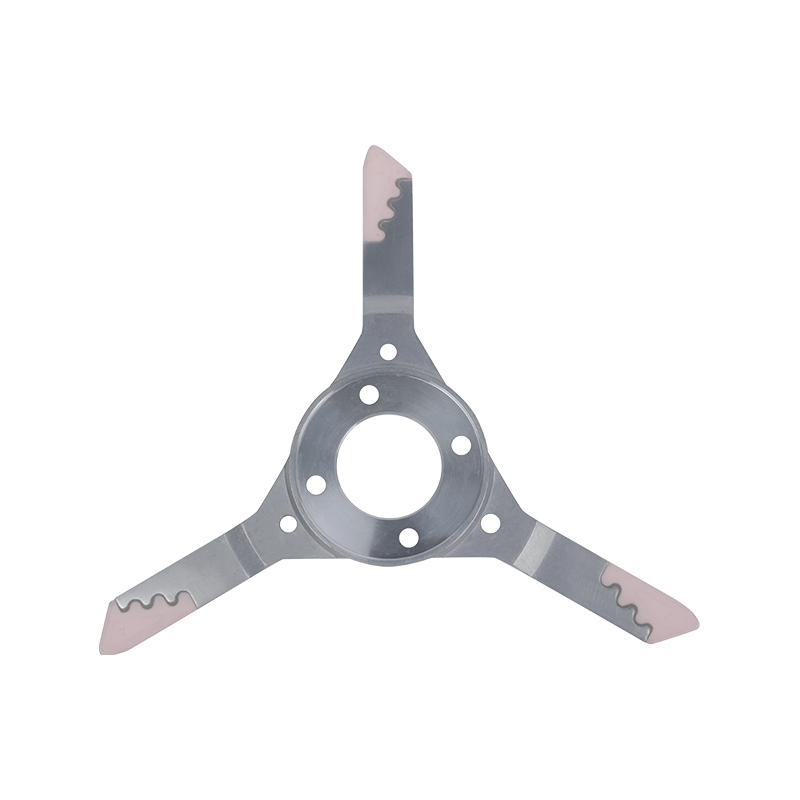 Barmag Shift Fork for Spinning Machine Winder GearboxThe shift fork engages the gearbox groove; a worn edge causes winding pattern drift. Our forks are manufactured for Barmag in Germany and have passed practical application tests.View Product →
The Barmag lock ring for the 1200 and 1380 chuck has a direct influence on package eccentricity. If the lock ring is not concentric, the chuck will wobble under load and produce yarn cake defects. When replacing a chuck, always inspect the lock ring seat for burrs or corrosion.
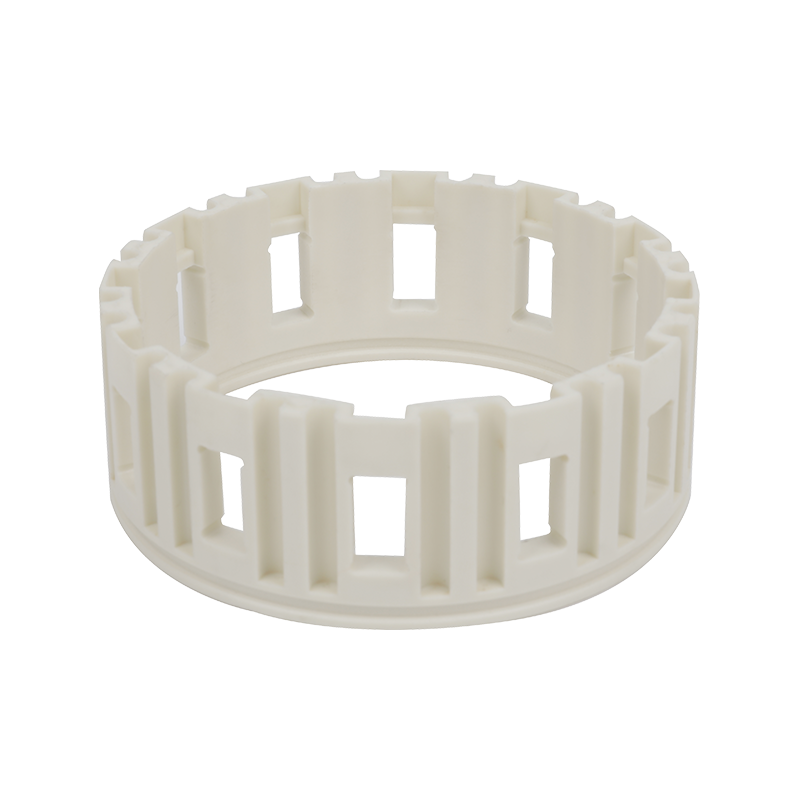 Barmag Lock Ring for Chuck 1200 and 1380This lock ring affects package eccentricity directly. If not concentric, the chuck wobbles under load, causing yarn defects. Always inspect the seat for burrs.View Product →
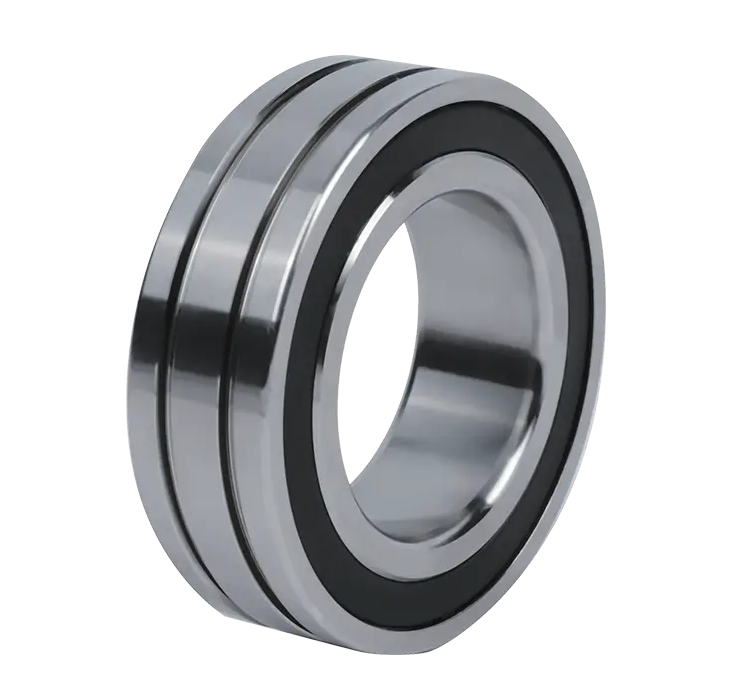
If the hot godet is the focus, the Barmag hot godet bearing is selected according to the load and the operating temperature of the heater. The bearing preload must match the original spec; a bearing with higher clearance will cause the heater temperature to fluctuate and weaken the fiber.
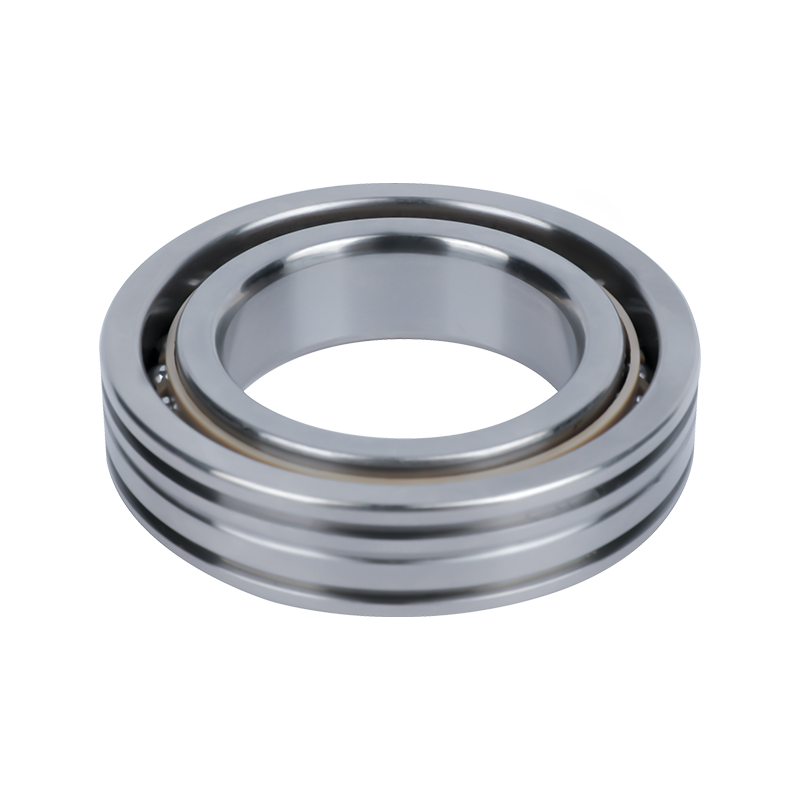 Barmag Hot Godet Bearing for Spinning MachineSelected for load and operating temperature, the bearing preload must match the original spec. Our bearings have passed practical application tests in chemical fiber industries.View Product →
The choice between original and aftermarket parts comes down to process discipline, not brand loyalty. Original Barmag parts are made by the machine manufacturer and are designed for the exact load cases and material demands of the original equipment. They are the safe choice when you want guaranteed compatibility and a documented maintenance path through the OEM service network. The trade-offs are cost and lead time. Original parts often need to be ordered from the regional warehouse, and the price reflects the brand premium.
Aftermarket parts can be a practical alternative when the supplier demonstrates the same mechanical discipline. The key is not the label but the process. On a hot godet, dynamic balancing matters more than the bearing brand; a component that is not balanced to the original standard will vibrate and accelerate the wear of the neighboring parts. On a wear surface, plasma-sprayed coating layers can extend service life beyond an original hard-anodized surface, provided the coating thickness and porosity match the process. Compare the supplier's production infrastructure: CNC machining, dynamic balancing equipment, temperature calibration tools, and material traceability. A balanced set of capabilities, like CNC machining, a SCHENCK dynamic balancing machine, plasma spray coating, and a Barmag original hot godet temperature calibrator, is a stronger signal than a copycat product page.
| Criteria | OEM Original | Experienced Aftermarket |
|---|---|---|
| Cost | Highest | Lower |
| Lead time | Depends on warehouse stock | Often faster |
| Compatibility | Confirmed by OEM | Confirmed by matching drawings and dimensions |
| Wear resistance | Designed by OEM | Improved by plasma spray coating where applicable |
| Upgrade path | Conservative | Flexible, including winder and shift fork upgrades |
Not every worn Barmag part needs a new component. Shift forks are often repairable. The edge can be rebuilt and re-machined within tolerance, which is usually a fraction of the price of a new fork and faster to source. The same field-proven approach applies to hot godets, chucks, coils, motors, contact rolls, and separator rolls.
The decision to repair or replace should be based on the wear envelope. If a dimension has moved more than 15 percent from its nominal value, or if the surface has developed cracks, replacement is safer. If the wear is localized and the frame is intact, a repair restores the part to service while preserving its original alignment.
If you have a large batch of worn forks or a limited budget for replacement components, ask about a shift fork repair service. It is a cost-effective way to keep a spare-parts stock rotating without tying capital up in new castings.
Before you place an order, run through this list. It takes ten minutes and saves you from a downtime mistake.
The Barmag parts ecosystem is easier to manage when you use one supplier for mechanical components, spray-coated wear surfaces, and repair work. That way, the drawing for the shift fork, the coating specification for the godet, and the balancing protocol all come from one source.
The takeaway is direct: select Barmag parts by mechanical fit and production role, not by appearances. If a part looks the same but does not carry the correct bearing number or the right coating, it will show up as a winding defect. The sooner your team aligns the purchase with the machine history and the supplier's capabilities, the quicker the line returns to normal speed.

ADDRESS: No.1298, Zhouan Road, Economic and Technological Development District, Jiaxing City, Zhejiang Province
PHONE: +86 19057031687
TEL: 86-0573-83777752
EMAIL: [email protected]