English
 عربى
عربى русский
 简体中文
简体中文






2026-10-09
Home / News / Technical Knowledge / Spinning Production Line Explained: Types, Key Equipment & How to Choose the Right Configuration

A spinning production line converts polymer chips or melt into continuous filament yarn through a defined sequence of thermal, mechanical, and winding processes. The configuration of that sequence — which equipment is included, in what order, and at what operating parameters — determines what yarn types can be produced, at what quality level, and at what energy and labour cost.
This article explains how a synthetic filament spinning line works, what distinguishes the main line types from each other, and what to evaluate when specifying or upgrading a line for PET, PA, or PP production.
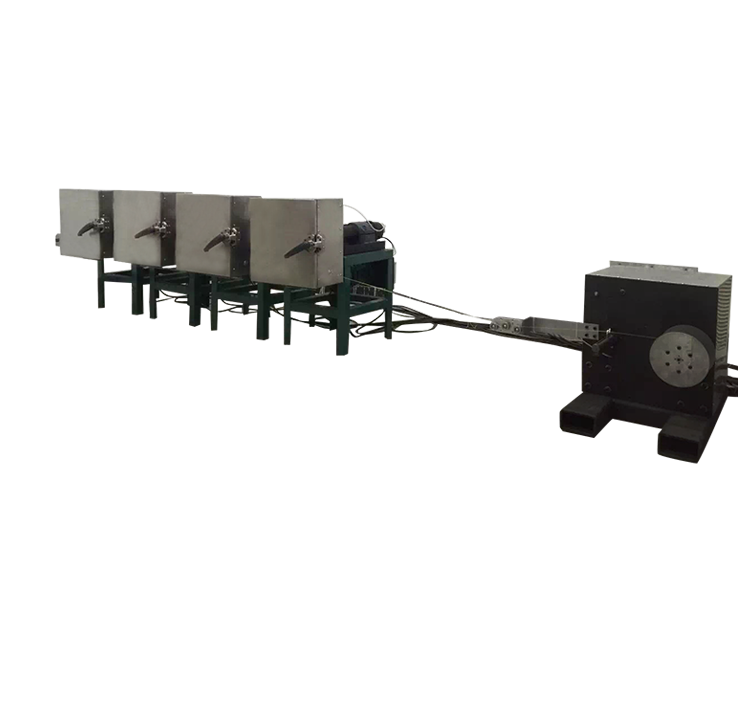
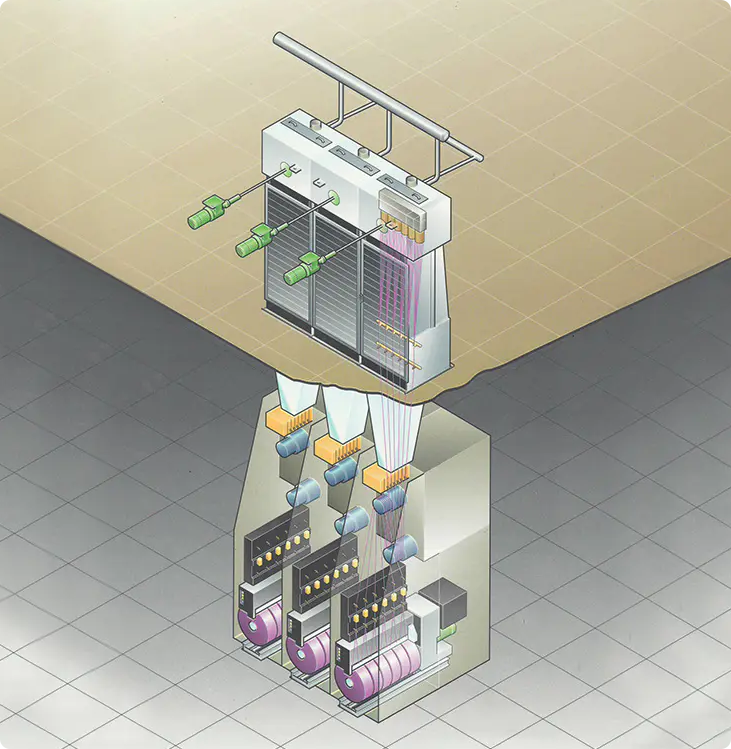
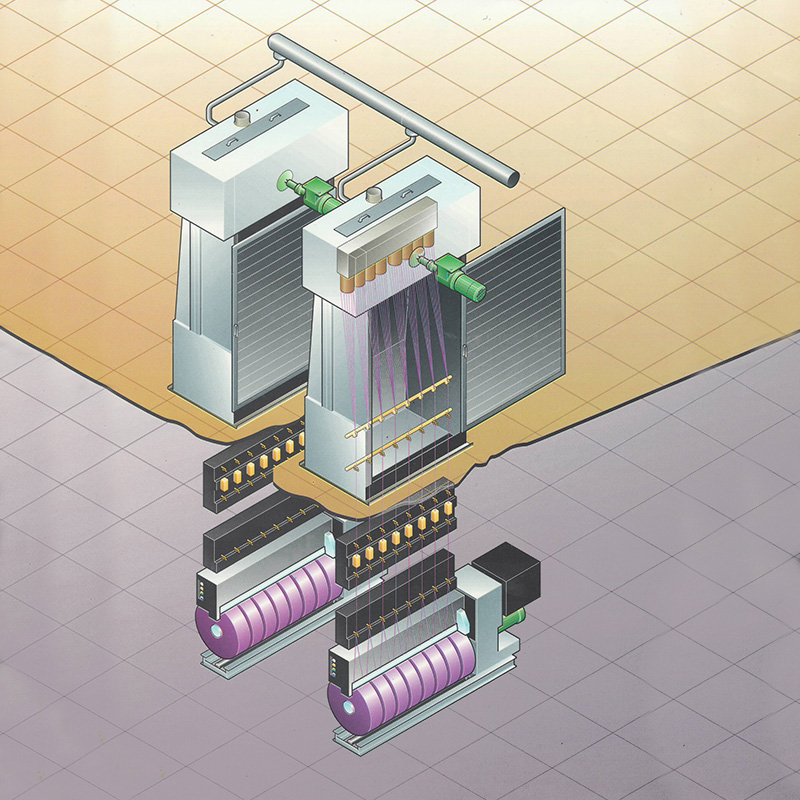
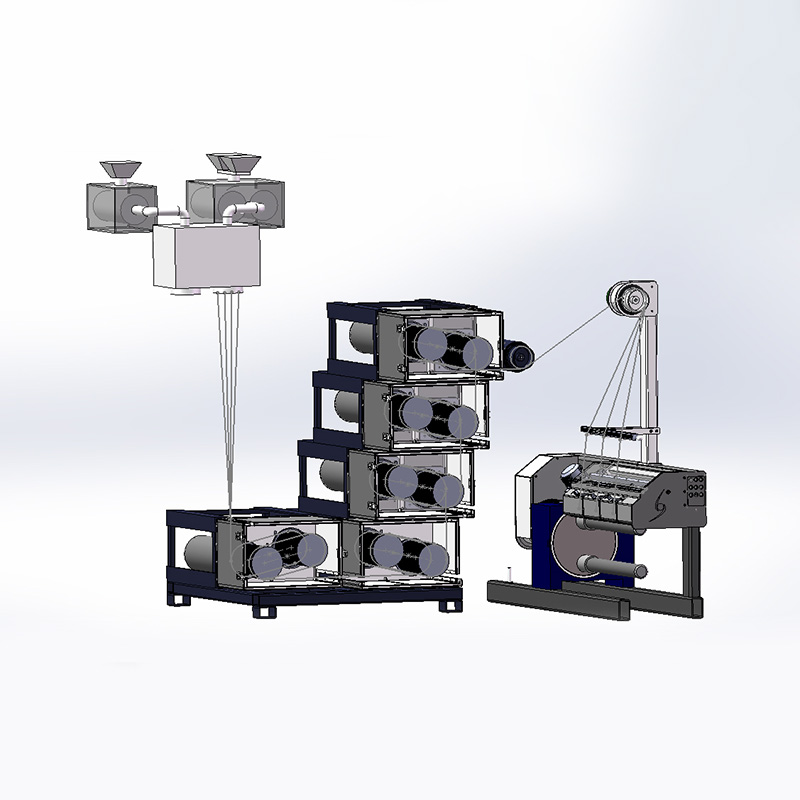
All melt-spun synthetic filament lines follow the same fundamental sequence: the polymer is melted, extruded through a spinneret to form filaments, cooled and solidified, drawn or relaxed to develop molecular orientation, and wound onto a package. What differs between line types is how much drawing and heat treatment is applied between extrusion and winding — and this is what determines the yarn's mechanical properties and end-use suitability.
Table 1 — Core Process Stages in a Melt Spinning Line
| Stage | Equipment | Function |
|---|---|---|
| Drying | Dryer / dehumidifier | Remove residual moisture from chips before extrusion to prevent hydrolytic degradation |
| Melting & extrusion | Extruder / spin pump / spinneret | Melt polymer and extrude at controlled throughput through fine spinneret holes to form filaments |
| Quenching | Quench air system / chimney | Solidify extruded filaments with controlled cross-flow or co-flow air to achieve uniform cooling |
| Finish application | Finish guide / oiling roll | Apply spinning finish to bundle filaments, reduce static, and lubricate yarn-machine contact surfaces |
| Drawing / heat treatment | Godet rolls (cold and hot) | Apply controlled draw ratio and heat to develop molecular orientation and crystallinity |
| Interlacing | Interlacing nozzle | Create periodic entanglements to provide yarn cohesion for downstream processing |
| Winding | Take-up winder | Wind yarn onto a bobbin tube at controlled tension and traverse to form a saleable package |
The number of godet pairs, their surface speeds, and their temperatures define the draw ratio and heat-setting conditions — and therefore the yarn type produced. This is the key variable that distinguishes POY, FDY, and HOY lines from each other.
POY lines wind yarn directly after quenching and finish application, with a moderate winding speed (typically 2,800–3,600 m/min for PET) that produces partial molecular orientation. The yarn is not fully drawn on the spinning line — it is an intermediate product intended for further processing on a draw-texturing machine (DTY production) or draw-winding machine. POY is the largest volume product category in the synthetic filament sector globally, primarily in PET and PA6 feedstocks.
POY lines have a simpler godet configuration than FDY lines — typically one or two cold godet pairs before the winder — making them lower in capital cost and energy consumption per kilogram of output. The trade-off is that POY requires a downstream texturing step before it can be used in fabric production.
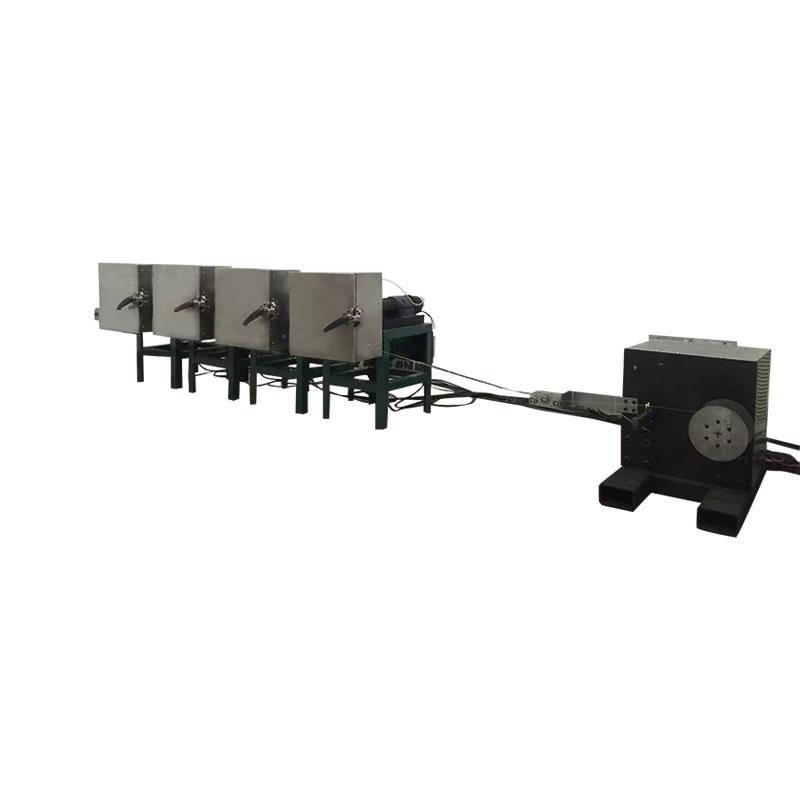
FDY lines incorporate hot godet rolls that draw and heat-set the yarn in-line, producing a fully oriented, stable filament that can be used directly in weaving or knitting without a separate texturing step. The draw ratio is applied between a cold feed godet and a hot draw godet, with the temperature and speed differential controlling the degree of crystallinity and tenacity.
FDY winding speeds are higher than POY — typically 4,000–6,000 m/min for PET — and the hot godet system adds both capital cost and energy consumption versus a POY line. However, FDY eliminates the downstream DTY step, which simplifies the production chain for mills selling directly to fabric producers. Hot godet temperature stability is the primary process variable affecting FDY quality consistency; godet surface uniformity and temperature calibration are therefore critical maintenance items on FDY lines.
HOY lines run at higher winding speeds than standard POY (typically above 4,500 m/min) to produce yarn with higher molecular orientation than POY but without the heat-setting step of FDY. HOY is used for fine-denier applications and specific downstream texturing processes that require a particular orientation profile. HOY production is more technically demanding than standard POY due to the higher process speeds and tighter tension control requirements at the winder.
Industrial yarn lines produce high-tenacity filament for technical applications: tire cord, seat belts, airbags, geotextiles, conveyor belts, and rope. The defining characteristic is high draw ratio — typically 5:1 to 6:1 for PET industrial yarn — which requires robust godet systems capable of handling the high tension loads associated with drawing thick-denier, high-tenacity yarn types. Industrial yarn lines also run PA66, UHMWPE, aramid, and other high-performance polymer feedstocks, each with specific melt processing and drawing requirements.
Winding on industrial yarn lines requires a fundamentally different take-up architecture than textile yarn lines. Package weights are typically much higher, winding tensions are greater, and package geometry requirements differ due to the downstream beaming and warping processes used in technical fabric production.
Table 2 — Spinning Line Type Comparison
| Line Type | Drawing | Typical Winding Speed | Primary End Use | Key Process Variable |
|---|---|---|---|---|
| POY | Partial (no hot godet) | 2,800–3,600 m/min | DTY feed yarn | Winding speed / birefringence |
| FDY | Full draw + heat-set | 4,000–6,000 m/min | Direct weaving / knitting | Hot godet temperature / draw ratio |
| HOY | High orientation (no heat-set) | >4,500 m/min | Fine-denier / specialty DTY | Speed uniformity / tension control |
| Industrial Yarn | High draw ratio | Variable by product | Tire cord / technical textiles | Draw ratio / tenacity uniformity |
PET chips must be dried to a moisture content below 30 ppm before extrusion. Residual moisture above this level causes hydrolytic chain scission during melting, which reduces intrinsic viscosity (IV) and produces yarn with lower tenacity and higher end-breakage rates. Dryer capacity must be matched to extruder throughput; undersized drying capacity is a common cause of IV inconsistency on production lines that have been upgraded to higher throughput without upgrading the drying system.
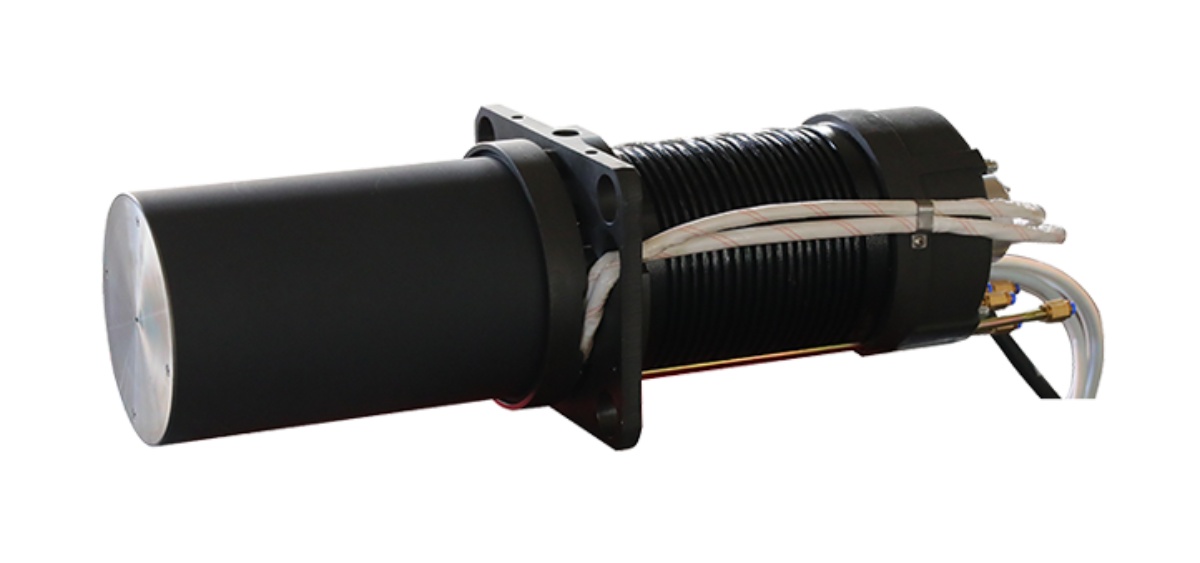
On FDY and industrial yarn lines, the hot godet is the most process-critical component after the spin pump. Godet surface temperature must be uniform across the entire wrap length — typically ±1°C tolerance on a well-maintained godet — to produce consistent draw conditions across all filaments and all positions on the line. Temperature non-uniformity produces differential crystallinity across positions, which appears as tenacity variation and differential dye uptake in finished fabric. Godet surface condition — specifically surface roughness and coating integrity — also affects yarn tension at the draw point and yarn surface quality.
The interlacing nozzle uses compressed air to create periodic entanglements (interlace knots) in the filament bundle. These knots provide cohesion during winding and unwinding, replace the twist used in traditional staple yarns, and affect how the yarn performs on high-speed warping and weaving machines downstream. Interlace frequency and knot strength are controlled by air pressure and nozzle geometry; nozzle wear or blockage from finish deposits produces inconsistent interlace, which shows up as unwinding problems at the customer's machine.
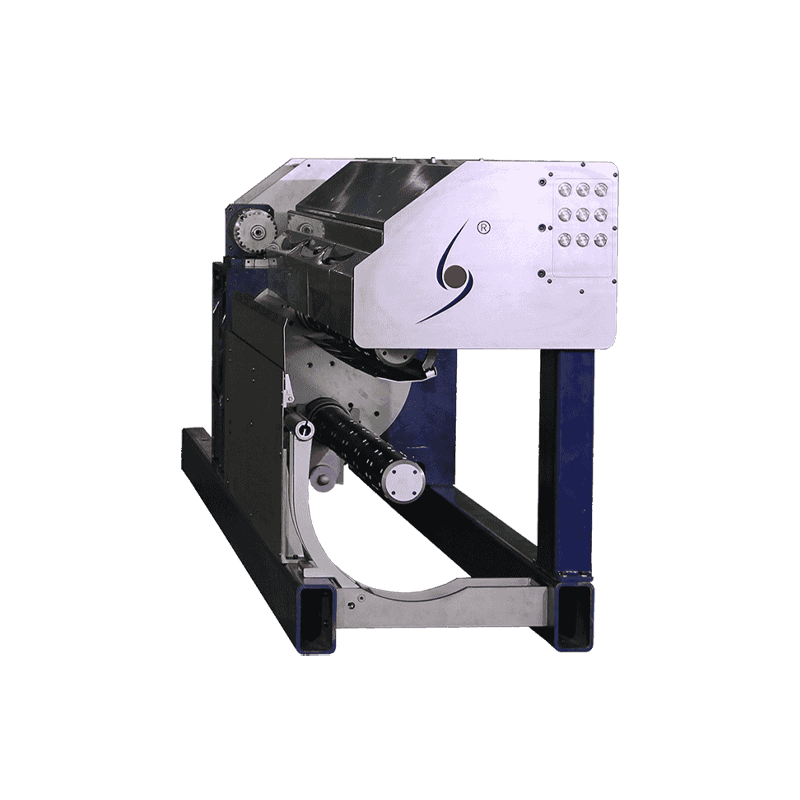
The take-up winder winds the finished yarn onto a bobbin tube at controlled tension and traverse ratio. On a continuous production line, the winder operates without stopping — automatic turret rotation transfers the yarn to a fresh tube (doffing) while the full package is removed, maintaining uninterrupted production. Winder performance directly determines package quality: traverse uniformity controls package shape and density, tension consistency controls hardness profile, and doff timing consistency controls package weight accuracy. On high-speed FDY and HOY lines, the winder operates at the highest linear speed of any component in the line and must maintain all these parameters simultaneously at up to 7,000 m/min.
Specifying a spinning line requires matching equipment capability to the target product portfolio, expected production volume, available utilities, and maintenance capacity. The following parameters are the most consequential to get right at the specification stage.
For mills adding capacity or entering a new product segment, the choice between a new spinning line and a reconditioned used line involves a direct comparison of capital outlay, lead time, and operational risk.
A new line offers the latest technology — including current-generation automation, energy efficiency features, and control system integration — along with OEM warranty support and full documentation. Lead time for a complete new line from a major equipment supplier typically runs 12–24 months from order to commissioning.
A properly reconditioned used line can achieve comparable production performance to a new line at a significantly lower capital cost and with a much shorter lead time — often 3–6 months from order to commissioning. The critical qualifier is the reconditioning standard: superficial refurbishment of a used line leaves the wear components that determine production quality — godet surfaces, winder spindle bearings, traverse components — in their degraded condition. A thorough reconditioning program replaces all wear components, verifies the control system against current parameters, and validates performance through a production trial before delivery.
The evaluation question for a reconditioned line is not whether it is new — it is whether the reconditioner can demonstrate actual production performance at the specified speed, yarn type, and quality level before the line ships.
Jiaxing Shengbang Mechanical Equipment Co., Ltd. designs, manufactures, and commissions spinning production lines for PET, PA, and PP filament production across POY, FDY, HOY, industrial yarn, and special yarn configurations. The company undertakes the full project scope — from process design and equipment specification through manufacture, installation, and commissioning — for both complete new lines and capacity upgrades to existing installations.
Key equipment manufactured in-house includes Shengbang's own high-speed take-up winder (rated to 7,000 m/min, applicable to PET, PA6, PA66, and PP), hot godet rolls for textile and industrial yarn applications, and dryers for PET chip pre-treatment. The company's spinning laboratory — where new line configurations and component designs are validated under actual production conditions before deployment — is available to customers for process trials with their own target yarn specifications.
For mills operating existing spinning lines, Shengbang also supplies wear parts and reconditioned equipment across the major winder platforms. Established supply relationships with major chemical fiber producers — including Tongkun Group, Xin Feng Ming Group, Hengli Group, and Shenghong Corp. — provide the field validation context for Shengbang's equipment and parts performance claims.
To discuss spinning line configurations, equipment specifications, or parts supply requirements, contact Jiaxing Shengbang Mechanical Equipment Co., Ltd. directly.
ADDRESS: No.1298, Zhouan Road, Economic and Technological Development District, Jiaxing City, Zhejiang Province
PHONE: +86 19057031687
TEL: 86-0573-83777752
EMAIL: [email protected]