English
 عربى
عربى русский
 简体中文
简体中文







2026-10-16
Home / News / Industry News / Pilot Spinning Machine Guide: Flexible Fiber R&D and Small-Batch Trials

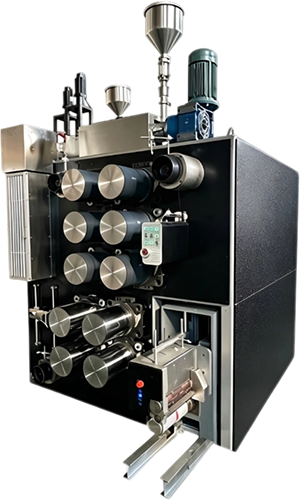
No fiber reaches a commercial line on the strength of a laboratory recipe alone. Somewhere in between, somebody has to spin it on real equipment — real godets, real quenching, a real winder — and find out whether the idea holds together. That is the job of a pilot spinning machine: a compact, flexible melt spinning system that lets you test a polymer, a spinneret or a bicomponent cross-section at a scale small enough to iterate quickly and representative enough to trust.
We build these machines at Jiaxing Shengbang Mechanical Equipment. Our work runs in both directions: supplying Barmag, TMT and domestic-machine parts to fiber producers, and engineering complete POY, FDY, HOY and industrial yarn lines. The multifunctional flexible pilot spinning machine sits where those two worlds meet, and it is the piece of equipment customers most often want to talk through first.
A pilot spinning machine is not simply a smaller production line. It is a machine built around change: positions are easy to reconfigure, process windows are wide, and the settings you would never touch on a line running around the clock are exactly the ones you want to explore here.
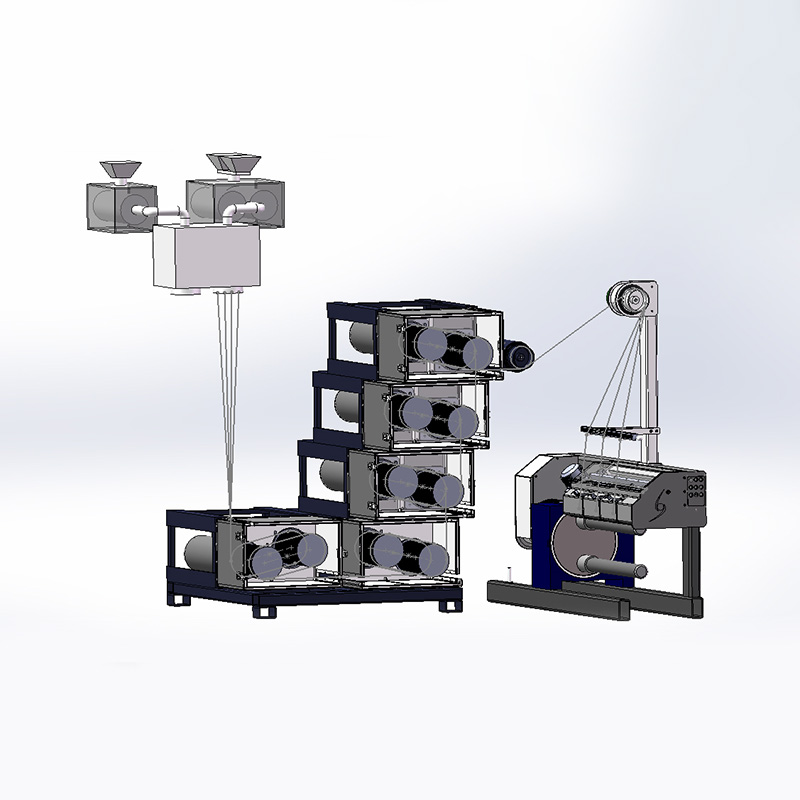
In practice it carries the full melt-to-package sequence — extrusion, metering, filtration, spinning, quenching, godet handling and winding. What changes is the freedom around it.
Our SF series covers that ground in several configurations, so a laboratory, a university group or a manufacturer's R&D department can start where it needs to start and expand later.
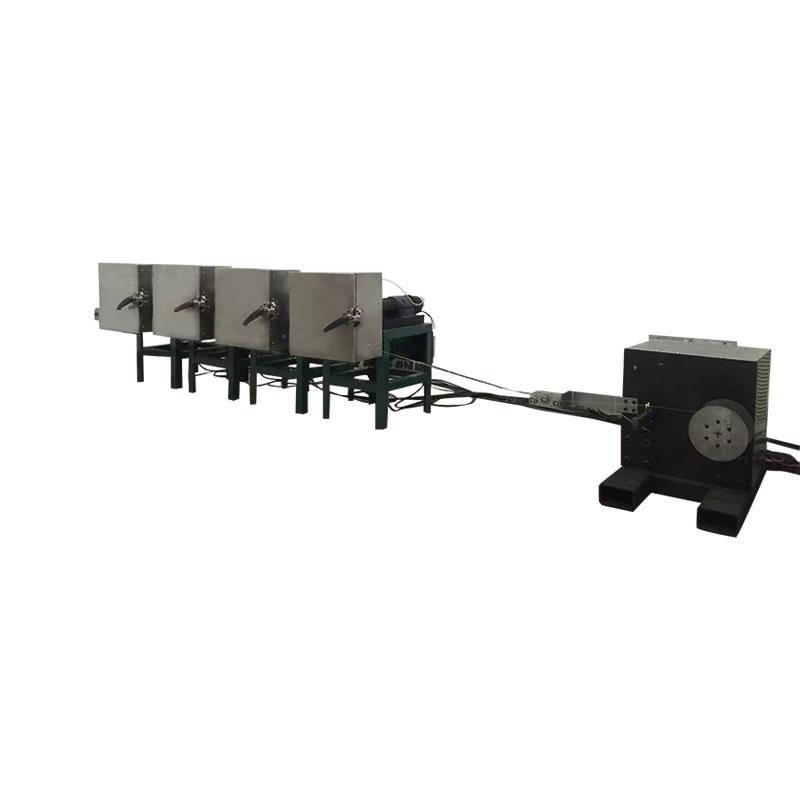
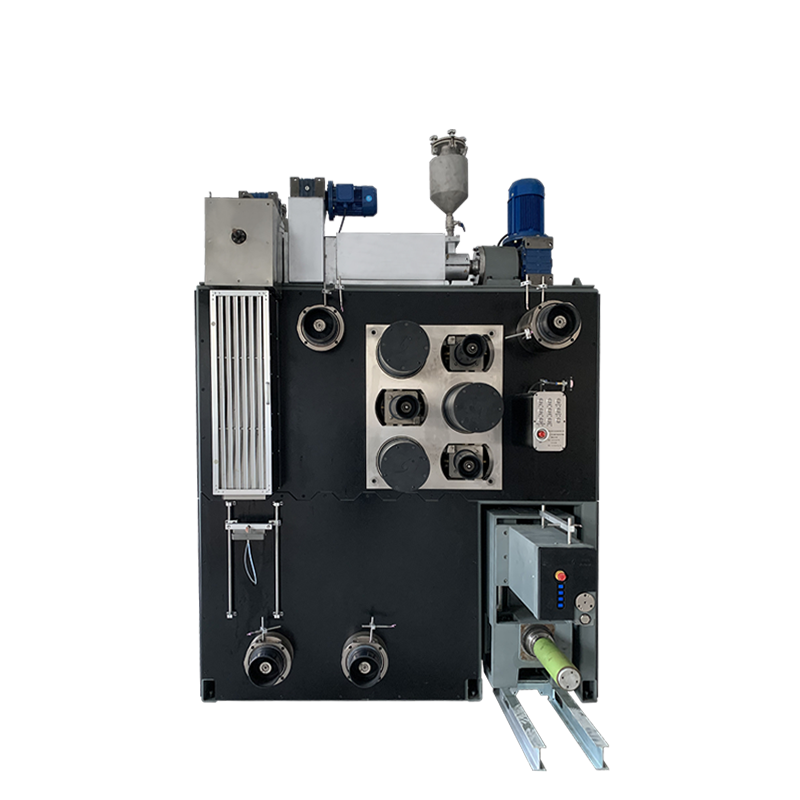 SF Series Multifunctional Flexible Pilot Spinning MachineA flexible pilot spinning platform for single-, bi-, and multi-component yarn, POY, FDY, and filament, suited to laboratory, university, and R&D trials.View Product →
The economics become obvious the first time you watch a failed recipe run through a commercial line. A polymer that gels in the extruder, a spinneret that fouls after two hours, a quenching setup that gives uneven denier — every one of those problems costs far more to diagnose at production scale. Material is wasted in kilos instead of tonnes, and the line is not standing still while engineers chase the answer.
There is a slower benefit too. Pilot work builds the process knowledge that makes a product repeatable: the temperatures the polymer tolerates, how the draw ratio behaves, where tension starts to wander. That knowledge is what turns a promising sample into something a sales team can promise a customer. It also reflects a wider shift in fiber manufacturing, which we describe in our note on the multifunctional flexible pilot spinning machine opening a new dimension of fiber manufacturing.
The word multifunctional is doing real work here. A machine that can spin only one recipe belongs in a museum; a pilot machine earns its floor space by answering many questions.
Single-component, bicomponent and multicomponent spinning all belong on the same platform, because most of the interesting work in technical textiles now happens at the boundary between two polymers. Switching configurations without rebuilding the whole machine is what keeps a trial schedule realistic.
The same platform covers POY, FDY, medium-strength yarn and fine-denier industrial yarn. That range lets a research group move from a clothing-oriented filament to a load-bearing industrial yarn without changing machines, which matters when a project changes direction halfway through.
Our spinning equipment is specified for PET, PA, PP and other melt-spinnable polymers, and the pilot platform follows the same logic. If a polymer runs on a commercial line, the pilot machine should be able to tell you something useful about it.
| Consideration | Multifunctional pilot spinning machine | Commercial spinning line |
|---|---|---|
| Main purpose | Development, trials and sampling | Continuous commercial output |
| Batch size | Small and quickly repeated | Large, planned well in advance |
| Recipe changeover | Routine and expected | Costly scheduled downtime |
| Component options | Single, bi- and multicomponent | Usually fixed for the product |
| Yarn range | POY, FDY, medium-strength and fine-denier industrial | Dedicated to the target product |
| Where it fits | Before a product decision is made | After the process is proven |
The trial package is only half the story. What customers really want to know is how the recipe transfers, and two things help it along.
First, the parameters that matter — melt temperature, throughput, quench conditions, godet temperatures, draw ratios, winding tension — are recorded in the same terms on both machines, so scale-up becomes a conversation about adjusting numbers rather than re-learning a process.
Second, the equipment around the pilot machine is deliberately related to what runs in a plant. Our POY, FDY, HOY and industrial yarn lines use the same families of hot godets, winders and guide components, and for compounding work we supply melt direct spinning masterbatch adding equipment with a dynamic mixer, so additive dosing can be developed small before it is installed large.
Where a customer already has a line that works, replacing it is rarely the answer. A good deal of our engineering time goes into equipment upgrading — godet controls, quenching chambers, spinneret packages, winders and shift forks — which is usually the cheaper road to a new product.
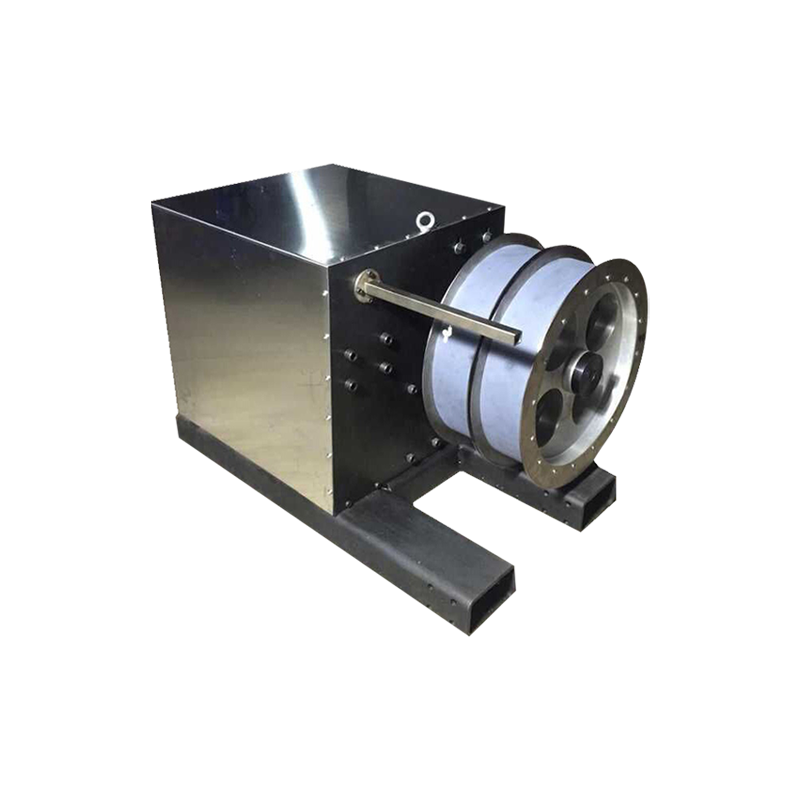
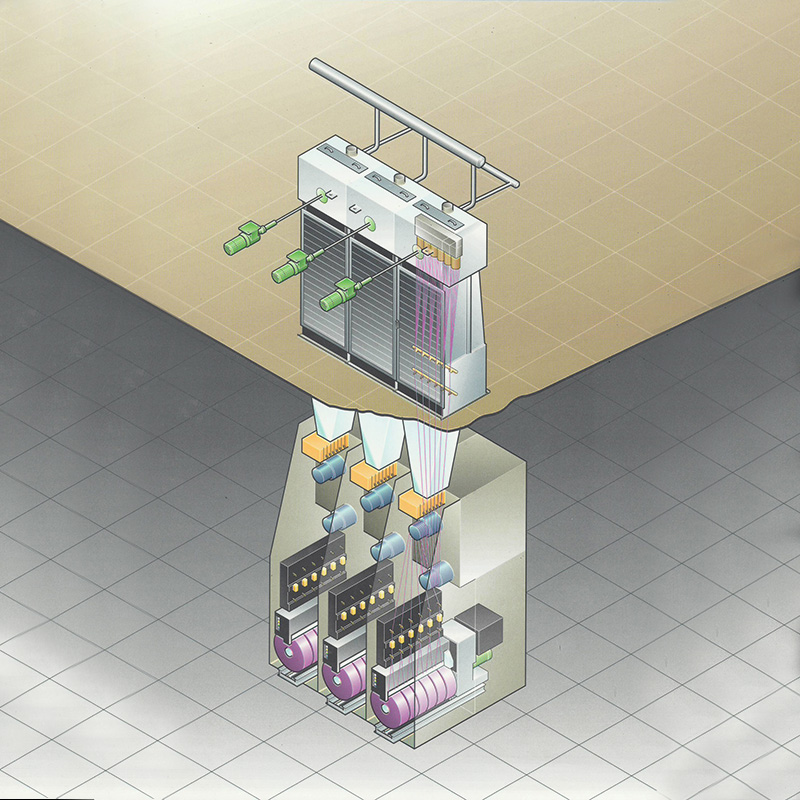 POY Spinning Production Line for PET, PA, PPReview this POY line for PET, PA, or PP production; the page also covers oil-application control to support uniform fiber quality and efficiency.View Product →
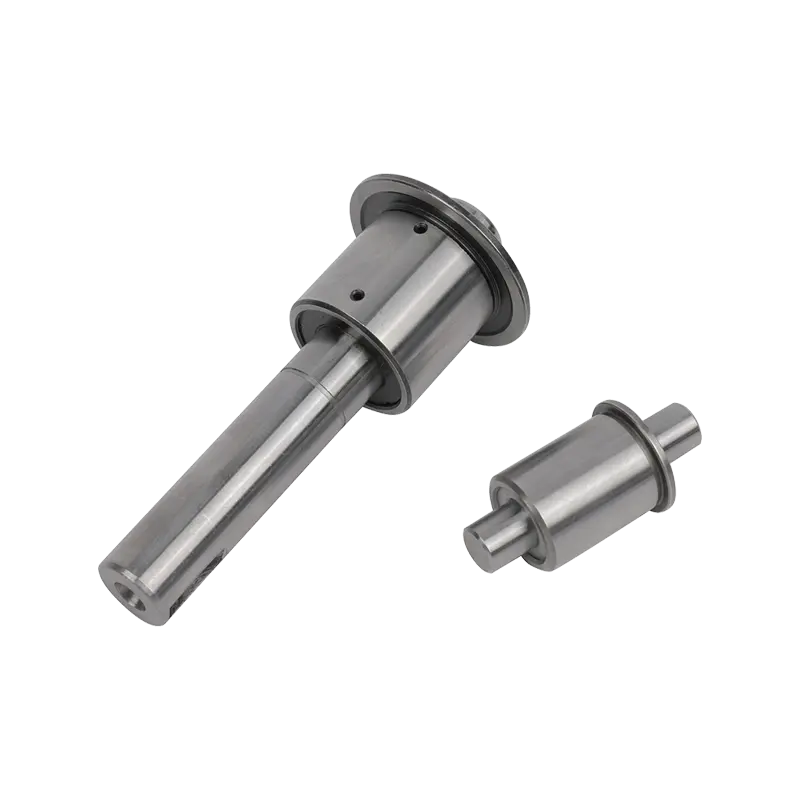
A pilot machine is only as good as the components holding its process steady. Thermal accuracy is the obvious one: godet temperature error shows up directly in yarn properties, so we calibrate with a genuine godet temperature calibration instrument rather than trusting a dial. Rotating parts are balanced on a SCHENCK dynamic balancing machine, and machined parts come off CNC equipment in our own workshops.
Beyond the machine itself, the same catalogue of parts we supply to fiber producers applies:
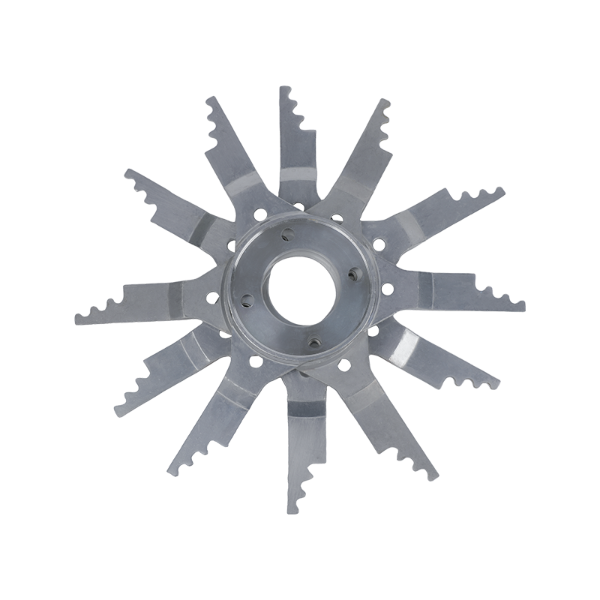
Guide elements that see continuous filament contact — filament guides, godets, hot godets, separator rolls and yarn guide plates — can be finished with plasma spray coating, which we run in-house. When something wears out, our repair team covers hot godets, motors, chucks, coils, contact rolls, separator rolls, pumps, circuit boards, valves, gear boxes and shift fork repair.
The list is broader than people expect.
Our specialty yarn equipment has gone into academic projects, including installations associated with Sichuan Textile Institute and Tianjin Polytechnic University — a reminder that some of the most useful questions come from outside a factory floor.
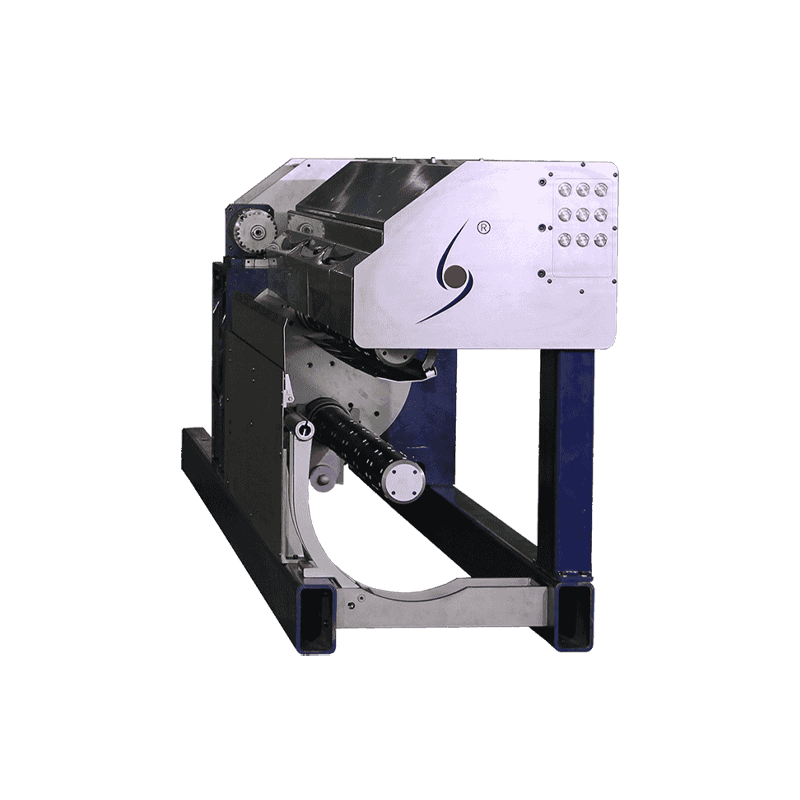
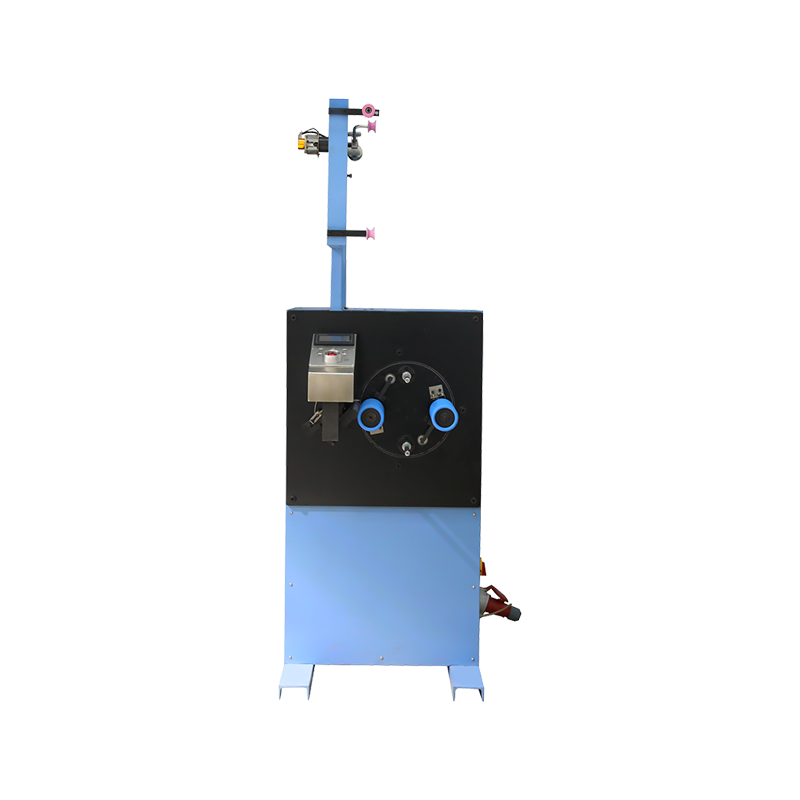
 JST1610B Ultra-low Speed Pilot Take-up WinderFor R&D teams needing ultra-low-speed winding, including fixed-length tow cutting for water purification semi-permeable membrane fiber bundles.View Product →
Every pilot machine looks similar in a brochure. The differences show up in the third month of use.
We have an obvious bias on the last two points, but it is a practical one: the same company that machines the parts also repairs godets, rebuilds gear boxes and calibrates hot godets. Our spinning laboratory is open for external spinning trials, so a project can be tested before a purchase decision is made.
If you are weighing up a pilot spinning machine, the most useful first step is usually a simple conversation about the fiber you want to make — polymer, component structure, yarn type, and what you intend to do with the samples. From there the configuration, the godet and winding setup, and the spare parts list all follow.
We are glad to walk through that with you, whether you run a fiber plant planning a new product, a research group setting up a laboratory, or an operation that simply wants more from the equipment already on the floor.

ADDRESS: No.1298, Zhouan Road, Economic and Technological Development District, Jiaxing City, Zhejiang Province
PHONE: +86 19057031687
TEL: 86-0573-83777752
EMAIL: [email protected]