English
 عربى
عربى русский
 简体中文
简体中文







2026-10-16
Home / News / Industry News / Barmag Parts Guide: Hot Godets, Winder Spares and Fitment Advice for Spinners

If your plant runs Barmag spinning and winding equipment, you already know the truth about spare parts: they are small, they are easy to overlook, and they quietly decide whether a line runs at full speed or sits idle waiting for a technician. Barmag parts cover a long list of items, from hot godet bearings, chuck lock rings and aluminum tubes to shift forks, yarn guide plates, tensioning blocks and tiny O-rings. Each one touches the yarn at a different point in the process, and each one fails for its own reasons.
We have spent years supplying, checking and repairing these parts for filament producers, and the questions we hear are always similar. Which part do I actually need? How do I know it will fit my machine? And how do I make it last longer than the last one? This guide walks through the main groups of Barmag parts, what they do in production, and what is worth checking before you place an order.
Modern POY, FDY and industrial yarn lines do not stop politely. A winder chuck may rotate thousands of times per minute while a hot godet holds a precise surface temperature, and a tensioning block keeps yarn tension inside a narrow band. In that environment, wear is not a question of if, but when. A rolling element that has lost its preload starts to vibrate, and vibration travels straight into the package. A worn shift fork throws off package transfer timing. A hardening O-ring turns a clean pneumatic signal into a leaking one.
The practical consequence is that spare parts are never really "just parts". They are the difference between a stable dyeing result downstream and a batch of packages your customer questions. That is why we treat every Barmag component as a functional item with its own inspection criteria, rather than a catalogue line to be matched only by number.
Before ordering anything, it helps to know which functional group you are dealing with, because that tells you what to measure and what to inspect alongside the failed item.
| Part group | Typical items | Process role | What to inspect |
|---|---|---|---|
| Hot godet and roller parts | Bearings for hot godets, separator rolls and contact rolls | Heat setting, drawing and yarn transport | Surface temperature consistency, running noise, vibration |
| Winder and chuck parts | Chuck base, chuck sleeve, lock ring, aluminum tube, shaft bearing | Package formation and doffing | Chuck runout, tube grip, lock ring seating |
| Yarn path and guide parts | Yarn guide plate, yarn guide rod, Y-shaped fork, finish guide assembly plate | Guiding, interlacing and yarn path control | Guide surface wear, groove depth, coating condition |
| Tension and transfer parts | Tensioning block, shift fork, shift fork gear box | Tension control and package transfer | Shifting response, gear box play, contact pattern |
| Sealing and connection parts | O-rings, couplings, rods | Air, oil and mechanical connections | Hardening, leakage, looseness |
Hot godet bearings are among the least forgiving parts on the machine. They sit inside a heated assembly, so the grease or oil inside them ages faster than on a cold roller, and the consequences of a tired bearing show up twice: mechanically as noise and vibration, and thermally as a surface that no longer holds the temperature your process recipe assumes.
When we look at a hot godet problem, we check the bearing first, then the temperature itself. We keep a Barmag original hot godet temperature calibration instrument in house, which lets us verify a roller's actual surface temperature rather than trusting the set point on the panel. Separator roll and contact roll bearings get the same treatment, because a contact roll running slightly off true will mark the yarn in ways that are easy to blame on the polymer instead.
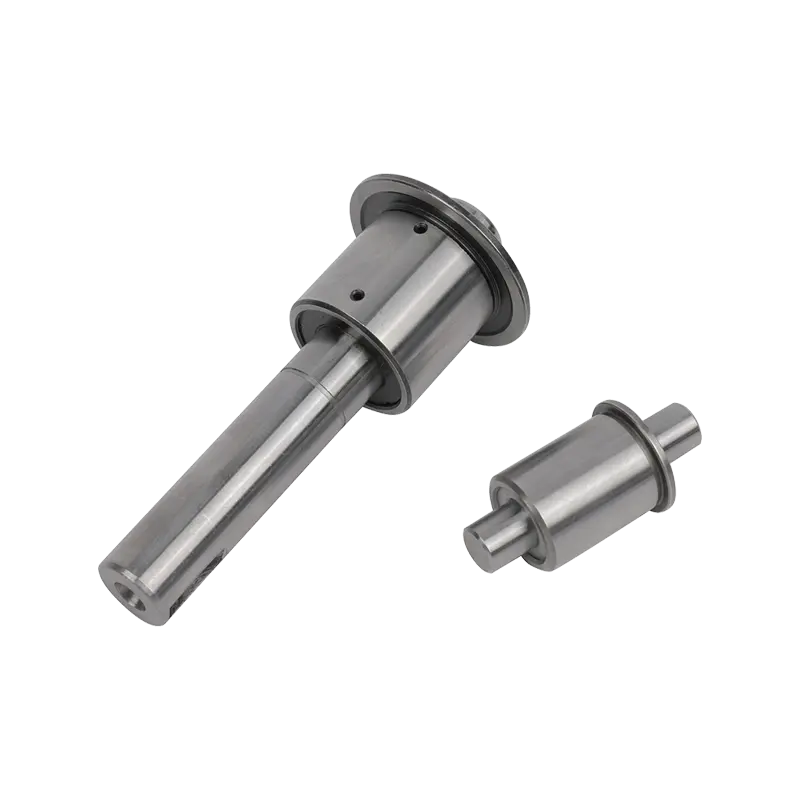
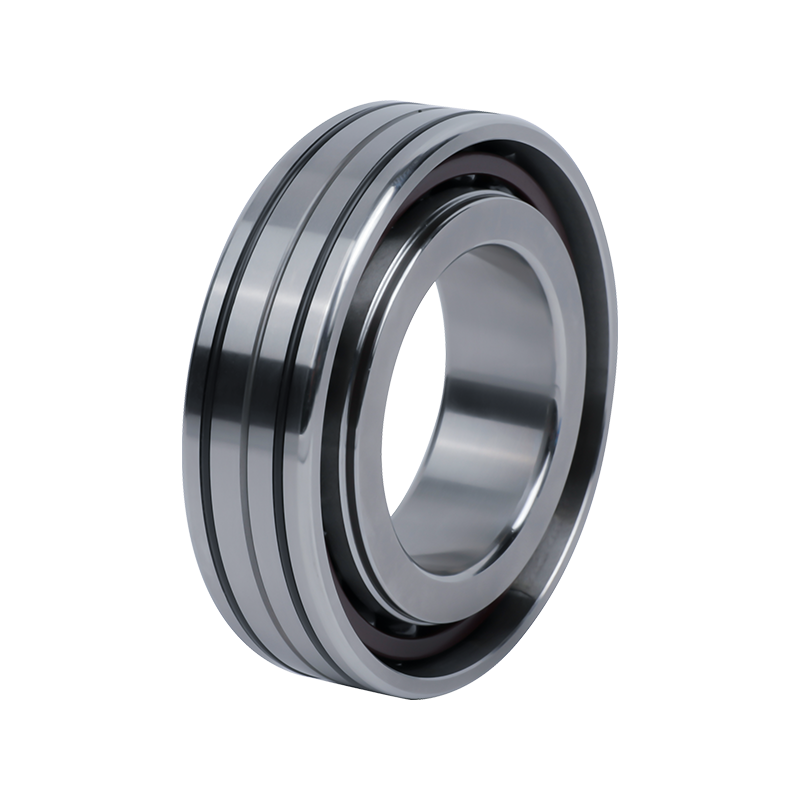 Bearing for Barmag Hot Godet 13011800030A replacement bearing for Barmag hot godet assemblies, sized 50 x 90 x 23 mm, useful when checking hot godet bearing problems first.View Product →
The winder is where most wear-related complaints originate, simply because it has the most moving parts per square metre. Chuck parts make up a family of their own. Depending on your machine, you may be dealing with a 1200, 1380, 1500, 1600 or 1800 chuck, and the matching lock ring, chuck base, chuck sleeve and shaft bearing are specific to that size. Replacing a lock ring with the wrong diameter seating is a common mistake that shows up later as tube slippage or package wobble.
Alongside the chuck, the yarn path components deserve equal attention. Yarn guide plates and yarn guide rods steer the threadline; a Y-shaped fork handles the changeover geometry; tensioning blocks hold the package firm without crushing it. When a winder starts producing packages with soft edges or inconsistent density, the cause is often a tensioning block that has lost its elastic response rather than anything in the control system.
Shift forks and shift fork gear boxes sit at the centre of transfer reliability. A fork that has worn on its contact face will still move, which makes the fault hard to spot until packages begin transferring late. This is exactly why we keep a wide range of fork variants available and why we also offer fork repair, where the geometry is restored rather than the whole assembly replaced.
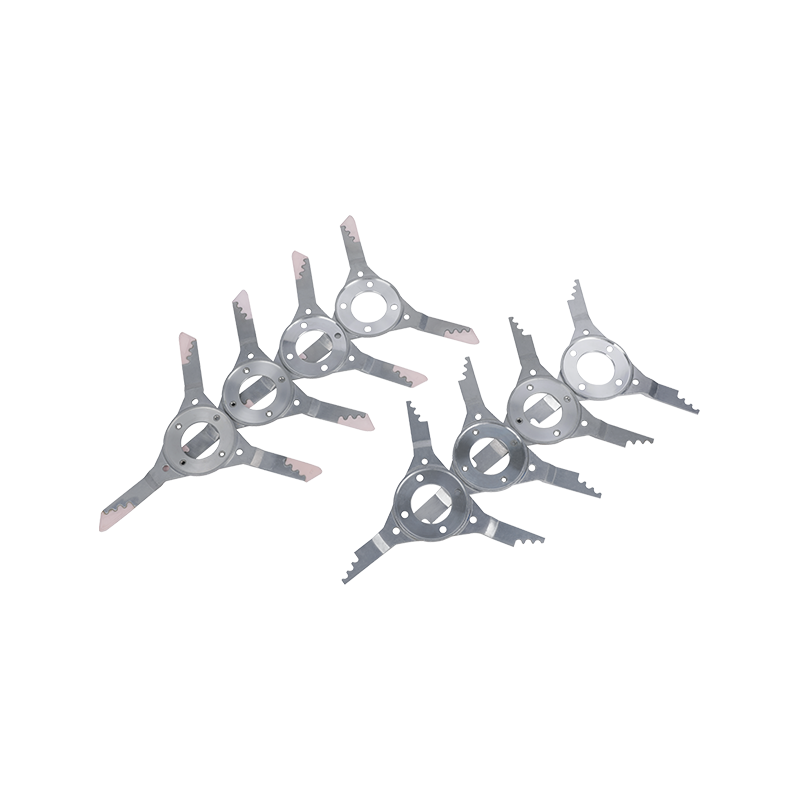 S-1011(RO) Shift Fork for Barmag WindersAluminium alloy shift fork for Barmag ACW1500, with R129.975 mm and 40 mm dimensions, relevant where transfer reliability and worn fork faces are concerns.View Product →
Not every critical item is large or expensive. Couplings transmit drive and compensate for small misalignments; when they harden or crack, vibration appears at a frequency that is easy to misdiagnose. Interlacing nozzles determine the coherence of the yarn and interact directly with air pressure and yarn speed, so a partially blocked or worn nozzle changes the texture of the final product without triggering any alarm.
O-rings and rods are the classic "small part, big downtime" category. An O-ring that has gone hard will leak air slowly, and the first symptom is usually a machine that behaves inconsistently rather than a clear fault. Finish guide assembly plates, likewise, wear gradually on the guide surface. We usually recommend inspecting them alongside any guide plate replacement, since the two work as a pair.
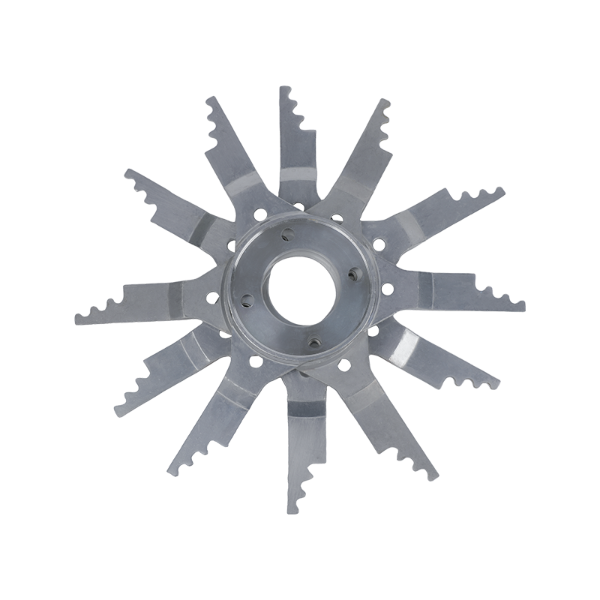
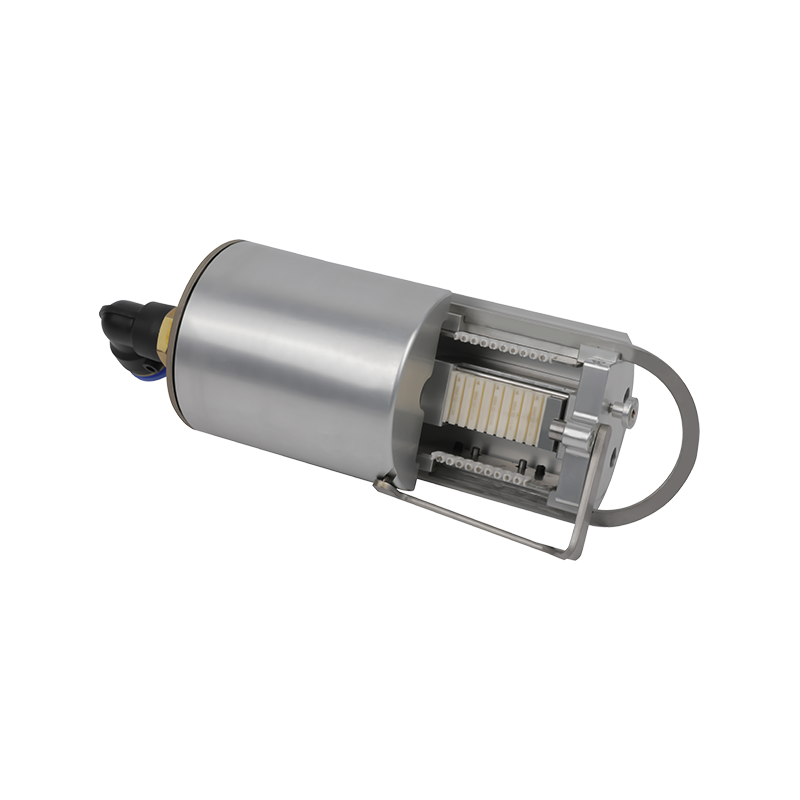 Interlacing Nozzles for Barmag Spinning MachinesBarmag spinning machine interlacing nozzles for producing interlacing yarn, worth checking when nozzle wear, blockage, or yarn coherence issues affect final texture.View Product →
Barmag built a great many machine generations, and many of them are still producing today. Two parts that look identical on a screen can differ by a millimetre of seating depth or a few degrees of fork angle, which is enough to matter. To avoid a return shipment, send us the following when you enquire:
We also supply parts for TMT machines and for domestic spinning equipment, and because we handle several machine families, we can often cross-check a doubtful number against a similar application instead of simply shipping what was ordered.
Replacement is not always the first answer. Many assemblies can be restored to specification, which is often faster and cheaper than waiting for a new unit. Our repair and maintenance services cover hot godets, motors, chucks, coils, contact rolls, separator rolls and godets, shift fork gear boxes, spin finish and metering pumps, circuit boards, EPR and valve banks, and shift forks themselves.
Where the original design is the limitation, equipment upgrading is the better route. Typical projects include chuck motor and fan upgrades, godet control technology without a winding frame, ITY spinning technology, air quench chambers, spinneret upgrades and winder plus shift fork upgrades. For components that wear at the surface rather than the core, we also apply plasma spray coating to godets, hot godets, yarn guide plates, separator rolls and filament guides, and we balance rotating parts on a SCHENCK dynamic balancing machine before they go back into service.
None of this is complicated, but it does require knowing what you are looking at. If you are unsure which Barmag part you need, send us a photo and a machine reference. We will tell you what it is, whether a repair is realistic, and what else is worth checking while the machine is open. That conversation usually saves more money than the part itself costs.

ADDRESS: No.1298, Zhouan Road, Economic and Technological Development District, Jiaxing City, Zhejiang Province
PHONE: +86 19057031687
TEL: 86-0573-83777752
EMAIL: [email protected]