English
 عربى
عربى русский
 简体中文
简体中文







2026-10-09
Home / News / Industry News / Exploring Used Barmag Machinery: Injecting Cost-Effective Momentum into Your Synthetic Fiber Production

In today's volatile global synthetic fiber market, manufacturers are constantly seeking strategies to optimize capital expenditure while maintaining production quality and flexibility. A powerful solution gaining significant traction is the acquisition of high-quality pre-owned manufacturing equipment. This approach allows companies to mitigate risks associated with market cycles and substantial new investments.
Investing in a meticulously refurbished Barmag used machine emerges as a particularly strategic decision. It represents an opportunity to leverage proven, high-performance technology at a fraction of the cost of new machinery. This enables businesses to conserve capital, reduce their initial investment outlay significantly, and achieve a faster return on investment (ROI). Furthermore, it provides a pathway to modernize production lines or expand capacity without the long lead times often associated with ordering new equipment, allowing for a more agile response to shifting market demands.
This section introduces the core value proposition of considering pre-owned assets, specifically those with a renowned heritage for durability and precision, as a smart tool for navigating economic uncertainty and enhancing competitive advantage.
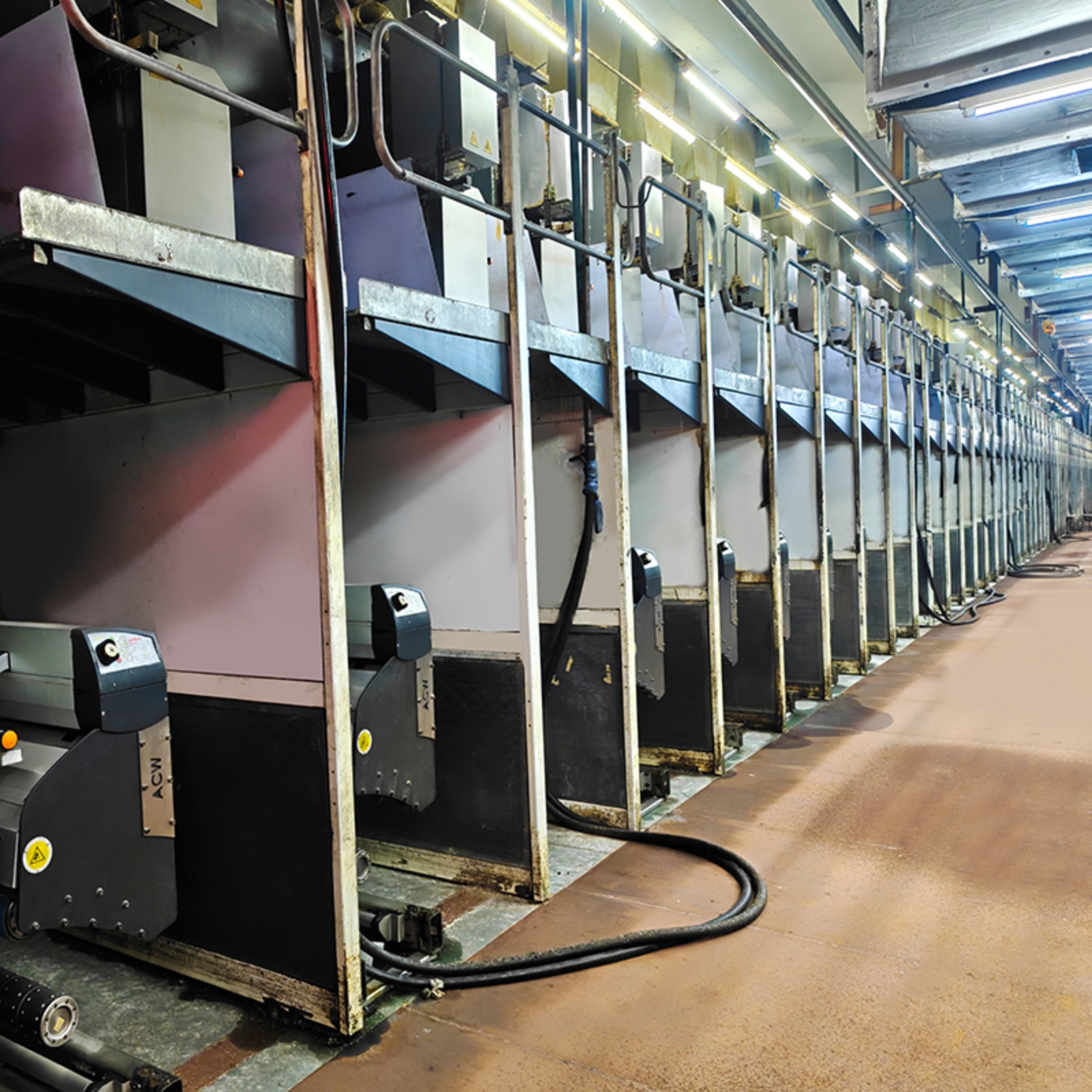
The decision to invest in a used Barmag machine is fundamentally rooted in the brand's unparalleled legacy within the fiber and yarn manufacturing industry. For decades, Barmag has been synonymous with engineering excellence, renowned for building machinery that offers exceptional durability, remarkable precision, and an exceptionally long operational lifespan. This inherent robustness is the primary reason why a pre-owned Barmag machine remains a highly capable and valuable asset, forming a solid foundation for a smart investment.
The advantages of this choice can be broken down into several key areas:
Proven Technology & Reliability: You are investing in mature, market-proven technology. The performance and limitations of these machines are well-understood, significantly reducing the risk of unforeseen technical issues. They are built to industrial standards that ensure continuous, stable production.
Exceptional Cost-Efficiency: This is the most compelling advantage. The depreciation on new machinery is steepest in its first few years. By purchasing used, you avoid this initial depreciation hit, acquiring premium technology at a drastically reduced capital outlay. This leads to a vastly improved Return on Investment (ROI) and a much shorter payback period.
Faster Time-to-Market: Sourcing and installing a new production line can involve lead times of 12 to 18 months or more. A used Barmag machine, often already available in a warehouse, can be sourced, refurbished, and installed in a fraction of that time, allowing you to respond quickly to new market opportunities or increase capacity urgently.
Strong Technical Support & Parts Availability: Due to the widespread adoption and long service life of Barmag machines, a global network of independent technical specialists and third-party parts manufacturers exists. This ensures that maintenance, servicing, and obtaining replacement components (e.g., for spin packs, godet rolls, or texturing heaters) are manageable and often more affordable than commonly assumed.
| Parameter | New Barmag Machine | Used Barmag Machine | Note |
|---|---|---|---|
| Initial Investment Cost | Very High | Significantly Lower (e.g., 40-60% of new) | The primary driver for ROI. |
| Lead Time to Operation | Long (12-24 months) | Short (3-9 months after sourcing) | Allows for rapid capacity expansion. |
| Technology Level | Latest, most advanced | Proven, industry-standard | May lack the very latest automation features but is fully capable of producing high-quality products. |
| Performance & Efficiency | Peak, as-designed | Dependent on condition and refurbishment | A well-refurbished unit can perform close to original specifications. |
| Warranty | Full manufacturer warranty | Typically from the refurbisher/seller | Reputable refurbishers offer robust warranties on their work. |
| Energy Consumption | Most efficient | May be slightly higher than newest models | Modernization kits can sometimes be applied to improve efficiency. |
In conclusion, choosing a used Barmag machine is not a compromise; it is a strategic calculation. It is the choice to acquire proven, high-performance engineering at an optimal cost, minimizing financial risk while maximizing production potential and profitability.
The versatility of Barmag's engineering means their pre-owned equipment caters to a wide spectrum of synthetic fiber production. Understanding the different types of used Barmag machines available is crucial for identifying the right asset for your specific manufacturing goals. These machines often form the backbone of a complete used synthetic fiber machinery line or can be acquired as standalone units to upgrade a specific process section.
Here is a detailed breakdown of the primary equipment categories found on the secondary market:
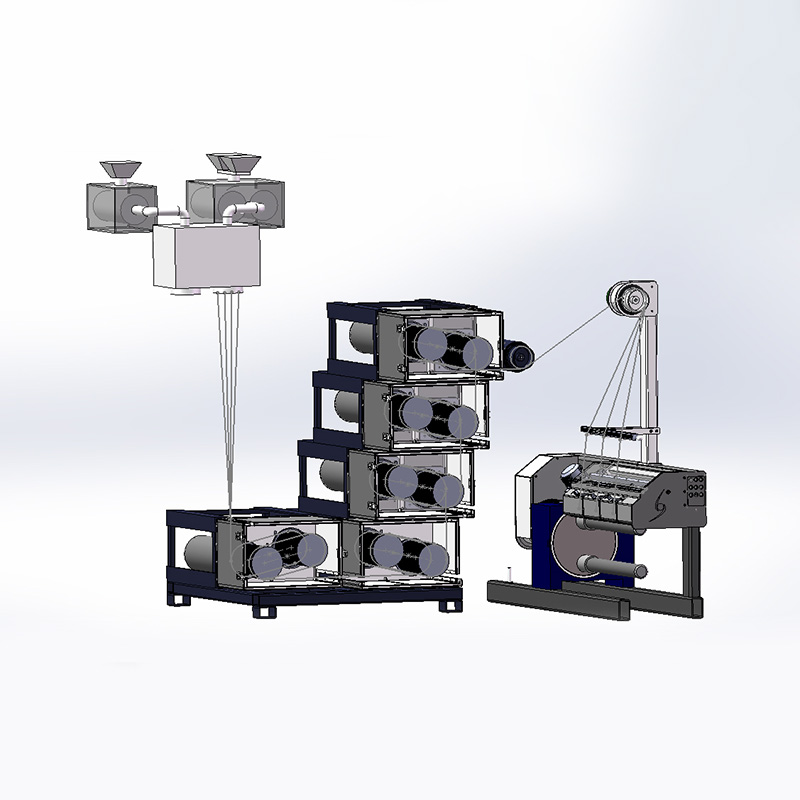
This category encompasses machines that transform polymer chips into continuous filaments.
Application: Producing Partially Oriented Yarn (POY), Fully Drawn Yarn (FDY), and industrial yarns. These are the foundational yarns for subsequent texturing or direct application.
Key Barmag Components:
Extruders: Melting and homogenizing the polymer.
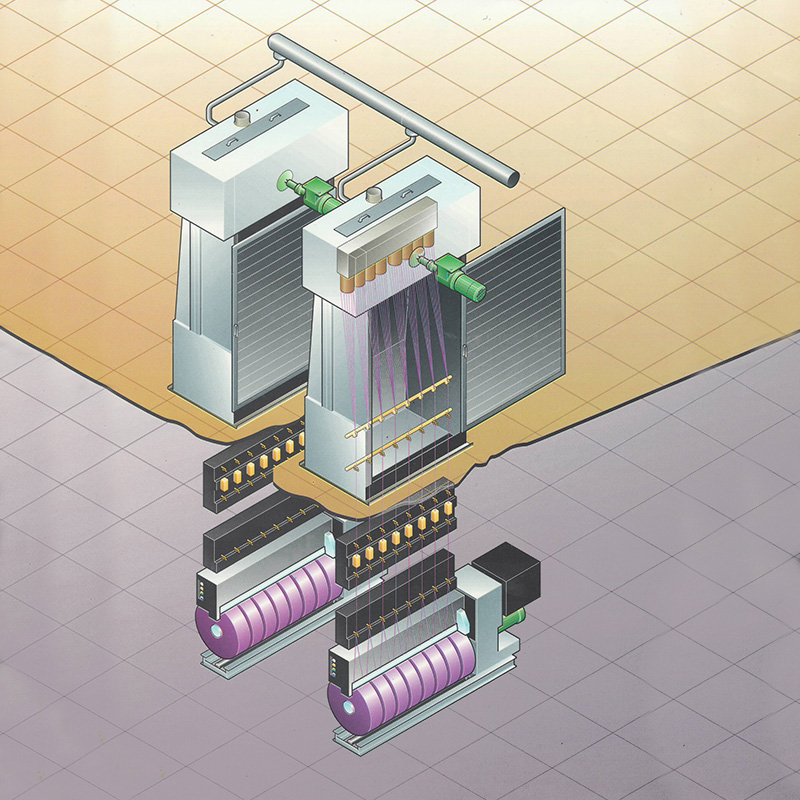
Spinning Beams / Spin Packs: Precisely metering and extruding the molten polymer through spinnerets to form filaments.
Quenching Systems: (Air conditioning) Cooling the filaments in a controlled manner.
Application: A used Barmag POY spinning line is a high-value asset for producing the primary feedstock for texturing plants.
This is one of the most sought-after categories for used Barmag machines. Texturing imparts stretch, bulk, and comfort properties to synthetic filaments.
Application: Converting POY into Drawn Textured Yarn (DTY) for applications in apparel, home textiles, and upholstery.
Key Barmag Models: The FK6 and FK9 series are industry benchmarks. Selection depends on:
Number of Ends: Machine capacity (e.g., 216-end, 432-end).
Heater Type: Contact vs. non-contact heaters.
Speed: Modern machines operate at higher speeds (e.g., over 1200 m/min).
Application: A used Barmag FK6 texturing machine is ideal for a manufacturer looking to enter or expand their production of polyester or nylon textured yarns.
This category includes equipment for downstream value-addition, enhancing yarn strength and creating special effects.
Application:
Twisting: Plying singles yarns for industrial applications like tire cord, sewing thread, or technical textiles. Barmag's two-for-one twisters are renowned.
Air Texturing: Creating bulk without elasticity for applications like furniture fabrics or automotive interiors.
Application: A used Barmag two-for-one twister is critical for a producer supplying high-tenacity yarns to the tire industry.
| Parameter/Model | FK6 Series (e.g., FK6-12, FK6-900) | FK9 Series (e.g., FK9-12) | Note |
|---|---|---|---|
| Primary Application | Standard DTY Production | High-Speed, High-Tenacity DTY | FK9 is generally a more advanced platform. |
| Standard Number of Ends | 216, 432 | 216, 432 | Configurations can vary. |
| Typical Speed Range | Up to ~1,200 m/min | Up to ~1,600 m/min | Actual speed depends on yarn type and condition. |
| Heater Technology | Standard Contact Heaters | Advanced Heater Designs (e.g., non-contact) | Newer heaters offer better energy efficiency. |
| Control System | Older PLC-based systems | More modern digital controls | Upgraded control systems are often available. |
| Ideal For | Manufacturers seeking a robust, proven workhorse for standard polyester/nylon DTY. | Producers focusing on higher output and more specialized, high-quality yarns. | A well-maintained FK6 often represents the best value. |
This refers to the upstream equipment that prepares the raw material.
Application: Solid-state polycondensation (SSP) plants to increase the intrinsic viscosity (IV) of PET chips, making them suitable for industrial yarns and bottles. Barmag is a key player in SSP technology.
Application: A used Barmag SSP line is a major capital investment that enables a producer to vertically integrate and control raw material quality.
By understanding these categories—from spinning equipment to texturizing machines and specialized yarn twisting or polymer processing units—buyers can precisely target their search for a used Barmag machine that aligns with their production strategy and delivers maximum value.
Acquiring a used Barmag machine is a significant investment that requires meticulous due diligence. A thorough evaluation is paramount to avoid unforeseen costs and ensure the equipment will meet your production targets. This checklist provides a structured approach to assessing a machine's condition and value, focusing on technical and commercial factors critical for a successful purchase.
Production Year & Serial Numbers: Confirm the machine's age and original specifications.
Total Operational Hours: Similar to a car's odometer, this indicates overall usage. Lower hours are generally preferable.
Maintenance & Service Logs: Request complete records. A well-documented history is a strong indicator of good care and predictable performance.
Previous Application: Understand what polymer (e.g., PET, PA, PP) and yarn type it produced. This can affect wear patterns.
Frame and Structure: Check for signs of corrosion, cracks, or repairs on the main machine frame.
Drive Systems: Inspect godet rollers, friction units, and other drives for wear, scoring, or bearing noise. They should run smoothly and quietly.
Heater Systems: For texturizing machines, test all heater zones (contact and non-contact) for consistent temperature and function. Replacing heaters is a major cost.
Oil & Lubrication Systems: Check for leaks and ensure pumps and filters are functional.
Control Cabinet: Inspect for outdated or obsolete components, burnt connections, and general cleanliness.
PLC, Drives, and Sensors: Power the machine on. Check for error logs in the PLC and ensure all sensors (e.g., broken filament detectors, speed sensors) are operational.
Wiring Harness: Look for brittle, cracked, or damaged wiring, which is common in older machines and can cause persistent electrical faults.
Require a Live Production Test: Never buy without seeing the machine run under load.
Process Stability: Observe the machine during start-up, steady-state operation, and doffing for vibrations or irregularities.
Quality Sample: Have the seller produce a yarn sample. Test this sample in your own lab or a third-party lab for key properties (e.g., Uster values, dye uptake, tensile strength).
Energy Consumption: If possible, measure power consumption during the test run to establish a baseline.
Critical Spares: Inquire about the availability and cost of key wear parts (e.g., spin packs, godet rollers, heater elements, friction disks).
Technical Expertise: Ensure you have access to technicians familiar with maintaining and troubleshooting this specific Barmag model, either in-house or through a reliable third-party service provider.
This table serves as a quick-reference guide for core technical points to verify.
| System/Component | What to Check | Good Indicator | Potential Risk |
|---|---|---|---|
| Operational History | Total Running Hours | < 150,000 hours | Very high hours (>250,000) may indicate excessive wear. |
| Mechanical Drives | Godet Rollers | Smooth, noiseless operation; no visible scoring. | Vibration, noise, or wobble indicates need for rebuilding/replacement. |
| Texturing Heaters | Resistance & Function | All zones heat to setpoint quickly and consistently. | Large variance between zones (>5°C) or failure to heat. |
| Control System | PLC Error Logs | Few or no active critical faults; clean history. | Long list of persistent errors indicating unresolved issues. |
| Yarn Quality | Uster % | Meets standard quality benchmarks for the target yarn. | High unevenness, poor dyeability, or low tenacity. |
| Documentation | Maintenance Logs | Complete, chronological records from first operation. | Missing or non-existent records. |
By systematically working through this checklist, you move from a speculative buyer to an informed one. This disciplined approach significantly de-risks the purchase of a used Barmag machine and provides a clear framework for negotiating a fair price based on the asset's actual condition. Always engage a qualified technician to conduct the final inspection.
The journey through evaluating a used Barmag machine culminates in a final, strategic decision. This choice is not merely about purchasing a piece of equipment; it is about investing in a production asset that will impact your operational efficiency, product quality, and bottom line for years to come. The comprehensive due diligence process outlined in the previous sections is designed to transform this significant decision from a gamble into a calculated and informed strategy.
The core takeaway is that a well-chosen used Barmag machine represents an unparalleled opportunity to acquire robust, precision German engineering at a highly optimized capital cost. It allows manufacturers to access proven technology, reduce their initial investment outlay dramatically, and achieve a faster return on investment (ROI) while mitigating the risks associated with long lead times for new machinery. The key to unlocking this value lies in a disciplined focus on the machine's condition, history, and verifiable performance, rather than on price alone.
| Strategic Pillar | The Informed Decision (Path to Success) | The Poor Decision (Path to Risk) |
|---|---|---|
| Investment Basis | Value and long-term Total Cost of Ownership (TCO). Prioritizes condition and performance history over the lowest sticker price. | Driven solely by finding the cheapest available option. |
| Due Diligence | Meticulous. Includes a review of full documentation, a technical inspection by a qualified engineer, and a mandatory production test run. | Rushed or skipped. Relies on seller claims and photographs without verification. |
| Technical Support | Secured upfront. Confirms access to technical expertise, spare parts availability, and potential refurbishment services. | Assumed or overlooked. No concrete plan for maintenance or repairs post-purchase. |
| Strategic Fit | The machine's specifications and capabilities are perfectly aligned with current production goals and target product portfolio. | A compromise. The machine may be under-sized, over-sized, or incapable of producing the desired yarn quality. |
| Risk Management | Understood and mitigated. The purchase price reflects the machine's condition, and a warranty from the seller is obtained. | Ignored or accepted. The buyer bears all risk for hidden defects and unforeseen repair costs. |
In conclusion, the market for used Barmag machinery offers a viable and strategic path for growth and modernization. By embracing a thorough, evidence-based evaluation process, you can confidently select a machine that will serve as a reliable, high-value, and profitable cornerstone of your production operations. This prudent approach ensures that your investment is not just an expense, but a powerful catalyst for enhancing your competitive advantage in the global synthetic fiber industry.
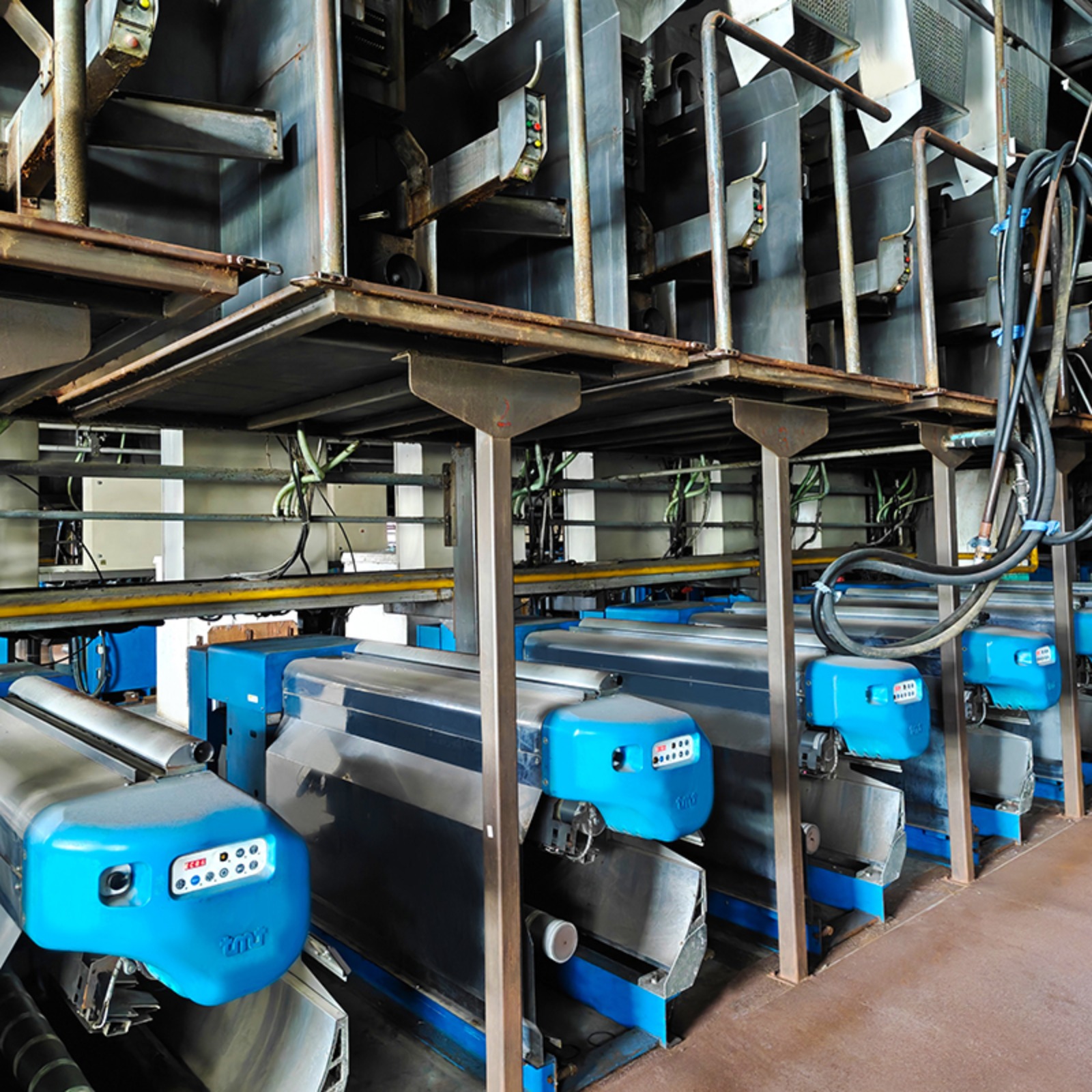
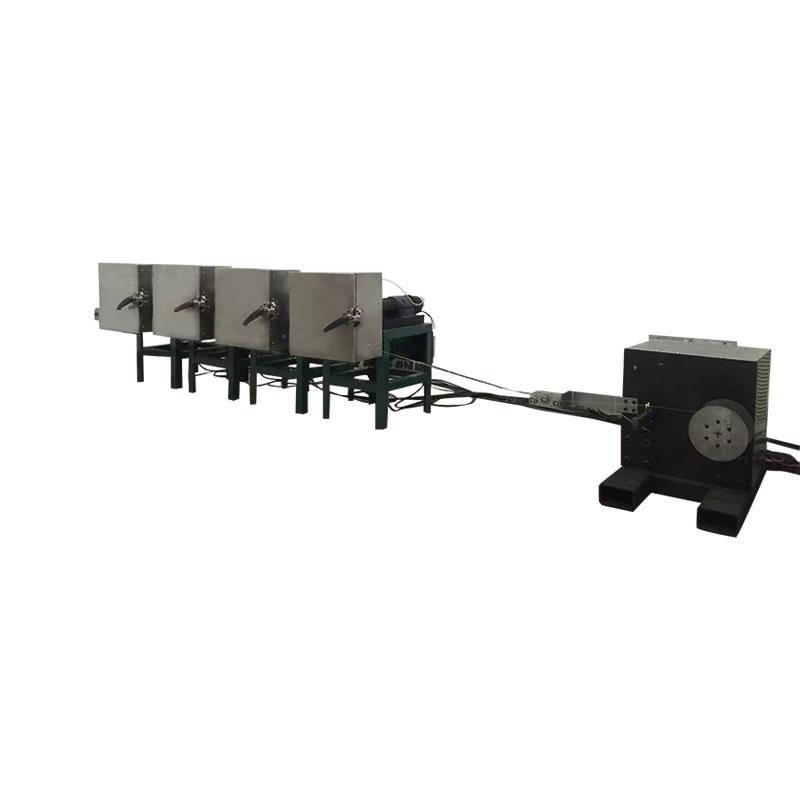
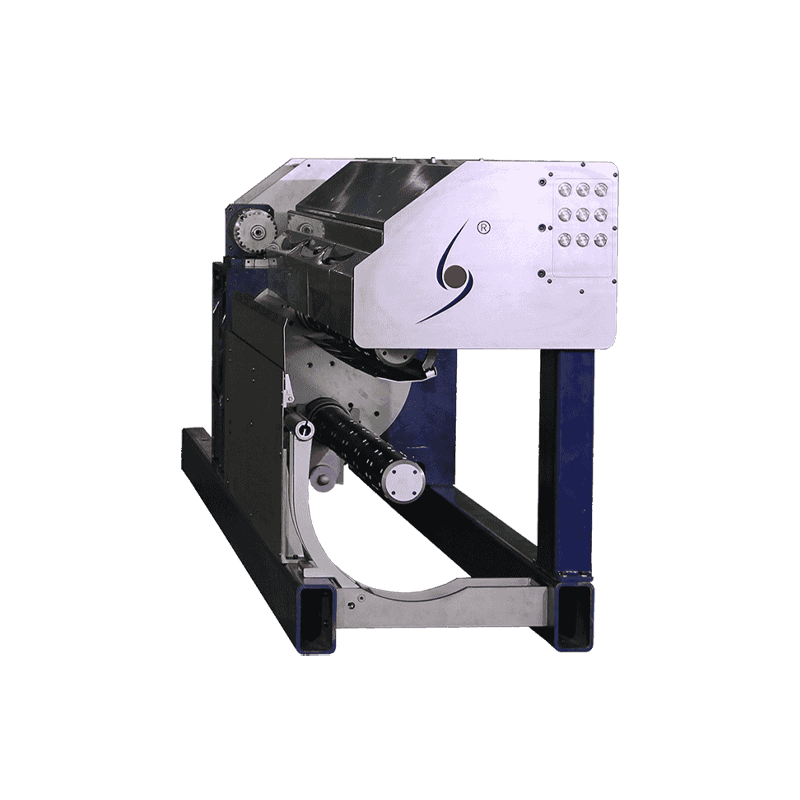
A: Choosing a specialized supplier ensures you receive technical expertise that general dealers cannot match. Jiaxing Shengbang Mechanical Equipment Co., Ltd. is not just a seller; we are a comprehensive technology company with deep expertise in spinning machinery. Our unique advantage lies in our integrated structure. With branches like Shanghai Panguhai Technology Engineering Co., Ltd. as our R&D headquarters and Haian Jingtong New Material Technology Co., Ltd. as our production base, we possess the full capability to not only supply high-quality used Barmag equipment but also provide complete pre-sale assessment, precision refurbishment using our advanced CNC machine tools and Shenk Balancing Machine, and unparalleled after-sales support. Our direct experience in yarn production, demonstrated by our revolutionary multi-purpose spinning test machine, means we understand your production needs and can ensure the machine is optimized for them.
A: Our support network is designed for long-term partnership. Post-purchase, our technical team can provide installation supervision, commissioning, and operator training. Crucially, our in-house Production Department, featuring dedicated machining, maintenance, and plasma-coating workshops, allows us to manufacture and refurbish critical wear parts to original standards. We use advanced equipment, including plasma-coating from AVIC Manufacturing Technology Institute, to restore godets and rollers. Furthermore, we can calibrate essential components like hot godets using temperature calibration equipment from Barmag, ensuring your machine operates at peak performance and produces consistent, high-quality yarn.
A: Our reputation is built on technical excellence and trusted relationships with industry leaders. Our company's foundation in R&D, production, and maintenance of key parts and spinning machines means we conduct a rigorous, multi-point inspection and refurbishment process on any used Barmag machine we offer. This deep technical capability is why we have successfully established cooperation relationships with major groups like Tongkun Group, Xin Feng Ming Group, Hengli Group, and Shenghong Corp.. Their approval of our quality and service serves as a powerful testament to our commitment to excellence. When you source from us, you are not just buying a machine; you are gaining a technology partner dedicated to ensuring your investment delivers maximum productivity and return.

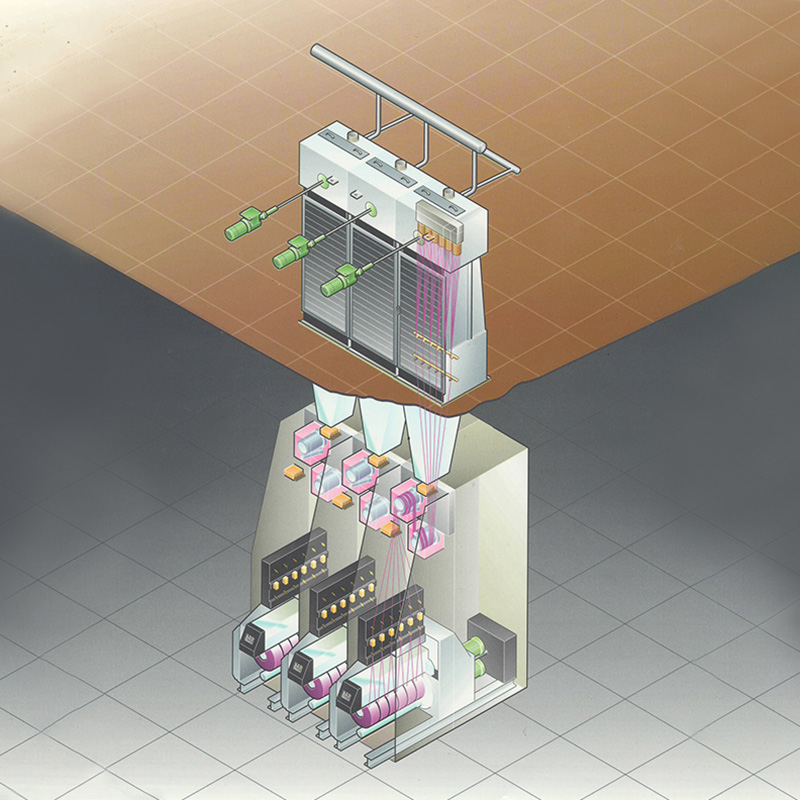
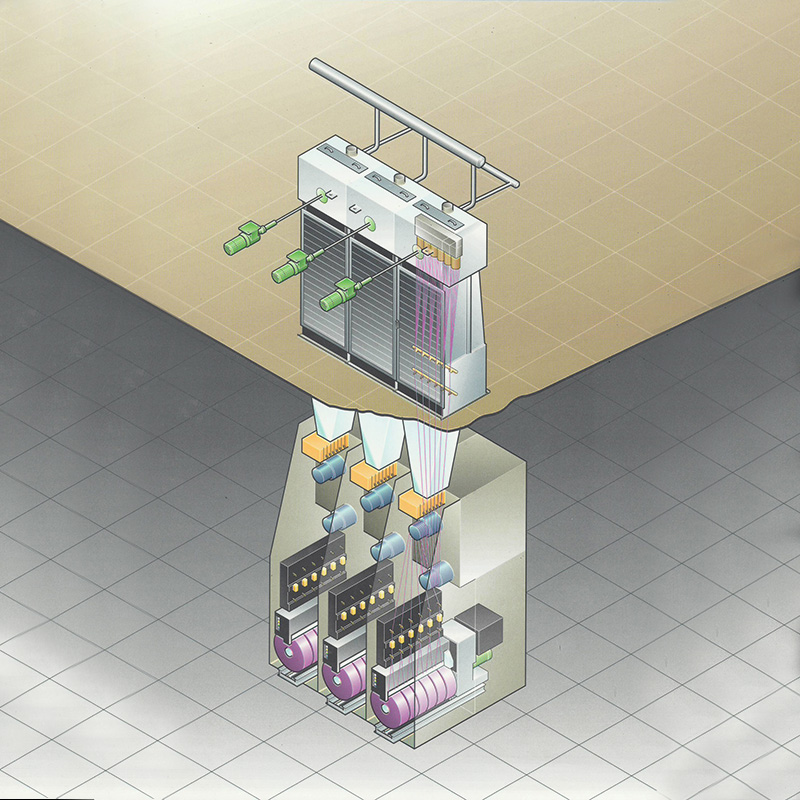
ADDRESS: No.1298, Zhouan Road, Economic and Technological Development District, Jiaxing City, Zhejiang Province
PHONE: +86 19057031687
TEL: 86-0573-83777752
EMAIL: [email protected]