English
 عربى
عربى русский
 简体中文
简体中文







2026-10-21
Home / News / Technical Knowledge / Industrial Applications and Prospects of Electrospinning Technology

1. Introduction: From Laboratory to Production Line
Electrospinning is a fiber fabrication technique that employs a high-voltage electrostatic field to draw polymer solutions or melts into ultrafine fibers ranging from the nanometer to micrometer scale. Since the 1990s, the technology has accumulated a vast academic research base. Entering the 2020s, driven by advances in equipment automation and exploding downstream demand for nanofiber-based products, electrospinning is rapidly completing the transition from laboratory technique to industrial production platform.
This article focuses on the current industrialization status, core application sectors, equipment market trends, and critical scale-up challenges of electrospinning technology.
2. Equipment Market Scale and Growth Projections
The global electrospinning equipment market is experiencing rapid expansion:
| Year | Global Market Size (USD Billion) | CAGR |
| 2031 | 11.7 | 21.60% |
A CAGR of 21.6% is remarkable within the context of mature textile machinery markets, reflecting strong pull-through demand from three primary downstream application sectors: medical devices, high-efficiency filtration media, and advanced energy materials.
3. Fundamental Operating Principles
The core mechanism of electrospinning relies on the synergistic interaction between a high-voltage electrostatic field (typically 5–50 kV) and the rheological properties of the polymer feedstock:
1.Solution/melt preparation: The target polymer is dissolved in an appropriate solvent and adjusted to a suitable viscosity (typically 100–10,000 mPa·s).
2.Taylor cone formation: High voltage applied at the spinneret tip causes the droplet to overcome surface tension, forming a characteristic Taylor cone.
3.Jet elongation: The charged jet undergoes bending instability within the electric field and is stretched into extremely fine fibers.
4.Collection and solidification: Solvent evaporation (solution process) or cooling solidification (melt process) deposits fibers onto a collector to form a nanofiber membrane.
Critical Process Parameters:
Applied voltage (kV)
Tip-to-collector distance (cm)
Solution concentration and viscosity
Ambient temperature and relative humidity
Feed rate (mL/h)
4. Core Industrial Application Sectors
4.1 Biomedical Applications
This represents the highest commercially matured application domain for electrospinning, including:
Tissue engineering scaffolds: PLGA, PCL, and collagen nanofiber scaffolds mimicking extracellular matrix (ECM) microarchitecture, applied in skin regeneration, vascular repair, and osteochondral reconstruction.
Controlled drug delivery: Core-shell electrospun fiber architectures enable programmable drug release profiles, with established clinical value in wound dressings and implantable devices.
Medical filtration and protection: Composite nanofiber-nonwoven laminates achieve bacterial filtration efficiency (BFE) ≥ 99%, substantially outperforming conventional melt-blown layers.
4.2 Industrial Filtration
Nanofiber filtration membranes represent one of the largest-volume industrialized applications of electrospinning:
| Application Scenario | Core Advantage | Representative Materials |
| Liquid filtration (UF/MF membranes) | Tunable pore size (100 nm–10 μm) | PVDF, PES, PA6 |
| Lithium battery separators | High thermal stability + high ionic conductivity | PVDF-HFP, PAN |
4.3 Energy Materials
Lithium-ion batteries: Electrospun PAN fibers, upon carbonization, yield carbon nanofibers (CNF) serving as high-performance anode materials for LIBs and supercapacitors.
Fuel cells: Nanofiber proton exchange membranes (NF-PEM) demonstrate ionic conductivity superior to conventional Nafion® membranes.
Piezoelectric nanogenerators: PVDF nanofibers, leveraging piezoelectric effect, are applied in flexible wearable energy harvesting devices.
4.4 Food and Agriculture
Micro/nano encapsulation of active ingredients (essential oils, probiotics, antioxidants) to extend food shelf life.
Biodegradable agricultural mulch films and seed coating materials (PLA, PCL nanofibers).
5. Critical Challenges for Industrial-Scale Production
Despite broad application prospects, electrospinning faces several systemic barriers to large-scale industrialization:
5.1 Throughput Bottleneck
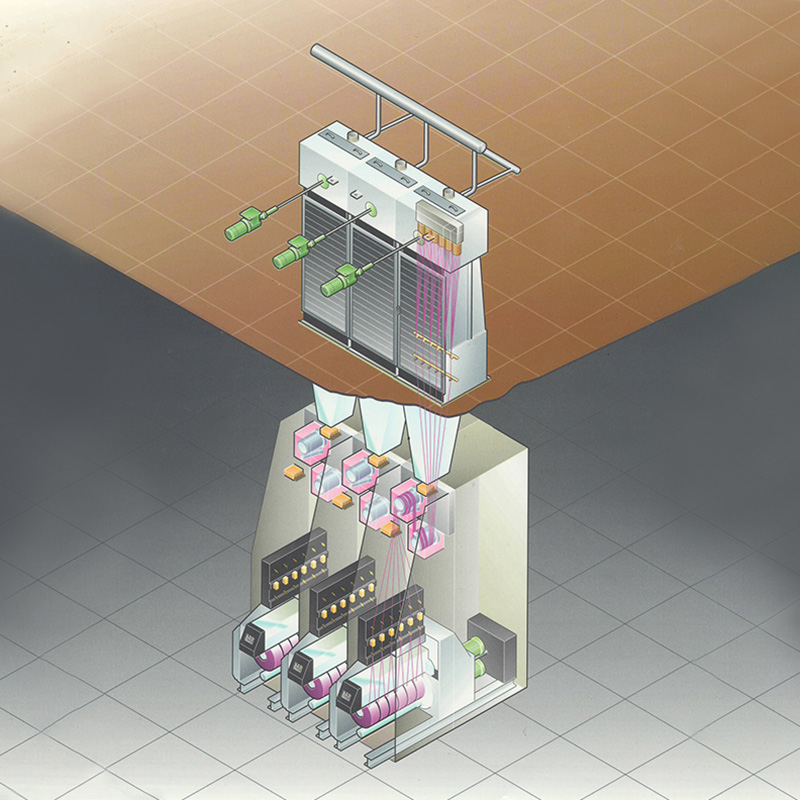
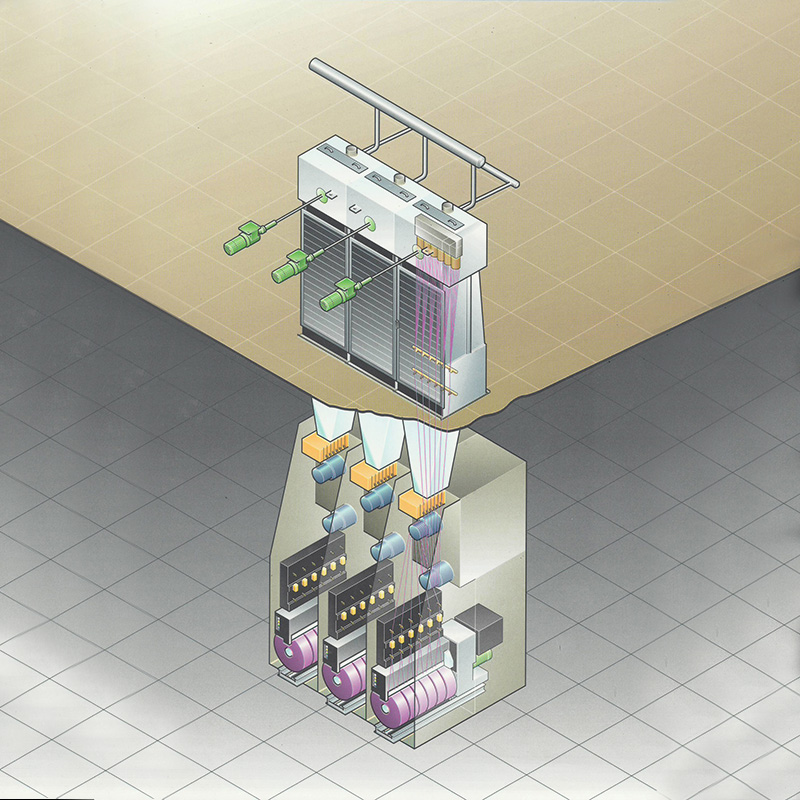
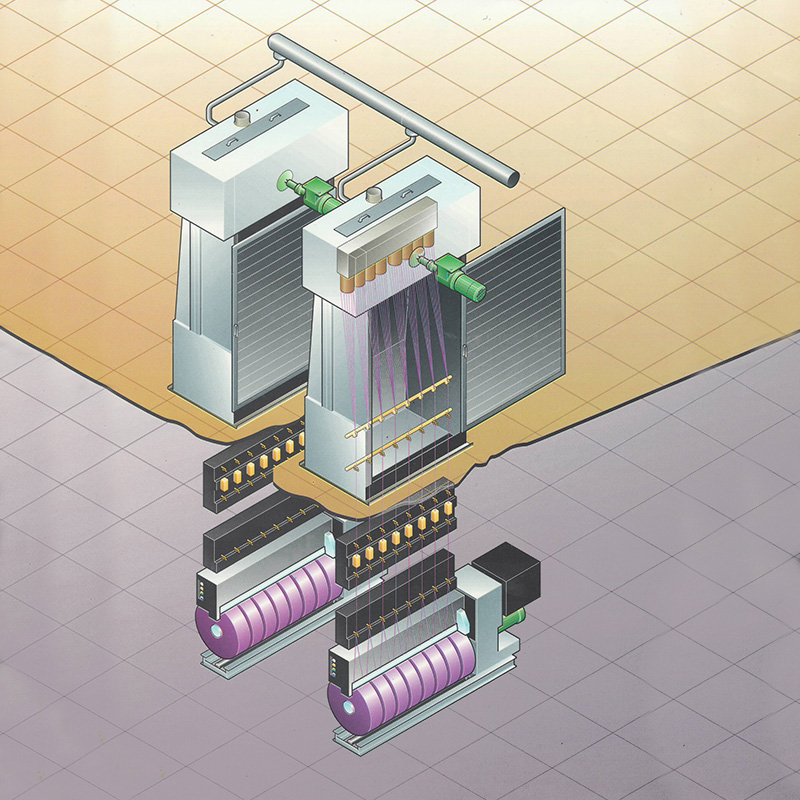
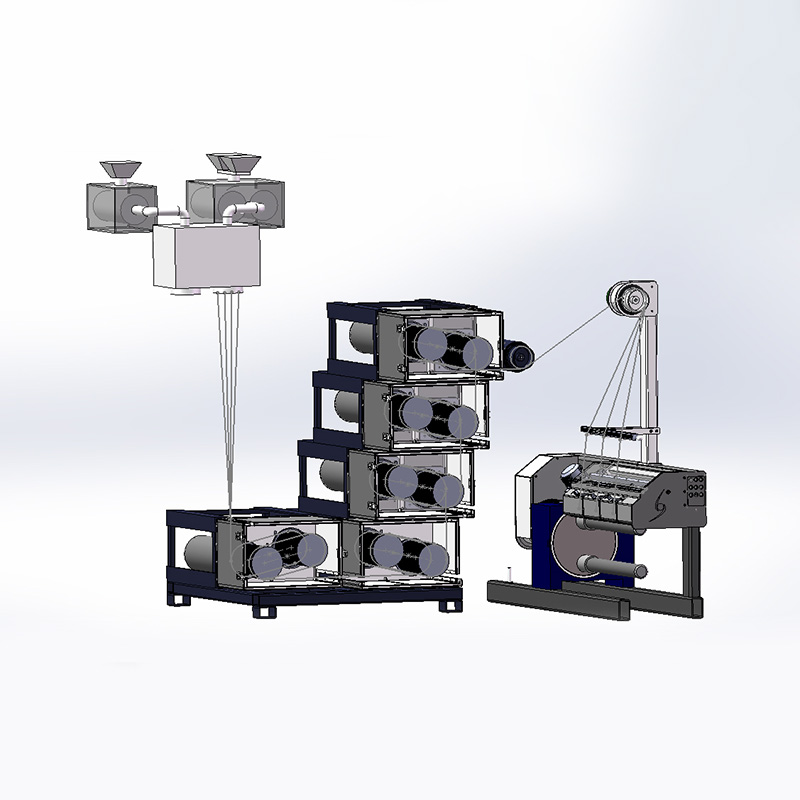
Conventional single-needle electrospinning systems have extremely low production rates (~0.01–1 g/h). Current scale-up pathways include:
Multi-needle parallel systems: Linear throughput scaling, though inter-needle electric field interference requires precision engineering.
Needleless electrospinning: Elmarco's Nanospider™ platform (Czech Republic), utilizing rotating roller or wire electrodes for large-area uniform fiber deposition.
Centrifugal-assisted electrospinning: Integration of centrifugal forces can increase throughput 10–100-fold.
5.2 Solvent Safety and Cost
Most polymers require dissolution in toxic organic solvents (DMF, NMP), with industrial solvent recovery systems and explosion-proof ventilation significantly increasing production line capital expenditure. Melt electrospinning represents the fundamental pathway to eliminate solvent-related issues, but demands extremely precise temperature control in equipment design.
5.3 Quality Consistency
Nanofiber diameter distribution and pore structure uniformity are highly sensitive to ambient temperature and humidity fluctuations. Industrial-grade quality control systems are still being established across the sector.
6. 2025 Technology Frontier
A comprehensive review published in Advanced Materials (Wiley, 2025) identifies the most significant emerging directions in electrospinning:
Multi-architecture composite nanofibers: Precision fabrication of core-shell, hollow, and multi-axial fiber structures.
In-situ functionalization: Direct incorporation of metal oxides, carbon nanomaterials, and quantum dots during the spinning process.
AI-assisted process optimization: Machine learning models predicting nanofiber morphology-process parameter relationships, substantially reducing experimental cycle times.
Biopolymer electrospinning: Continued breakthroughs in controllable electrospinning of natural macromolecules including collagen, silk fibroin, and chitosan.
7. Conclusion
Electrospinning technology stands at the threshold of large-scale industrialization. The convergence of equipment intelligence, maturation of needleless spinning platforms, and explosive downstream demand in medical, filtration, and energy applications is collectively driving this technology toward full industrial realization.
For technical decision-makers in fiber manufacturing enterprises, key focus areas should include: the throughput-uniformity trade-off in needleless electrospinning platforms, the capital investment logic of melt spinning routes, and the operational case studies of leading industrialized suppliers with demonstrated scale-up experience (e.g., Elmarco, Inovenso).
Strategic Recommendation: Prioritize validation of electrospinning scale-up solutions in the medical filtration media and lithium battery separator sub-markets — both high-margin niches where nanofiber performance differentiation is most commercially defensible — before extending to broader applications.

ADDRESS: No.1298, Zhouan Road, Economic and Technological Development District, Jiaxing City, Zhejiang Province
PHONE: +86 19057031687
TEL: 86-0573-83777752
EMAIL: [email protected]